Africa
Congo Says 2,000 People Have Died in its Ebola Outbreak, The Fastest Growing on Record

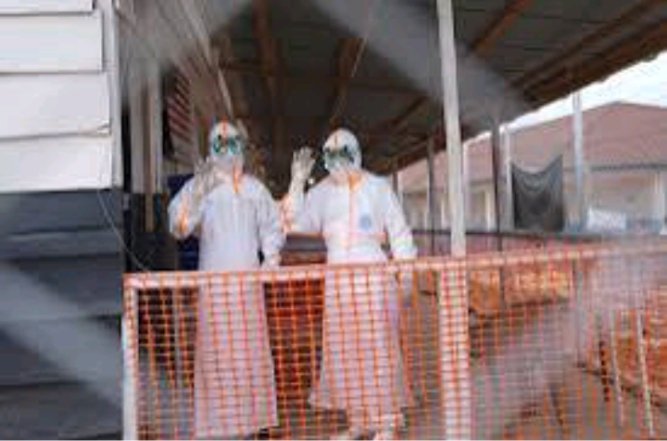
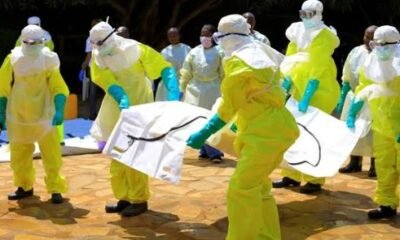
The Democratic Republic of the Congo has reported that more than 2,000 people have died in its devastating Ebola outbreak, which health officials are calling the fastest-growing on record.
According to the latest figures from the DRC health authorities, confirmed cases have surpassed 4,000, making it the second-largest Ebola outbreak ever documented globally.
The outbreak is being driven by the rare Bundibugyo strain of the Ebola virus. Health Minister Roger Kamba had previously warned that this strain carries a high fatality rate and has no specific treatment or approved vaccine. The current fatality rate stands at over 45 percent.
World Health Organization Director-General Tedros Adhanom Ghebreyesus visited the DRC and confirmed the unprecedented speed of transmission, stating that “new cases are doubling in some hotspots”. Health officials have described the crisis as “the largest one the DRC has ever faced”.
The response effort is severely hampered by the lack of effective medical tools.
There are currently no approved vaccines or specific treatments for the Bundibugyo strain, unlike previous outbreaks caused by the Zaire strain.
WHO spokesperson Tarik Jasarevic noted that the outbreak is “unfortunately still expanding beyond the capacity of the response”.
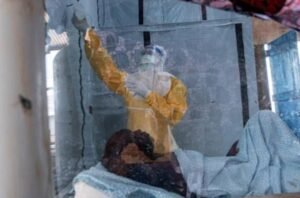
A significant challenge has been community transmission. WHO’s Chikwe Ihekweazu warned that “80 percent of new cases are outside our contact lists,” indicating hidden chains of transmission.
Many deaths are occurring in communities rather than health facilities, with nearly 66 percent of reported deaths happening outside medical care.
The outbreak has been concentrated in the Ituri province, which accounts for over 86 percent of confirmed cases.
The region is plagued by armed conflict, population displacement, and intense mobility around mining areas, complicating containment efforts.
The International Organization for Migration has documented bodies being moved through checkpoints, with some testing positive for Ebola.
Frontline health workers have also faced significant challenges. Some staff went on strike over unpaid salaries, disrupting care. Bunia resident Anicet Baluku, whose two brothers died during the disruption, urged authorities to “quickly find a solution to prevent other families from experiencing the same tragedy”.
Efforts are continuing to develop vaccines specifically targeting the Bundibugyo strain.
The University of Oxford and the Serum Institute of India entered a Phase 1 clinical trial in July, while Moderna is expected to begin testing.
However, health officials caution that it could take months before results are conclusive.
Prime Minister Judith Suminwa Tuluka emphasized that “without community engagement, we cannot eradicate this disease”.