
Business
Global Bond Selloff Eases, but Stocks Slide as Investors Fret Over Debt and Inflation


Global bond markets steadied on Wednesday after a sharp selloff, but the relief in fixed-income markets failed to calm investors as stocks fell sharply across Asia and remained under pressure in other major markets.
Long-term government bond yields remained close to multi-year highs as investors continued to demand higher returns to compensate for concerns about rising government debt, persistent inflation and increased borrowing.

The U.S. 30-year Treasury yield, which had climbed to 5.337% on Tuesday; its highest level in nearly two decades eased back to around 5.27%. The move followed similar stabilisation in European bond markets after German and French yields had reached levels not seen since 2011.
Despite the moderation in bond yields, equity markets suffered significant losses. Japan’s Nikkei fell about 3.3%, while South Korea’s KOSPI dropped nearly 6%, with semiconductor stocks among the biggest casualties.
The selloff extended a difficult session on Wall Street, where the Nasdaq Composite lost 1.33% on Tuesday, the S&P 500 fell 0.69% and the Dow Jones Industrial Average declined 0.22%. Semiconductor shares were particularly weak, with the PHLX Semiconductor Index dropping about 5%.

Investors are increasingly concerned that governments around the world will need to borrow heavily to finance large fiscal deficits. The United States is preparing to issue $16 billion in 20-year Treasury notes, adding to an already substantial supply of government debt.
At the same time, major technology companies are raising large amounts of money in bond markets to finance artificial-intelligence infrastructure, creating additional competition for investor funds.
Inflation is another major concern. Oil prices have remained above $90 a barrel amid tensions surrounding the U.S.-Iran conflict, raising fears that higher energy costs could keep inflation elevated and complicate central banks’ efforts to reduce interest rates.
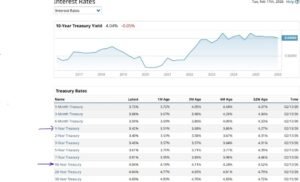
Higher bond yields can put pressure on stocks because they increase borrowing costs for businesses and make relatively safer government securities more attractive compared with equities. Technology and other growth stocks are particularly sensitive because their valuations depend heavily on expectations of future earnings.
In Asia, the pressure was especially pronounced among chipmakers. Samsung Electronics and SK Hynix both suffered steep losses, while Japan’s technology-heavy market also came under pressure.
China provided a notable exception to the broader risk-off mood, with shares of robotics company Unitree surging dramatically during its market debut. The gains contrasted sharply with weakness across other major Asian markets.

Market attention is now turning to the U.S. Federal Reserve’s minutes from its July meeting, which could provide clues about policymakers’ thinking on inflation and interest rates.
Investors are also watching upcoming economic data, oil prices and government bond auctions for signs of whether the recent rise in borrowing costs represents a temporary market adjustment or the beginning of a more prolonged period of financial stress.
For now, Wednesday’s calmer bond trading has offered little comfort to equity investors, with concerns over government debt, inflation, expensive technology shares and geopolitical risks continuing to weigh on global markets.