
Business
Global Stocks Slide as Oil Surge Fuels Inflation and Rate Fears

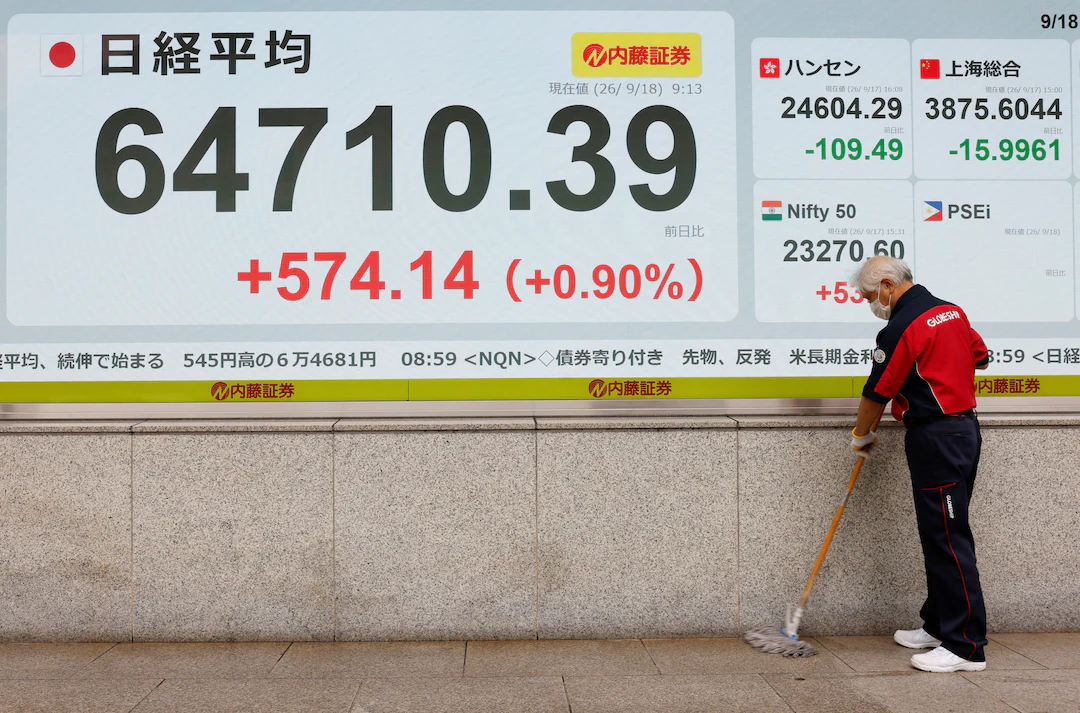
Global stocks came under pressure on Monday as renewed gains in oil prices pushed inflation concerns higher, while rising U.S. Treasury yields increased expectations that interest rates could remain elevated for longer.
Wall Street opened lower, with the S&P 500 down about 0.9%, the Dow Jones Industrial Average off 0.8% and the Nasdaq Composite falling 1.2% in late-morning trading, according to Associated Press reporting.

Oil prices were a major source of pressure. Brent crude rose above $100 a barrel, with Reuters reporting that futures climbed as much as 4% to around $108.50. The increase followed renewed uncertainty surrounding efforts to end the conflict involving the United States and Iran and concerns about oil shipments through the strategically important Strait of Hormuz.

Higher oil prices have revived concerns that inflation could remain persistent. Investors are consequently reassessing expectations for U.S. monetary policy, with markets indicating an increased likelihood of another Federal Reserve interest-rate hike in October.

Reuters reported that markets were pricing in about a 68% chance of a second consecutive Fed hike in October, while roughly 90 basis points of additional tightening were being priced through the end of next year.
The bond market has been a particularly important source of pressure. The yield on the benchmark 10-year U.S. Treasury rose to around 5.27%, compared with 5.17% late last week, according to AP. The 30-year Treasury yield climbed to about 5.57%, its highest level since 2004.
Treasury yields tend to rise when investors expect higher inflation or interest rates. Higher yields can also increase borrowing costs for households and companies while reducing the relative appeal of stocks, particularly shares whose valuations depend heavily on expectations of future earnings.

The move in two-year Treasury yields has been especially notable. Reuters reported that the two-year yield had risen by 56 basis points during September, its largest monthly increase since February 2023, as investors adjusted their expectations for U.S. monetary policy.
The pressure was not limited to the United States. Asian markets were mixed, with South Korea’s Kospi falling 2.3% and China’s Shanghai Composite declining 1.7%, while Japan’s Nikkei was broadly flat and Hong Kong’s Hang Seng gained. Brent crude was trading above $106 a barrel during Asian trading.

Some companies nevertheless bucked the broader decline. Nvidia shares rose after the chipmaker announced an additional $150 billion authorization for share buybacks, surpassing Apple’s $110 billion authorization announced in 2024.
Investors are also looking ahead to a busy week of economic data that could provide further clues about the Federal Reserve’s next steps. Inflation and employment figures will be closely watched as markets assess whether higher energy costs are likely to translate into broader price pressures.

The combination of higher oil prices and rising bond yields has consequently strengthened the market’s focus on a possible “higher for longer” interest-rate environment. Reuters reported that despite the pressure, strong U.S. economic growth and corporate earnings have so far helped markets absorb the higher borrowing costs and energy prices.