
Politics
Atiku Unveils New Fuel Subsidy Plan, Promises Cap, Audit and Consumer Benefits

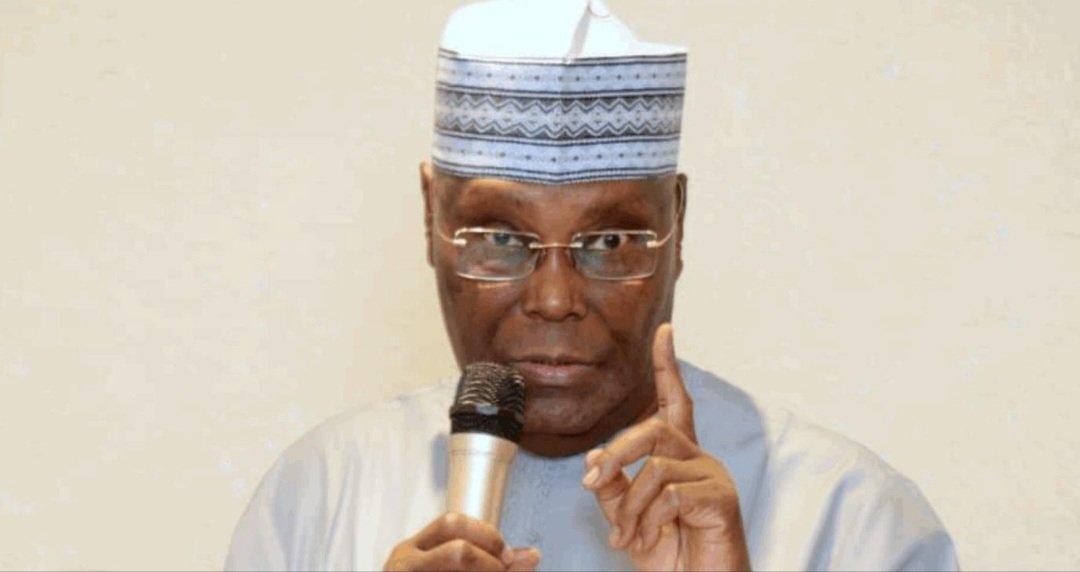
Former Vice President Atiku Abubakar has unveiled a proposed new model for fuel subsidy, saying his administration would replace Nigeria’s former import-based system with a targeted production subsidy focused on domestic refining and lower energy costs.
Atiku, the African Democratic Congress (ADC) presidential candidate, said the proposal forms part of his Atiku Economic Recovery Plan (AERP) 2027 and would provide support to qualifying Nigerian refineries while ensuring that the financial benefits are passed on to consumers.
In a statement issued on Thursday by his Senior Special Assistant on Public Communication, Phrank Shaibu, Atiku said the choice facing Nigeria was not simply between having a subsidy or abolishing one, but between an opaque system and a controlled intervention with clearly defined limits.
“The subsidy will follow the barrel,” Atiku said.
Under the proposed arrangement, qualifying public and private refineries would receive Nigerian crude at a preferential price, subject to conditions covering production, efficiency, transparency and domestic supply.
Atiku acknowledged that selling crude below its market-equivalent value would have an opportunity cost for the Federation.
He said his proposal would therefore establish in advance the cost of the intervention, the beneficiaries and the expected benefits to Nigerians.
According to him, the government would determine what the country could afford before approving subsidy support rather than allowing costs to accumulate without a defined limit.
Atiku said refineries receiving preferentially priced crude would be required to demonstrate that they had supplied a corresponding quantity of petroleum products to the Nigerian market.
He proposed independent verification of crude allocations, refinery intake, production yields, inventories and domestic deliveries.
Under the proposed system, operators that diverted subsidised crude or petroleum products, manipulated production records or failed to meet domestic-supply obligations would lose eligibility and could be required to repay the subsidy benefit.
Atiku also said the programme would be open to all qualifying refineries based on independently verified capacity, efficiency and compliance rather than political connections.
“Public support must produce a measurable public benefit,” he said.
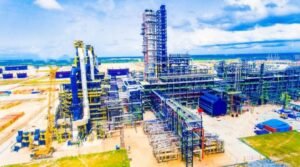
The former vice president said his proposed production subsidy would operate within a predetermined annual fiscal ceiling approved through the federal budget.
He said this would prevent the emergence of unlimited subsidy liabilities or unexpected claims against government finances.
The National Assembly, according to Atiku, would determine the appropriation, while independent auditors would monitor the movement of subsidised crude and verify refinery production.
He also proposed that the government publicly disclose the fiscal cost of the programme and its implications for revenues available to the federal, state and local governments.
Any additional oil revenue above the budget benchmark, he said, could only be used within the established fiscal ceiling and after the revenue had actually materialised.
Atiku said his proposed intervention would not be permanent.
Instead, it would contain statutory sunset and periodic review provisions under which subsidy support would progressively decline as domestic refining capacity expands, refinery utilisation improves and production costs fall.
He said the ultimate objective was to build a domestic refining industry capable of operating without government subsidy.
The proposal, he argued, would eventually help reduce the cost of petrol and diesel while lowering transportation and logistics costs for households, farmers and businesses.
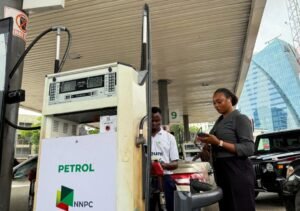
“The ultimate objective is not merely cheaper petrol. It is cheaper transportation, cheaper food, stronger businesses, more Nigerian jobs and greater purchasing power,” Atiku said.
The former vice president also used the statement to renew his criticism of President Bola Tinubu’s handling of petrol subsidy removal.
Tinubu announced the end of the petrol subsidy during his inauguration speech on May 29, 2023, triggering a sharp increase in petrol prices and transportation costs.
Atiku argued that Nigerians had borne the immediate consequences of the policy through higher living costs, while questions remained over petroleum-related expenses recorded by the Nigerian National Petroleum Company Limited (NNPCL).
He cited NNPCL’s audited financial statements, which he said recorded approximately ₦4.84 trillion in Energy Security Expenses in 2023 and ₦7.13 trillion in 2024.
Atiku said the government should explain the economic substance of the expenses and clarify whether they included under-recoveries, pricing differentials or other petroleum supply costs.
He argued that Nigerians deserved to know how such expenses differed economically from the subsidy system they were told had ended.
The ADC presidential candidate also raised questions about approximately ₦30 trillion in what he described as revenues, deductions, savings, transfers and related Federation funds that require reconciliation.
Atiku stressed that he was not alleging that the ₦30 trillion represented stolen money or fuel subsidy.
Instead, he said his team had identified the figure across various published Federation Account classifications and was demanding a month-by-month reconciliation.
He called on the Federal Government to publish details of deductions, beneficiaries, transfers, balances and the legal authority supporting the transactions.
According to Atiku, the government should answer two separate questions: what happened to the financial effects of subsidy removal and what accounts for the approximately ₦30 trillion requiring reconciliation.
Atiku further promised that his administration would subject previous subsidy transactions to lawful scrutiny.
He said anyone found, through due process, to have fraudulently obtained or diverted public subsidy funds would face prosecution and possible asset recovery.
He maintained that his proposed system would seek to avoid the weaknesses associated with Nigeria’s previous subsidy regime.
Atiku said the difference between his approach and the Tinubu administration’s policy was that his government would establish the intervention, cap its cost, appropriate funds, track crude allocations, verify production and publish the accounts before progressively reducing the subsidy.
He described the proposal as an attempt to use temporary government support to build a stronger domestic refining industry and eventually eliminate the need for subsidy altogether.