
War
Russia Faces Petrol Shortages as War’s Impact Deepens Despite Strong Patriotism


Russians are increasingly feeling the everyday consequences of the war in Ukraine, with petrol shortages, long queues at filling stations and rising anxiety becoming more visible across the country.
In Moscow, motorists have been forced to spend hours waiting for fuel, with some petrol stations running out of gasoline altogether. At one station in the south-east of the capital, drivers reportedly waited for hours only to be told that there was no petrol available.
The latest shortages are being linked largely to repeated Ukrainian drone attacks on Russian oil infrastructure. The strikes have disrupted refinery operations, while unplanned maintenance, strong seasonal demand and logistical difficulties have further tightened domestic supplies.
Reuters reported that some petrol stations in Moscow have reinstated limits on the amount of gasoline motorists can purchase. Major fuel companies including Rosneft, Gazprom Neft and Lukoil have introduced restrictions in various locations, while some stations have temporarily closed or limited sales.
The shortages are not confined to Moscow. Russian authorities have reintroduced fuel-sale restrictions in a number of regions, with reports of empty pumps and lengthy queues stretching across parts of the country. Anadolu Agency reported that the proportion of stations with available petrol or diesel fell sharply between August 9 and August 16.
The situation represents a particularly striking problem for Russia, one of the world’s major oil producers. Moscow has responded by banning fuel exports, relaxing some fuel-quality requirements and beginning to import petroleum products to help stabilize domestic supplies.
Yet, as BBC Russia editor Steve Rosenberg observed in his report from Moscow, the visible strain on everyday life has not necessarily translated into a collapse in patriotic sentiment.
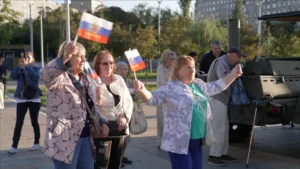
As Moscow prepared to celebrate Russian Flag Day, patriotic billboards, concerts and displays of military equipment remained prominent alongside the queues for petrol.
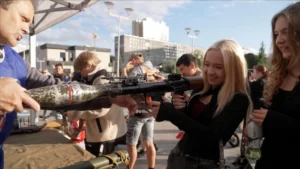
Rosenberg reported that some Russians continue to describe the difficulties as something that will ultimately make the country stronger. Others, however, acknowledged that high prices, fuel shortages and Ukrainian drone attacks are making the war increasingly difficult to ignore.
The contrast illustrates the complex mood in Russia: while the Kremlin continues to promote patriotism and resilience, the economic and practical consequences of the conflict are increasingly reaching ordinary households.
Analysts cited in Rosenberg’s report suggest that anxiety is growing among some Russians, particularly as drone attacks bring the consequences of the war closer to home.
Despite the renewed fuel crisis, there is currently no indication that the pressure has prompted the Kremlin to change course on the war.
For now, Russian authorities are attempting to contain the fuel shortage through imports, restrictions and measures aimed at increasing domestic supply, while Ukrainians continue to target infrastructure that supports Russia’s war effort.
The developing crisis highlights how the war is increasingly affecting life far beyond the battlefield, from energy supplies and transportation to household costs and public anxiety.