
Disaster/Tragedy
Glacier Collapse Triggers Catastrophic Floods in Nepal and Tibet, Hundreds Dead and More Than 1,300 Missing

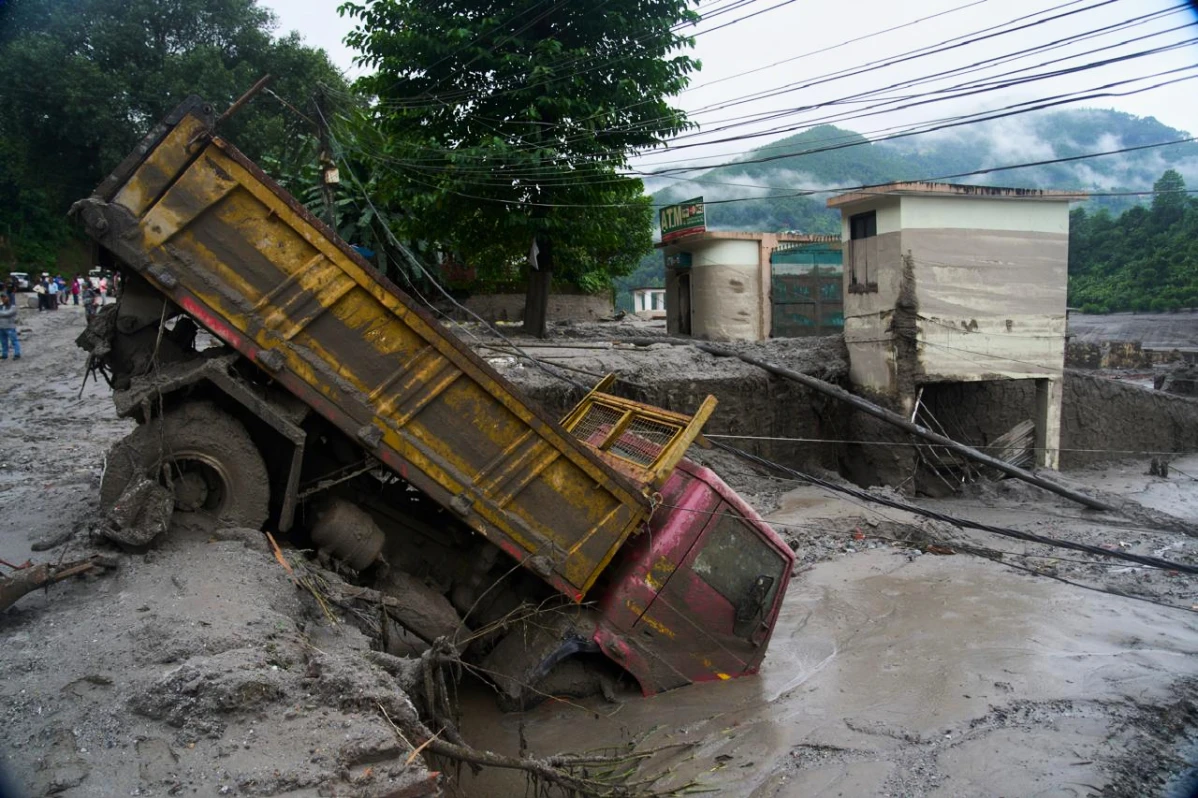
A catastrophic flood triggered by the collapse of a Himalayan glacier has killed more than 350 people across Nepal and China’s Tibet region, while more than 1,300 others remain missing in one of the region’s worst natural disasters in recent years.
The disaster struck on Wednesday after a huge section of glacier and rock collapsed high in the Himalayas, sending a torrent of mud, ice, rocks and water down a river along the Nepal-China border. The resulting flash flood swept through communities with little warning, destroying homes, roads, bridges and other infrastructure.
In Nepal, the worst-hit areas include Nuwakot and Rasuwa districts, where entire settlements along the Trishuli River were inundated. China has also reported extensive destruction in Tibet’s Gyirong County, near the major crossing between the two countries.
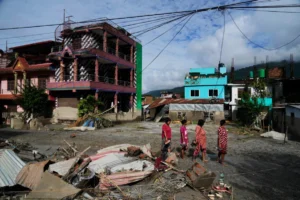
The latest Associated Press report puts the combined death toll at more than 350, while authorities in Nepal and Tibet continue to account for more than 1,300 missing people. Earlier figures had placed the death toll at 273, but the number has continued to rise as rescuers reach previously inaccessible areas and recover more bodies.
The flooding began after a substantial section of glacier broke away at an elevation of roughly 5,200 metres in the Himalayas. The falling ice and rock plunged about 1,200 metres into a valley, gathering additional debris before striking the Lhende River.
The debris temporarily blocked the river, creating a natural dam. When the blockage gave way, a massive surge of water and sediment rushed downstream towards the border communities. Satellite imagery and geological analysis indicate that the event was a glacial collapse rather than a conventional earthquake.
The U.S. Geological Survey initially recorded seismic activity that was interpreted as an earthquake, but later concluded that the signal was generated by the enormous landslide and debris flow itself. The collapse was subsequently measured as a magnitude 5.2 seismic event.
The disaster has also raised international concern because the affected region is a major route for tourists and religious pilgrims travelling towards Mount Kailash in Tibet.
Authorities say hundreds of foreign nationals are among those missing. have identified missing citizens from countries including India, the United States, Australia, Britain and Canada.
In Nepal alone, officials reported hundreds of missing people, while Chinese authorities said 558 people were missing in Tibet’s Gyirong County, including foreign nationals.
More than 5,000 Nepalese soldiers and police officers have been deployed for search-and-rescue operations, while helicopters are being used to reach communities cut off by destroyed roads and bridges.

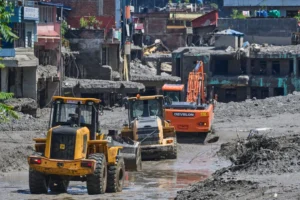
Rescuers are facing difficult conditions, with thick mud, unstable mountain terrain and damaged infrastructure hampering access to the worst-hit locations. Helicopters are also delivering food, medicine and emergency supplies to isolated communities.
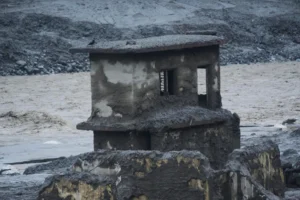
The scale of the destruction has made it difficult for authorities to determine the final number of victims. Entire stretches of roads and bridges have been swept away, while homes, vehicles and power infrastructure have been buried beneath mud and dirts.
Scientists say the disaster highlights the growing dangers posed by unstable glaciers and mountain slopes in a rapidly warming Himalayan region.
Nepal has lost a significant amount of its glacial ice over recent decades, while rising temperatures are contributing to glacier retreat, permafrost thaw and increasing instability in high-altitude areas. Experts warn that the combination of melting ice, unstable slopes and extreme weather can produce devastating cascading events such as landslides and glacial floods.
For families across Nepal, Tibet and several other countries, however, the immediate priority remains finding those who are still missing.
Search teams continue to scour rivers, villages and debris fields as authorities race against time to locate survivors and establish the full scale of one of the deadliest Himalayan flood disasters in recent memory.