
Business
Oil Surges Above $90 as US-Iran Strikes Rattle Global Markets

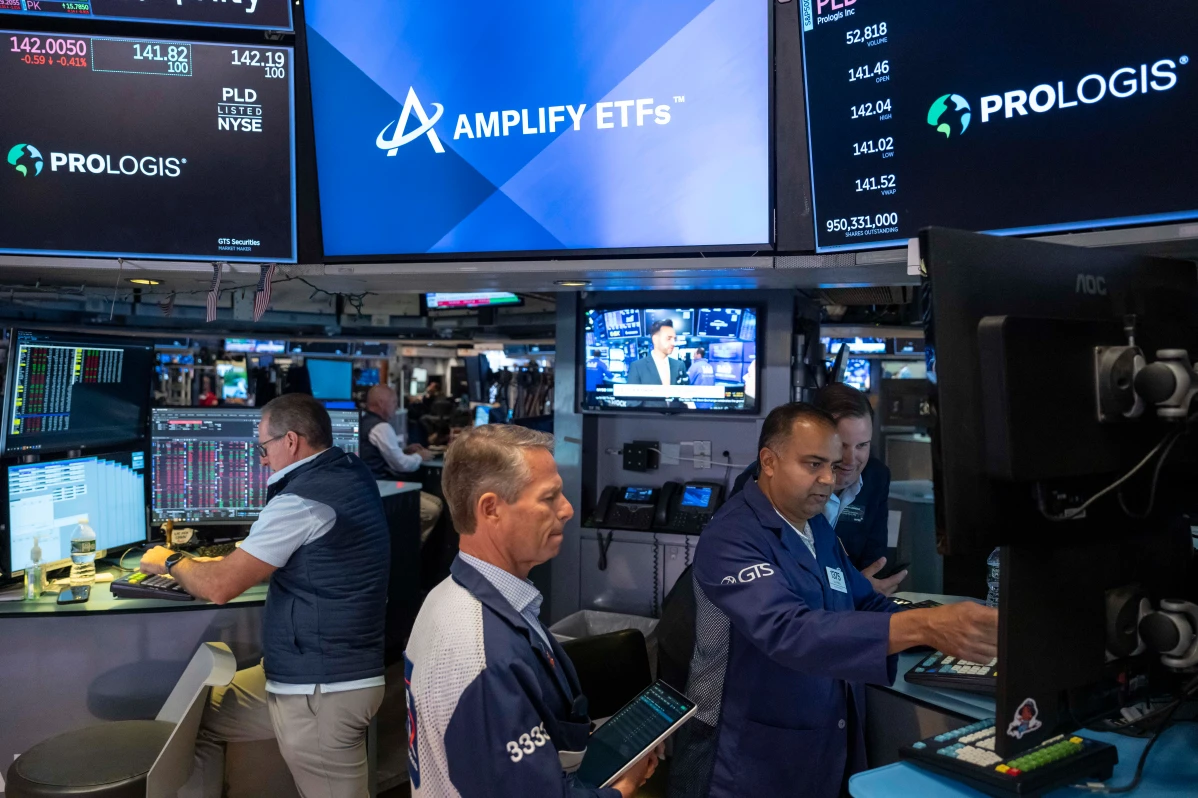
Oil prices surged and stock markets fell on Monday after the United States launched strikes against Iranian rocket launchers near the strategically vital Strait of Hormuz, reviving fears that the escalating conflict could disrupt one of the world’s most important energy corridors.
Brent crude rose 2.7% to $90.49 a barrel, while US benchmark West Texas Intermediate also climbed. The jump came after American forces struck Iranian rocket launchers on Larak Island, in the Strait of Hormuz, in the first direct US military action there in about a month.
The market reaction was immediate.
On Wall Street, the S&P 500 fell 0.3%, the Dow Jones Industrial Average dropped 0.7%, and the Nasdaq Composite slipped 0.1% as investors assessed the possibility of a wider conflict and its potential impact on global energy supplies.
The sell-off followed a volatile session in which rising oil prices renewed concerns about inflation and the possibility that central banks could keep interest rates higher for longer.
The Strait of Hormuz has become the central economic pressure point in the conflict.
The narrow waterway between Iran and Oman is one of the world’s most important oil-shipping routes, carrying roughly one-fifth of global oil supplies. Any prolonged disruption could therefore have consequences far beyond the Middle East, pushing up fuel, transportation and manufacturing costs worldwide.
The latest US operation targeted two Iranian rocket launchers on Larak Island, which sits close to the shipping route.
Iran responded with ballistic missile attacks against US military positions in Jordan, marking a sharp escalation after a period of relative calm.
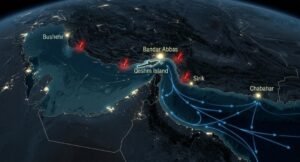
The renewed confrontation has also raised concerns among shipping companies and insurers, with commercial vessels facing greater risks while attempting to navigate the waterway.
The rise in crude prices reflects growing fears that fighting could interfere with oil exports from the Persian Gulf.
Reuters reported that oil shipments through the region had recovered to around 15 million to 16 million barrels per day, but remained below pre-war levels. The continuing security risks around Hormuz have made traders increasingly sensitive to any new military developments.
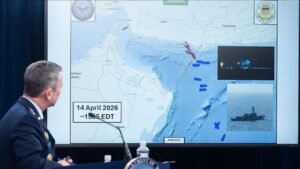
Those concerns intensified further on Tuesday after Reuters reported that two supertankers carrying Saudi oil were struck by unidentified projectiles in the Strait of Hormuz. The incidents added another layer of uncertainty for global energy markets.
By Tuesday, Brent had climbed further, trading above $91 a barrel, while WTI also moved higher.
While most stocks declined, energy companies benefited from the surge in crude prices.
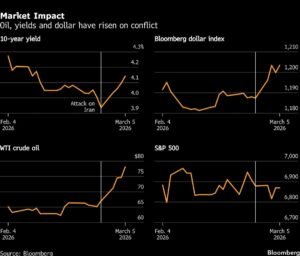
Shares of major oil producers such as Exxon Mobil and Chevron gained as investors anticipated higher revenues from more expensive crude. However, gains in energy stocks were not enough to offset losses across much of the wider market.
Technology and other growth stocks faced additional pressure as rising oil prices and higher bond yields increased concerns about inflation and borrowing costs.
US stock futures were also pointing lower on Tuesday, with investors continuing to monitor developments in the Middle East.
The latest oil shock is particularly worrying for policymakers because energy prices feed directly into transportation, electricity and consumer costs.
US gasoline prices have already been elevated, with the national average moving above $4 per gallon in August, according to AP. Further increases in crude prices could complicate the Federal Reserve’s efforts to bring inflation back toward its 2% target.
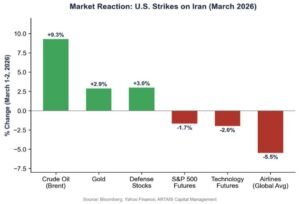
Investors are therefore watching not only the military situation but also upcoming US economic data, particularly employment figures, for clues about the Federal Reserve’s next interest-rate decision.
The renewed fighting comes as diplomatic efforts remain uncertain.
Iran has said it would reciprocate if Washington returns to commitments made under an interim agreement, while President Donald Trump has threatened further military action against Tehran.
For investors, the biggest concern is whether the latest escalation remains limited or develops into a prolonged confrontation that seriously restricts shipping through Hormuz.
A sustained disruption would likely mean higher oil prices, stronger inflationary pressure and increased volatility across global financial markets.
For now, the Strait of Hormuz remains the focal point of both the military confrontation and the economic fallout.
One thing is already clear: as tensions rise in the Gulf, markets around the world are paying the price.