
International
North Korea Commissions Second Naval Destroyer as US, South Korea and Japan Begin Military Drill

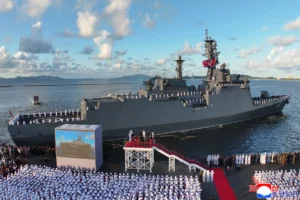
North Korea has commissioned its second 5,000-ton naval destroyer, with leader Kim Jong Un calling for a stronger nuclear deterrent as the United States, South Korea and Japan began a five-day trilateral military exercise in waters near South Korea.
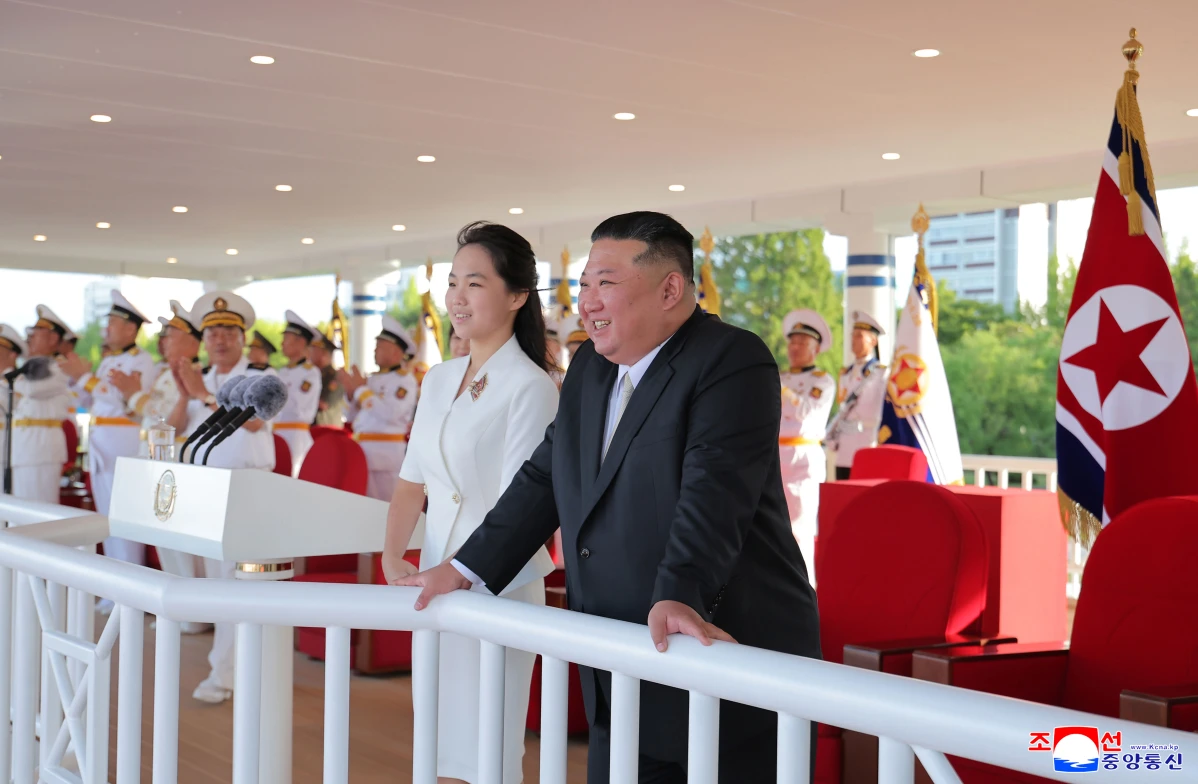
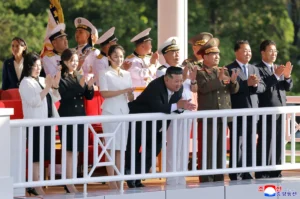
The new warship, named Kang Kon, was commissioned Sunday at a ceremony in the eastern port city of Wonsan attended by Kim and his teenage daughter, according to North Korean state media. The development marks another step in Pyongyang’s effort to expand its naval capabilities and integrate its warships into what Kim describes as the country’s nuclear response system.
The Kang Kon is the second destroyer of its class, following the Choe Hyon, which entered service in June. Both vessels weigh about 5,000 tons and are described by North Korean state media as capable of carrying a range of conventional and nuclear weapons. Analysts believe the ships represent some of North Korea’s most advanced surface warships and may have benefited from Russian assistance.
Kim used the commissioning ceremony to call for the strengthening of North Korea’s nuclear deterrent. He has also indicated that Pyongyang intends to continue expanding its naval forces, including pursuing more advanced warships and potentially a nuclear-powered submarine.
The commissioning came as the United States, South Korea and Japan launched their latest Freedom Edge exercise off South Korea’s southern coast near Jeju Island.
The five-day drill is designed to improve the three countries’ ability to respond jointly to North Korean nuclear and missile threats. South Korea’s military said the exercise involves major maritime and aerial assets and is defensive in nature.
Pyongyang, however, views such exercises as evidence of hostile intentions by Washington and its allies. North Korea’s Foreign Ministry has recently criticized the Freedom Edge exercise and accused the United States of maintaining a confrontational policy toward the country.
The latest developments come after President Donald Trump ordered a substantial reduction in the scale of the annual U.S.-South Korean Ulchi Freedom Shield exercise. The drill ended six days earlier than originally planned, in what Washington presented as part of a more conciliatory approach toward Pyongyang.
Despite that reduction, North Korea has continued developing its military capabilities. The commissioning of the Kang Kon suggests that Pyongyang’s naval modernization is continuing even as there are tentative signs that Washington and Pyongyang could eventually resume diplomatic engagement.
The juxtaposition of North Korea unveiling another advanced warship while the United States, South Korea and Japan conduct joint military exercises highlights the continuing security tensions on the Korean Peninsula.

At the same time, Seoul has expressed interest in creating conditions for renewed dialogue with Pyongyang, while South Korean intelligence has assessed that a future U.S.-North Korea summit remains possible. No confirmed direct contact between Washington and Pyongyang has been announced.
For now, however, both sides continue to strengthen their military capabilities, leaving diplomacy and deterrence operating side by side.