
General News
FG Targets ECOWAS Market to Boost Nigerian Manufacturing Exports


The Federal Government has urged Nigerian manufacturers and entrepreneurs to exploit the ECOWAS Trade Liberalisation Scheme (ETLS) to expand exports, increase production and gain access to markets across West Africa.
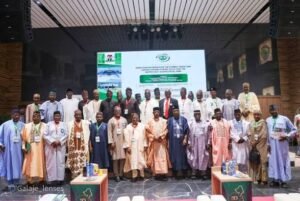
The Minister of State for Foreign Affairs, Ambassador Sola Enikanolaiye, made the call at a sensitisation workshop on the ETLS held in Bauchi for businesses and stakeholders in the North-East.

The workshop, themed “Increasing Intra-Regional Trade through the ECOWAS Trade Liberalisation Scheme (ETLS),” was organised to deepen awareness of the scheme and encourage Nigerian businesses to take advantage of opportunities offered by regional trade integration.
Enikanolaiye described the ETLS as a major instrument for strengthening economic cooperation among ECOWAS member states, urging manufacturers to see the regional market as an opportunity to scale their businesses rather than remain focused solely on domestic demand.
According to the minister, the scheme provides qualifying Nigerian products with access to markets across the ECOWAS region while eliminating customs duties, thereby lowering barriers to intra-regional trade.
He said the framework could help businesses increase their customer base and revenues, while also supporting job creation, wealth generation and broader economic growth.
«“The scheme is designed to enhance economic cooperation and trade integration among ECOWAS member states and accelerate regional economic growth,” Enikanolaiye said.»
He particularly encouraged manufacturers and entrepreneurs in the North-East to increase production and take advantage of the regional market, stressing that greater participation in intra-regional trade could help unlock the economic potential of the region.
The minister also called for increased processing of agricultural produce and raw materials in Bauchi and other parts of the North-East before they are exported.
He said greater value addition would strengthen local supply chains, improve the competitiveness of Nigerian products in foreign markets and support the Federal Government’s economic diversification and industrialisation drive.
Enikanolaiye said the move was consistent with the administration’s broader ambition of building a $1 trillion Nigerian economy, adding that the Ministry of Foreign Affairs was committed to ensuring that foreign policy translated into tangible economic opportunities for Nigerians.
“The ministry prioritises the wellbeing of Nigerians by involving people at the grassroots in its programmes and foreign policy formulation,” he said.
The renewed push for greater use of the ETLS comes amid rising intra-African trade, with data from the African Export-Import Bank showing that trade among African countries increased by 5.47 per cent to $213.8 billion in 2025, from $202.7 billion in 2024.
The development highlights the growing potential of African markets for Nigerian manufacturers as businesses seek to reduce dependence on traditional overseas markets and take advantage of closer regional supply chains.
For Nigeria, deeper utilisation of the ECOWAS trade framework could provide manufacturers with a larger market for locally processed agricultural products, manufactured goods and other qualifying products, while strengthening the country’s position as a major trading hub in West Africa.
However, increased participation will depend on manufacturers meeting ETLS requirements, improving product quality and standards, and developing the capacity to produce consistently for regional markets.