
Politics
HURIWA Warns Against Turning Traditional Palaces, Religious, Academic Institutions Into Campaign Platforms


The Human Rights Writers Association of Nigeria (HURIWA) has called on traditional rulers, religious leaders and academic institutions to resist what it described as the growing use of influential public institutions for partisan political activities ahead of the 2027 general elections.


In a statement signed by its National Coordinator, Comrade Emmanuel Nnadozie Onwubiko, HURIWA expressed concern over what it called an emerging pattern of political engagement involving traditional palaces, religious platforms and academic communities.
The rights group said the visits by the All Progressives Congress (APC) Presidential Campaign Council to influential traditional rulers should attract public scrutiny when such engagements result in political endorsements.

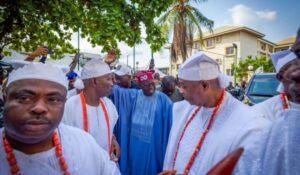
The APC campaign council, led by its Director-General, Abdulaziz Yari, recently visited the Oba of Lagos, Rilwan Akiolu, at his palace in Lagos. During the visit, Akiolu expressed support for President Bola Ahmed Tinubu’s bid for a second term, declaring that there would be “no vacancy in Aso Rock” for the next four or five years.
The monarch, however, also urged politicians to ensure that the 2027 elections are peaceful and cautioned against actions capable of undermining peace and stability.
HURIWA said such endorsements raise questions about the distinction between the personal political preferences of influential individuals and the use of institutions that enjoy broad public trust.
The organisation stressed that traditional rulers, religious leaders, academics, students and other citizens have the constitutional right to hold political opinions and support candidates of their choice.
However, it argued that the institutional platforms associated with traditional palaces, religious organisations and academic communities should not be transformed into campaign structures for any political party.
According to HURIWA, repeated partisan activity within such institutions could affect public perceptions of their neutrality and credibility.
The association therefore urged traditional rulers, religious leaders, university authorities, student organisations and other influential institutions to maintain institutional independence during the political season.
HURIWA further argued that political endorsements by influential individuals or institutions cannot determine how Nigerians will vote, insisting that the choice of political leaders ultimately belongs to eligible voters through the electoral process.
The group also called on the Independent National Electoral Commission (INEC) to protect the electoral process from partisan pressure and urged security and law-enforcement agencies to prevent intimidation, threats, inducement or coercion of voters because of their political choices.
It called for equal opportunities for political parties to communicate their programmes and engage voters, regardless of their political affiliation.
HURIWA said the credibility of the 2027 elections would depend not only on events on election day but also on whether Nigerians perceive the period leading to the election as open, competitive and free from undue institutional influence.
The association urged traditional institutions in particular to preserve their standing above individual political administrations and parties.
“A palace belongs to the people and history; it must not become a campaign office for any political party,” HURIWA said.
The organisation similarly called on religious and academic institutions to protect their independence and avoid actions that could undermine public confidence in them.
HURIWA urged Nigerians to remain vigilant and exercise their constitutional right to freely determine their political choices during the 2027 elections.
The statement was signed by Comrade Emmanuel Nnadozie Onwubiko, National Coordinator of HURIWA.