
Opinion
Angola: The Price of Non-FIFPRO Membership — How A Smaller Football Country Built One Player Voice And Moved Closer to The Global Table

By Paul Lucky Okoku


Sometimes the most useful lessons in football do not come from the biggest countries.
They come from countries willing to organise.
Angola offers one of those lessons.
Its professional players have faced unpaid salaries, contractual disputes, poor working conditions and even allegations involving forged documentation.
Yet rather than allowing those problems to remain individual battles, former footballers helped create a national organisation capable of representing players collectively and connecting them to FIFPRO.
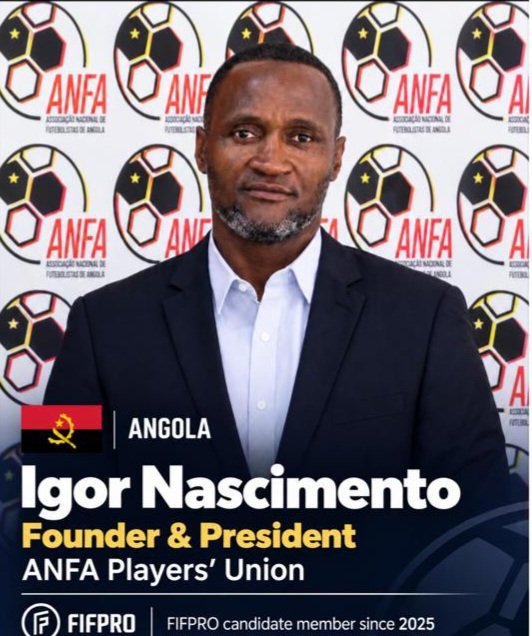
Today, the Associação Nacional dos Futebolistas de Angola, ANFA, has progressed from FIFPRO observer status to candidate membership.
That did not happen overnight.
And it did not happen because Angola had no problems.
It happened because somebody decided the players needed one organised voice.
IT STARTED WITH PLAYERS WHO WERE NOT BEING PAID
According to ANFA’s own history, the idea began in 2018 when former professional footballer Igor Nascimento became increasingly concerned about the treatment of players.
One particular situation involved players at a Girabola club who had gone months without salaries and match bonuses while working under poor conditions.
Nascimento began asking a simple question:
Who was protecting the footballers?
He consulted former players and football figures including Fabrice Maieco “Akwá,” Miller Gomes and Oliveira Gonçalves.
According to ANFA, they told him that Angola did not yet have an organisation of that nature representing professional players and encouraged him to proceed.
A group of former players then came together.
The original organisation was called the Sindicato dos Futebolistas de Angola, SIFA.
This point matters.
The available public record does not show several rival players’ unions fighting one another for recognition.
Instead, it shows one project evolving.
SIFA BECAME ANFA — NOT BECAUSE OF A PERSONALITY WAR
The organisers initially attempted to establish SIFA as a trade union.
They sought assistance from Angola’s national trade-union structure and also received support from the Portuguese professional players’ union, whose representatives travelled to Luanda in 2018 to advise them on legalisation and eventual integration into FIFPRO.
But the organisers encountered legal complications.
ANFA’s history says there were incompatibilities in Angolan legislation concerning the creation of trade unions specifically for sports professionals.
So the group changed course.
Rather than abandon player representation, it abandoned the SIFA structure and created the Associação Nacional dos Futebolistas de Angola — ANFA.
ANFA was formally established in June 2019 and legally registered later that year.
That is an important lesson in itself.
Sometimes progress requires people to adjust the structure without abandoning the purpose.
The objective remained the same:
Protect the player.
FROM OBSERVER TO CANDIDATE MEMBER — AND WHAT COMES NEXT
In November 2025, ANFA took another important step when FIFPRO elevated Angola from observer status to candidate membership at its General Assembly in Lisbon.
That distinction matters.
Angola is not yet a full FIFPRO member, but neither is it simply waiting indefinitely for recognition.
Under FIFPRO’s statutes, a players’ association normally remains a candidate member for its first two years after admission. During that period, it must continue demonstrating that it is genuinely player-driven, properly governed, financially accountable and compliant with FIFPRO’s membership-development standards.
FIFPRO assesses those requirements through its Membership Development and Accountability System, MDAS, which examines areas including governance, administration, finances, membership records and organisational capacity.
At the end of the two-year candidate period, the FIFPRO Board must decide what happens next.
If the association satisfies the requirements for full membership and has the necessary Affiliation Agreement, it can be elevated to full membership. If more development is required, candidate status can be extended for one additional year or another membership category may apply.
That means Angola’s present status should not be described as a delay.
It is better understood as a formal development period built into FIFPRO’s membership process.
And importantly, Angola’s players do not have to wait until full membership before beginning to benefit from the wider network.
Candidate status has already connected ANFA to FIFPRO programmes, international player advocacy and integrity initiatives, including access to the Red Button reporting system designed to help professional footballers anonymously report match-fixing approaches.
So the journey is not:
Wait for full membership, then begin helping players.
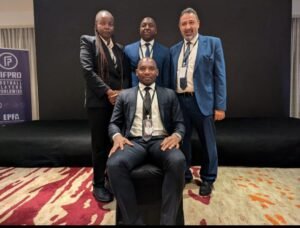
The process is already working.
ANFA is building the institutional standards required for full affiliation while its players are already gaining access to parts of the international player-representation system.
If the normal two-year timetable is followed, ANFA’s next major membership decision would be expected around late 2027, unless FIFPRO determines that an additional development period is necessary.
THE PLAYERS HAVE ALREADY RECEIVED PRACTICAL HELP
ANFA has reported providing legal assistance to footballers involved in contractual disputes with clubs and helping resolve cases both through settlement and football disciplinary structures.
Nascimento told FIFPRO in 2026 that ANFA had won cases before the Angolan federation’s disciplinary mechanisms and before FIFA’s dispute-resolution structures, although he emphasised that preventing disputes through better relationships was preferable to celebrating conflict.
That philosophy deserves attention.
Player representation does not have to mean permanent warfare.
A strong union can challenge a club when necessary and still pursue dialogue when dialogue can solve the problem.
The objective is not conflict.
The objective is protection.
WHEN PLAYERS HAD NO CLUB, ANFA PUT THEM BACK ON THE FIELD
The benefits are not limited to courtrooms.
In July and August 2026, ANFA organised a month-long programme for footballers without clubs.
Players trained, played matches, received visibility and attended educational sessions while looking for opportunities to return to professional football.
ANFA said the programme was designed to maintain fitness, improve abilities and provide players with a platform to relaunch their careers.
The programme also included education on sports employment contracts.
ANFA’s legal director explained contractual rights, duties, clauses and other legal issues affecting players’ careers.
That is representation before the crisis arrives.
Teach the player what the contract means today so that he is better protected tomorrow.
ANGOLA ALSO HAD TO FIGHT FOR A SEAT IN THE ROOM
Angola’s progress has not been without institutional difficulty.
FIFPRO reported in 2025 that players had faced problems involving unpaid salaries and forged documentation under the previous football-administration regime.
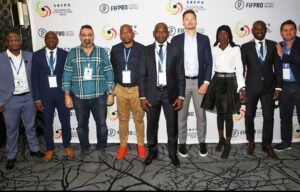
After Fernando Alves Simões became president of the Angolan Football Federation, FIFPRO representatives met with the federation, league officials and ANFA.
One immediate commitment from the new federation president was to readmit the players’ union to the federation’s General Assembly, Angola football’s highest decision-making body.
That word — readmit — matters.
Representation is not only about helping a player after something goes wrong.
It is also about being present where football decisions are made.
The player should not merely be discussed.
The player should have representation in the room.
FROM OBSERVER TO CANDIDATE MEMBER
In November 2025, ANFA took another step.
At the FIFPRO General Assembly in Lisbon, Angola was elevated from observer to candidate member.
FIFPRO explained that advancement toward full membership requires a union to demonstrate over several years that it is genuinely player-driven and satisfies strict organisational requirements.
That means FIFPRO membership is not simply handed out because an organisation calls itself a players’ union.
There is a process.
There are standards.
There is scrutiny.
And there must be evidence that the organisation actually works for footballers.
HOW ARE SMALLER COUNTRIES GETTING THIS RIGHT?
That is the wider question.
Angola is not one of world football’s largest countries.
Yet its players have moved from having no dedicated national representative organisation in 2018 to building ANFA, entering the federation structure, connecting with FIFPRO Africa and progressing toward full international membership.
There is no evidence in the history I reviewed of competing groups allowing titles, personalities or institutional rivalry to derail that original purpose.
That does not mean everybody always agrees.
No organisation works that way.
But player representation becomes stronger when the question is not:
Who is more important?
It becomes stronger when the question is:
What do the players need?
The footballer does not benefit from personality contests.
He benefits from legal assistance.
Contract education.
Representation.
Career support.
Collective bargaining.
International connections.
And somebody prepared to defend his rights when the system fails him.
THE PLAYER MUST REMAIN THE REASON
FIFPRO now represents professional footballers internationally in discussions involving employment conditions, transfers, welfare, health and safety, dispute structures and other workplace matters. Under its 2026 agreement with FIFA, FIFPRO has an expanded formal role in global football decision-making.
Angola is still progressing toward full membership.
Its work is not finished.
Its football system still has challenges.
But the direction is worth examining.
Former players came together.
They built an organisation.
When the original legal structure did not work, they changed it.
When players needed legal assistance, they provided it.
When unemployed footballers needed somewhere to train, they created a programme.
When players needed education, they taught contracts.
When their seat at the federation table disappeared, they worked to regain it.
And when FIFPRO required standards, they continued the process.
That is why the real question is never simply who leads a players’ organisation.
The more important question is:
What is the player receiving because that organisation exists?
Former players can build the bridge.
Administrators can maintain the bridge.
International organisations can strengthen the bridge.
But the bridge has only one real purpose:
The active player must be able to cross it.