
International
Tiny Spotted Cat Draws Crowds After Being Declared New Species in Bolivia

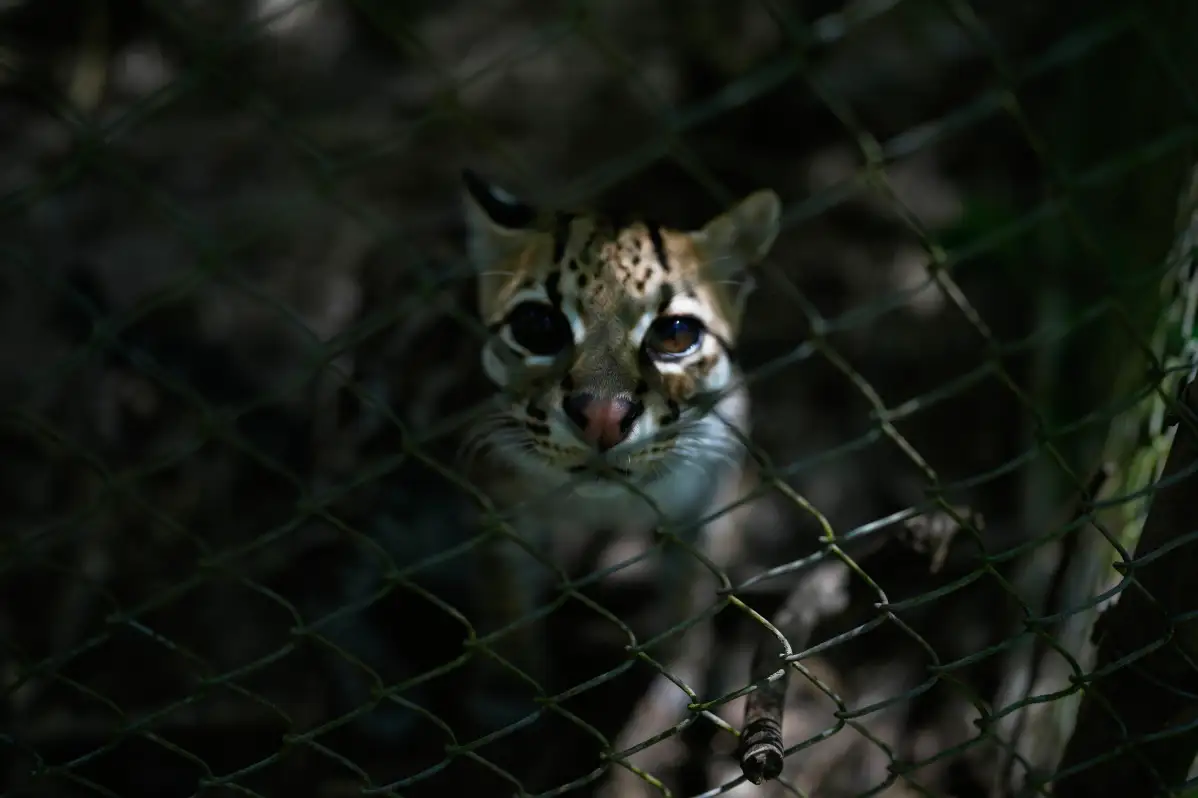
A tiny spotted wild cat in Bolivia has become an unlikely tourist attraction after scientists formally identified it as a previously unknown species; the first living wild cat species to be newly described in more than a century.
Named Leopardus tilcayo, or the tilcayo cat, the animal is native to the cloud forests of Bolivia’s Yungas region, an area on the eastern slopes of the Andes. Local communities have known the animal as “tilcayo” for years, but its distinct scientific identity was only confirmed after genetic research.
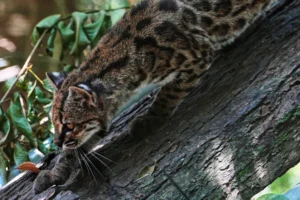
The discovery was published in Current Biology following an international research effort that examined genetic material from 38 cats belonging to the Leopardus group. The analysis showed that what scientists had previously regarded as one group of tiger cats actually contained several distinct evolutionary lineages.
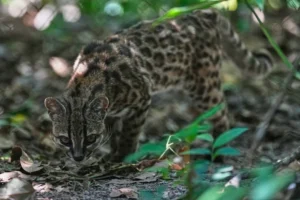
The tilcayo is notably small, measuring about 18 inches (46 centimetres) from its head to the base of its tail and weighing around 3 pounds (1.4 kilograms). Its light-brown coat carries distinctive, irregular dark rosettes. Researchers say it is smaller than an average domestic cat.
One individual, affectionately known as Tigrino, has been living at the Senda Verde Wildlife Sanctuary near Coroico since 2017. A local family had initially taken the animal home, apparently believing it could be kept as a domestic cat, before eventually surrendering it to the sanctuary.
The scientific discovery has now attracted visitors from Bolivia and beyond, eager to see the unusual feline. But sanctuary staff have limited public access because the animal becomes stressed by attention and is kept largely away from crowds. During a recent visit by the Associated Press, Tigrino briefly emerged from his shelter before retreating into vegetation.
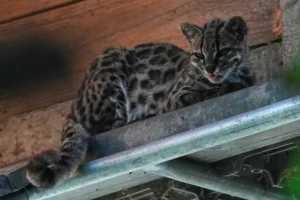
Researchers say there is still much to learn about the species, including its population size, distribution, reproduction and habitat requirements. Preliminary observations suggest the cat may be primarily active at night and feed on small rodents.
The discovery has also highlighted conservation concerns. The Yungas forests face pressure from activities including deforestation, agriculture, fires and mining. Scientists and conservationists say identifying the tilcayo as a separate species is important because its population and conservation needs can now be assessed independently.
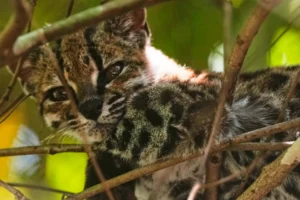
For sanctuary officials, the tiny animal has quickly become a symbol of the importance of protecting Bolivia’s wildlife. Marcelo Levy, a co-founder of Senda Verde, said the species’ sudden attention could help raise awareness about conserving wild cats and their forest habitat.