
Business
Malindi Court Declines to Halt Dangote Refinery Groundbreaking in Lamu

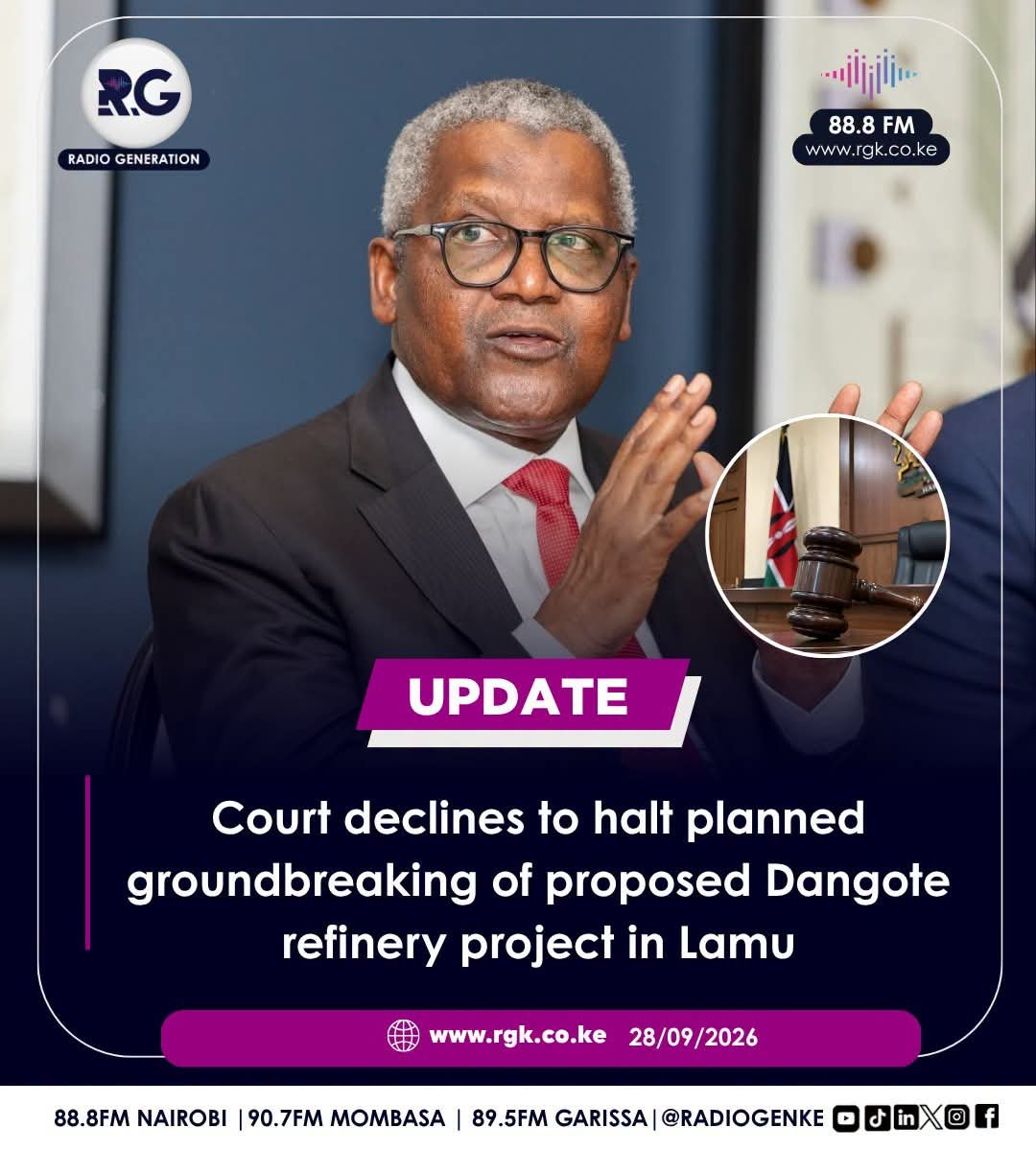
Kenya’s Malindi Environment and Land Court has declined to issue an order stopping the planned groundbreaking ceremony for Aliko Dangote’s proposed oil refinery in Lamu, but has directed parties to maintain the existing status quo on a disputed parcel of land until October 14, 2026.
The ruling comes just a day before the scheduled September 30 groundbreaking of the proposed KSh2 trillion ($15–17 billion) Dangote East Africa Refinery, which is expected to have a processing capacity of 700,000 barrels of crude oil per day.
The dispute was brought by 133 residents of Chandavai, who are challenging the use of land in the Hindi/Manda Magogoni area for the project. The residents say their families have occupied, cultivated and developed parts of the land for generations and claim ancestral, customary and other interests in the property.

The applicants maintain that they are not opposed to development, but want their land rights and interests addressed before the refinery project proceeds. Their court papers raise concerns about occupation, farming, homes and other developments on portions of the disputed land, as well as compensation and resettlement.
Justice Jane Onyango directed that the prevailing status quo on Land Reference No. 13061 be maintained until the matter returns to court on October 14. The respondents, including government agencies and Dangote-linked entities, were directed to file their responses within 14 days.
The order has generated differing descriptions of its immediate effect. While some reports have described it as a temporary halt to construction activities on the affected portions of the land, the court did not expressly cancel the September 30 groundbreaking ceremony. The Star reported that the court declined to grant the applicants’ request to stop the planned groundbreaking, while Reuters reported that Dangote Group said the ceremony would proceed although some site activities could be affected.

Dangote Group said the court had not halted the groundbreaking ceremony “at this stage”, but acknowledged that activities at the site could be affected by the requirement to maintain the status quo until the October hearing. Kenya’s Energy and Petroleum Cabinet Secretary Opiyo Wandayi also confirmed on Tuesday that the government planned to proceed with the September 30 launch.
The court case comes as preparations for the refinery have accelerated. On September 26, the Port of Lamu received the MV Da Yang carrying about 2,930 metric tonnes of heavy construction machinery intended for the project. The arrival was described by Kenyan officials as an important step ahead of the planned groundbreaking.
The proposed refinery is planned as a major industrial project within the Lamu Port-South Sudan-Ethiopia Transport (LAPSSET) corridor. With a proposed capacity of 700,000 barrels per day, the facility is expected to supply refined petroleum products to Kenya and other regional markets if completed as planned.
President William Ruto has strongly backed the project and met Dangote in New York during the 81st United Nations General Assembly earlier this month. Ruto also visited Dangote’s existing refinery in Lagos on September 25, as Kenya prepared for the Lamu groundbreaking.
The land dispute now moves toward the October 14 inter partes hearing, when the respondents will have an opportunity to formally respond to the residents’ claims. Until then, the status quo order leaves the parties operating under restrictions concerning the disputed parcel, even as the planned groundbreaking remains on the government and Dangote Group’s schedule.
The case therefore does not presently amount to a court cancellation of the refinery launch, but it introduces a legal dispute over land rights at the site that could affect activities connected to the project while the court considers the residents’ application.