
Disaster/Tragedy
Panama Hit by Powerful Earthquakes as Aftershocks Trigger Widespread Evacuations

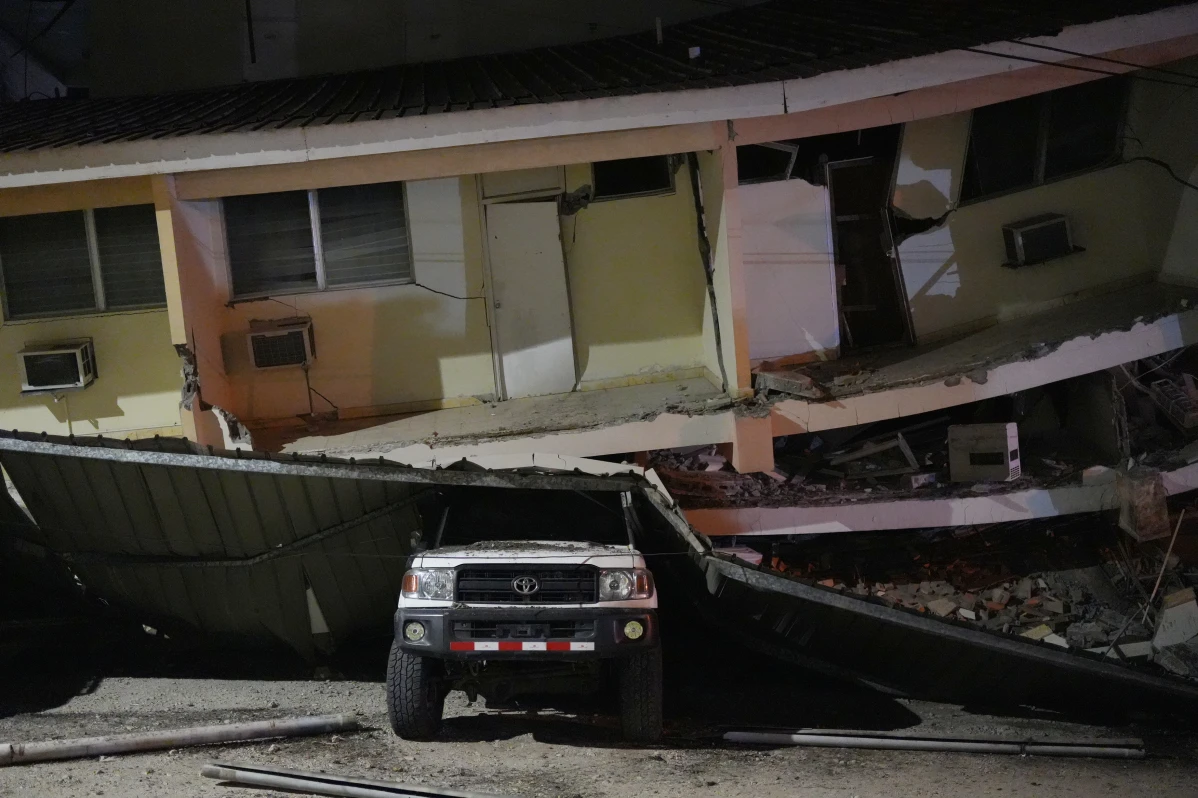
Panama was rocked by two powerful earthquakes on Friday, October 9, 2026, prompting evacuations, damaging buildings and roads, and leaving residents on edge as dozens of aftershocks continued to shake the Central American country.
Reports from the Associated Press (AP), Reuters and Agence France-Presse (AFP) said the strongest earthquake measured magnitude 7.7, with its epicentre near Pitaloza Arriba in Herrera province, in southern Panama. The tremor was followed by another powerful earthquake measuring magnitude 6.6, alongside numerous aftershocks.

The first earthquake was initially estimated at magnitude 8.0 by the United States Geological Survey (USGS) before being revised to 7.7. The relatively shallow tremor was felt across the country, including the capital, Panama City, where office workers and residents rushed out of buildings and gathered in open spaces for safety.

In Penonomé, a city in Coclé province, a church and other structures suffered significant damage. The historic Church of San Atanasio in Los Santos province was also reported to have partially or completely collapsed, according to reports from the affected areas.

Authorities reported injuries, including a person struck by falling debris. Schools nationwide were ordered to suspend classes as officials assessed the damage and prioritised public safety. The full extent of the destruction remained under assessment, with concerns that isolated communities could be difficult to reach because of damaged roads.

Panamanian President José Raúl Mulino visited affected areas and called for calm, while emergency personnel worked to establish the scale of the damage and coordinate the response.

Despite the strength of the tremors, officials had reported no confirmed deaths as of Friday evening in the initial AP and Reuters reports. However, authorities cautioned that the situation could change as inspections and rescue assessments continued.
The earthquake also disrupted transport operations. Tocumen International Airport in Panama City temporarily suspended flights following the initial tremor, with operations later resuming after precautionary checks.

The Panama Canal Authority said the canal continued operating normally, while technical teams inspected facilities to determine whether the earthquakes had affected infrastructure along the vital international shipping route.
A tsunami warning was issued after the earthquake but was subsequently lifted. Authorities continued monitoring seismic activity and assessing possible damage as aftershocks persisted.

The disaster has renewed attention on earthquake preparedness in a region vulnerable to seismic activity. Panama lies within a geologically active area where several tectonic plates interact, although powerful earthquakes of this scale are relatively uncommon in the country.
The USGS estimated that tens of thousands of people experienced severe shaking. Reports also indicated power outages in several provinces, adding to the challenges facing residents and emergency responders.

Neighbouring countries expressed solidarity and offered assistance, while the United States said it was monitoring the situation and stood ready to help if needed.
As inspections continue, authorities face the task of determining the full extent of the damage, restoring affected services and ensuring that buildings and roads remain safe amid continuing aftershocks.