
General News
Corruption Turning Nigerian Courts Into ‘Market Stalls’, Retired Justice Augie Warns

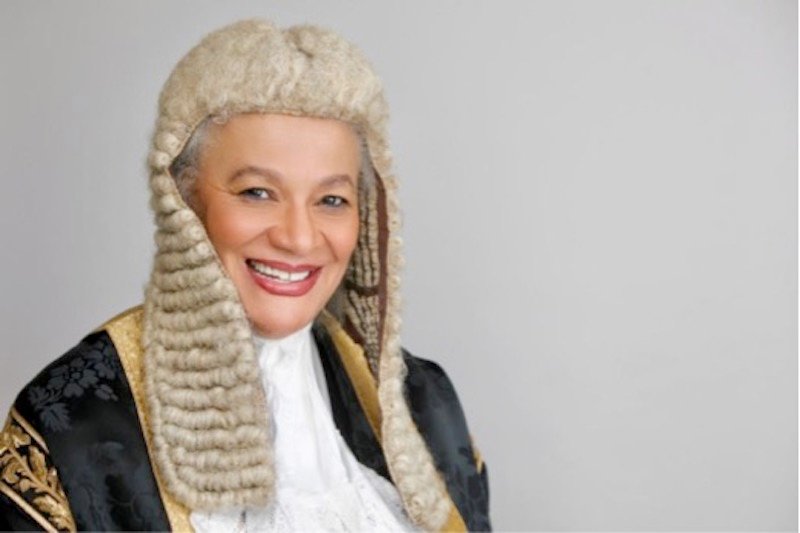
Retired Supreme Court Justice Amina Adamu Augie has warned that corruption, political interference and inadequate funding are undermining Nigeria’s judiciary, turning courts into what she described as “market stalls” where justice can be compromised.
Augie gave the warning on Saturday, October 17, 2026, in Abuja while delivering a public lecture at the 40th anniversary of the Nigerian Law School Class of 1986, popularly known as the Centennial Class. Her lecture was titled “The Rule of Law and Justice Delivery; The Last 40 Years, Today and Tomorrow: Whither Nigeria?”
She said corruption within the judiciary, among lawyers and in court registries was eroding public confidence in the justice system, stressing that misconduct by a few senior practitioners had damaged the reputation of the wider legal profession.
“Where it exists on the Bench, at the Bar, or in the Registry, it poisons everything by turning the one place that a citizen should find impartiality into one more market stall,” she said.
The retired jurist called for stronger professional discipline, insisting that lawyers and judges must be held accountable regardless of their positions or influence. She argued that restoring public trust required ethical conduct and a willingness within the legal profession to sanction offenders without favouritism.
Augie, however, cautioned against portraying every member of the judiciary as corrupt, noting that many judges and lawyers remained honest and hardworking despite difficult working conditions.
She also identified inadequate funding as a threat to judicial independence, arguing that courts that depend on the executive for basic operational needs may struggle to remain fully independent.

“A judiciary that must beg the executive for a courtroom roof, vehicles, or even the Judges’ entitlements is not fully free,” she said, adding that financial autonomy was a guarantee for litigants rather than a privilege for judicial officers.
Beyond corruption and funding, Augie criticised the slow pace and high cost of litigation in Nigeria, warning that prolonged proceedings often deny ordinary citizens timely access to justice.
Drawing from her experience at the Supreme Court, she said the apex court was overwhelmed by appeals, including cases that could have been resolved at lower levels. She recalled an appeal involving the burning of 12 goats that eventually reached the Supreme Court, using the example to illustrate the pressure on the country’s highest judicial institution.
She called for constitutional amendments to restrict the categories of appeals that can reach the Supreme Court, allowing its justices to concentrate on cases involving significant constitutional and national questions.
The former justice also condemned the failure of government authorities to comply with court orders, citing the prolonged detentions of former National Security Adviser Sambo Dasuki and Islamic Movement leader Ibrahim El-Zakzaky despite judicial decisions ordering their release.
She warned that disregard for court judgments weakens the authority of the judiciary and sends the message that the law can be ignored by those in power.
Augie acknowledged the progress Nigeria had made since returning to civilian rule in 1999 but said persistent corruption, delayed justice and unequal access to legal remedies continued to threaten democratic development.
She referenced Nigeria’s 120th position among 143 countries in the 2025 World Justice Project Rule of Law Index, describing the ranking as a troubling reflection of the country’s institutional challenges.
The retired justice urged members of the Nigerian Law School Class of 1986, many of whom now occupy senior positions across the legal profession, to defend constitutional governance, uphold professional ethics and help restore public confidence in the justice system.
She maintained that Nigeria’s future depended partly on whether its institutions could guarantee fair treatment, enforce court decisions and ensure that justice was accessible to ordinary citizens regardless of wealth or status.