
General News
Diri Disagrees With Umahi Over Coastal Highway, Calls Duke


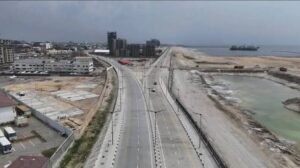
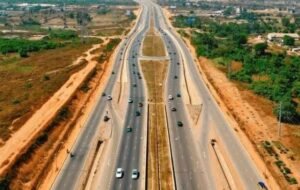
Bayelsa State Governor, Senator Douye Diri, has disclosed his disagreement with Minister of Works David Umahi over the proposed realignment of the Lagos-Calabar Coastal Highway with the East-West Road, insisting that both projects must proceed independently.
Diri said the governors of the South-South region were united in their support for the coastal highway and opposed any move to merge it with the East-West Road.
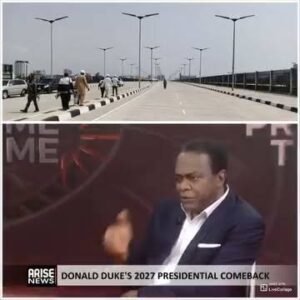
The governor also launched a scathing attack on former Cross River State Governor Donald Duke, describing him as a “jester” and a “national champion without a base” over his criticism of the coastal highway project.
According to a statement issued on Wednesday by his Chief Press Secretary, Daniel Alabrah, Diri spoke during the 200th session of the Bayelsa State Executive Council at Government House, Yenagoa.
The governor said he had personally contacted Umahi to express his opposition to the proposed realignment, stressing that the coastal highway and the East-West Road served different purposes.
“I privately called the Minister of Works and said, ‘Honourable Minister, that is a no, no, no for us. These are two different projects,’” Diri said.
He acknowledged the need to reconstruct the East-West Road but insisted that such work should not replace or delay the coastal highway.
“While you reconstruct the East-West Road, the coastal road must continue because you have already won the hearts of all the coastal states,” he said.
Diri added that he had asked Umahi to communicate the South-South governors’ position to President Bola Tinubu, noting that he was speaking both as Bayelsa governor and chairman of the South-South Governors’ Forum.
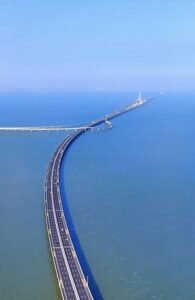
The governor’s remarks followed comments by Duke, who reportedly questioned the feasibility of the coastal highway, citing Bayelsa’s swampy terrain and the possible need to construct between 100 and 200 bridges for the road to pass through the state.
Diri said he was particularly displeased that a former governor from the Niger Delta would use Bayelsa’s terrain to argue against the project.
He maintained that his administration had demonstrated that roads and bridges could be constructed in the state despite its difficult geography.
“With our limited resources as a state government, we are building bridges and roads in the same swamp that he says cannot be developed. We are inviting him to come to Bayelsa since he has used our state as an example,” he said.
The governor also challenged Duke over his record in office, accusing the former governor of failing to act when the Bakassi Peninsula was ceded to Cameroon and criticising the financial burden he said the Tinapa business and leisure resort had placed on Cross River State.
Diri questioned Duke’s political standing as the presidential candidate of the Peoples Redemption Party (PRP), claiming that the party lacked elected representation at the councillor level in Cross River State.
“You can continue to be your national and international champion without a nucleus, without a base,” he said.
Diri further criticised Duke for referring to him as “that fellow” during a television programme, insisting that the description was disrespectful to the office of an elected governor.
“I am not that fellow. I am the sitting governor of Bayelsa State,” he said.
He explained that his response was not motivated by a desire to engage in personal attacks but by the need to defend Bayelsa State and its people against what he considered an unfair portrayal of the state’s development prospects.
The governor also rejected the longstanding narrative that Bayelsa’s terrain made development difficult, arguing that the state’s oil and gas resources had contributed significantly to Nigeria’s economy.
“Enough of this narrative that the Bayelsa environment cannot be developed. Oil and gas resources can be taken away from our land, but the land itself cannot be developed? That is a fat lie from the pit of hell, and we reject it,” he said.
Diri reaffirmed his support for the coastal highway, describing it as an important infrastructure project for the Niger Delta, particularly Bayelsa and the Ijaw nation.
He said the construction of the road had featured among the longstanding demands of the Ijaw National Congress, dating back to the military era.
The governor recalled presenting a document containing the organisation’s demands during the period when he and other political figures moved from the Peoples Democratic Party to the All Progressives Congress.
Diri commended Tinubu for backing the project, saying coastal communities should benefit from infrastructure development on the same scale as other parts of the country.
“The very thought of it alone — that these coastal people should not continue to wallow in poverty and be dehumanised, and that they should not be seen as second-class citizens of this country is commendable,” he said.
He maintained that the coastal highway would improve connectivity and address longstanding infrastructure concerns in the region, insisting that its construction should continue alongside the reconstruction of the East-West Road.