
Business
Lagarde Announces Early Exit as Europe Faces Economic Uncertainty

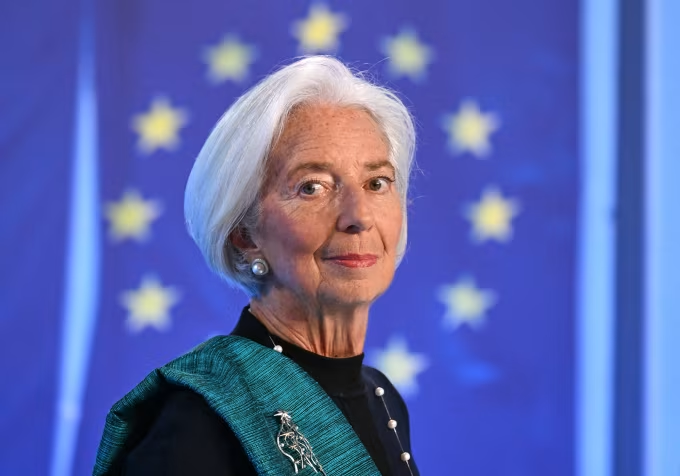
European Central Bank (ECB) President Christine Lagarde has announced that she will step down on February 7, 2027, ending months of speculation about her future and triggering a search for a successor to lead the eurozone’s central bank.
The ECB confirmed the decision on Thursday, October 29, saying Lagarde had informed its Governing Council and European Council President António Costa of her intention to leave. Her eight-year term was originally scheduled to end on October 31, 2027.
Lagarde, who took office in November 2019, said in a video message that serving the institution had been a source of pride and privilege. She added that she was leaving with a sense of work accomplished and confidence in the bank’s future.
The early departure comes at a sensitive time for Europe, as policymakers contend with inflationary pressures, rising energy costs, concerns over economic growth and higher government borrowing costs, particularly in France.
European Council President António Costa said the process of appointing Lagarde’s successor would begin immediately and proceed without delay.

Among the names reported as potential contenders are former Dutch central bank governor Klaas Knot and Pablo Hernández de Cos, the former governor of Spain’s central bank who now heads the Bank for International Settlements. Other candidates could emerge as European governments negotiate over senior appointments.
Lagarde’s departure before France’s 2027 presidential election is also significant. European leaders will have an opportunity to select her successor while French President Emmanuel Macron remains in office. The timing has fuelled discussion about the political considerations surrounding the appointment, although the ECB has not described the French election as the reason for her departure.
Speculation about Lagarde leaving early had intensified in recent months, with the World Economic Forum in Davos emerging as a possible destination. The organisation, which convenes political and business leaders annually, has been mentioned in media reports as a potential next step for her.
Reuters reported that a source familiar with the matter said Lagarde wanted greater freedom to engage in political issues beyond monetary policy. As ECB president, she is expected to maintain political neutrality to protect the institution’s independence. Lagarde herself said she wanted greater freedom of expression and the ability to engage in matters outside monetary policy, without elaborating further.
Lagarde’s departure comes as the ECB faces difficult decisions over inflation and interest rates. Higher oil prices linked to the Iran war have added to inflation concerns, while rising bond yields have increased borrowing costs for governments, households and businesses.
The ECB’s interest-rate decisions affect the cost of borrowing across the 21 countries that use the euro. Its next leadership will therefore inherit responsibility for balancing price stability with the risks that higher rates pose to economic activity.
The bank has sought to establish continuity beyond individual leaders, and analysts quoted in recent reporting said Lagarde’s departure was not expected to fundamentally alter the outlook for monetary policy.
Lagarde’s successor will be appointed by the European Council under the European Union’s established nomination process. Until she leaves in February, she will continue to lead the ECB through a period of economic uncertainty.