
Business
West African Crude Hits 15-Year Discount as Freight Costs, Weak Asian Demand Bite


West African crude has fallen to its steepest discount in more than a decade, as soaring shipping costs and weaker demand from Asian refiners weigh heavily on the region’s oil exports.
The development has left Nigerian and Angolan crude facing increased pressure in international markets, with higher freight costs making West African barrels less competitive against supplies from the Persian Gulf.
Bloomberg, citing trading data from S&P Global Energy’s Platts pricing window and estimates from traders active in the West African crude market, reported that the weakness has widened discounts on several regional grades.
A cargo of Angola’s Hungo crude scheduled for loading next month traded at a discount of $19.60 per barrel to Dated Brent, representing the widest discount recorded for a West African crude cargo in Platts data compiled by Bloomberg since 2011.

Another November-loading cargo of the Republic of Congo’s Djeno crude was offered at a $23.10 per barrel discount to Dated Brent, although it failed to attract a buyer.
The pressure is being driven largely by weaker Asian demand and sharply higher freight rates, according to Yash Bajaj, a crude analyst at Energy Aspects.
Bajaj said freight costs have risen to about four times their pre-war levels, making it increasingly expensive to transport West African crude to major Asian markets.
“Softer Asian demand is the key reason why Angolan differentials are discounting,” Bajaj said, adding that increased Gulf loadings since the start of the Iran war had reduced Asian demand for West African and other Atlantic Basin crude.
The market is also carrying unsold supplies, with 13 Nigerian and Angolan cargoes scheduled for October loading still available based on estimates compiled from traders earlier in the week.
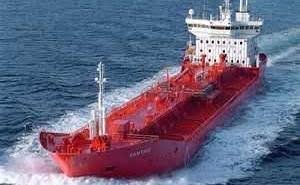
The pressure could persist if Atlantic Basin freight rates remain elevated and Persian Gulf exports continue to provide Asian refiners with closer alternatives.
For Nigeria, the development comes at a time when the country remains heavily dependent on crude oil earnings for foreign exchange and government revenue, making changes in international crude differentials particularly important to export earnings.
The widening discounts are also highlighting the need for African producers to develop pricing mechanisms that better capture the realities of the region’s oil market.
In July, the Nigerian Midstream and Downstream Petroleum Regulatory Authority said it was exploring the establishment of an African reference price benchmark aimed at improving transparency and reflecting regional market conditions more accurately.
NMDPRA Chief Executive, Rabiu Umar, said such a benchmark would need to consider regional supply and demand conditions as well as transportation costs to different markets.
The importance of freight in determining the competitiveness of West African crude has become particularly evident as shipping costs have surged.
The NMDPRA has also called for a more integrated West African fuel market as regional petroleum supply chains evolve, particularly with the expansion of Nigeria’s domestic refining capacity.
The shift is increasingly being driven by the growth of large-scale refineries across Africa, with Nigeria’s Dangote Refinery playing a central role.
The expansion of local refining is gradually changing Nigeria’s traditional position as a major exporter of crude while importing significant volumes of refined petroleum products.

According to the NMDPRA, Nigeria’s average daily petrol imports fell by 26 per cent to 14.6 million litres in August 2026, from 19.7 million litres in July, as locally refined products increasingly meet domestic demand.
Dangote Refinery is also pursuing expansion beyond Nigeria, including a refinery project in Kenya aimed at serving the East African market.
The latest crude market weakness therefore comes at a critical point for West Africa, as producers confront higher export costs and softer demand while governments push for stronger regional markets, improved pricing transparency and greater local refining capacity.