
International
Trinidad and Tobago Overturns Gay Sex Ban in Landmark LGBTQ+ Rights Ruling

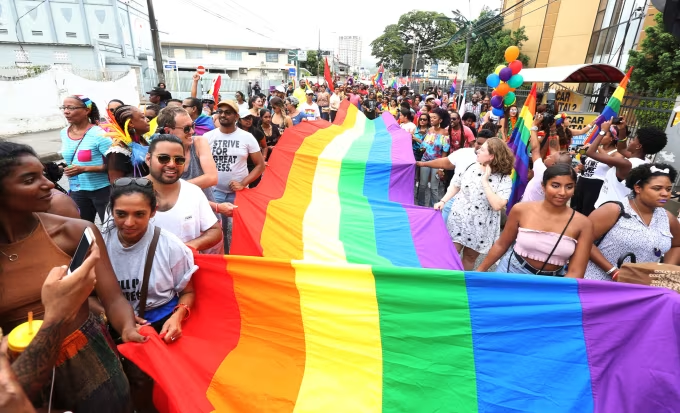
Trinidad and Tobago has won a landmark legal battle for LGBTQ+ rights after the United Kingdom’s highest court of appeal for the Caribbean nation overturned laws criminalising consensual same-sex relations between adults.
The Judicial Committee of the Privy Council in London ruled on Tuesday, November 10, that provisions of Trinidad and Tobago’s Sexual Offences Act of 1986, which prohibited certain sexual activities between men, violated fundamental constitutional rights.
The decision effectively decriminalises private, consensual same-sex intimacy between adults, ending a prolonged legal battle that has lasted nearly a decade.
The case was brought by Jason Jones, a Trinidadian LGBTQ+ rights activist who challenged the country’s restrictions, arguing that they violated his constitutional rights to privacy and personal freedom.
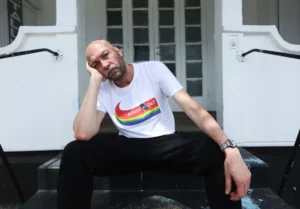
Jones initially secured a victory at Trinidad and Tobago’s High Court in 2018, when a judge ruled that the provisions criminalising same-sex relations were unconstitutional.
However, the country’s Court of Appeal reversed key aspects of that decision in 2025, prompting Jones to take the case to the Privy Council, which serves as the final court of appeal for Trinidad and Tobago.
In its unanimous judgment, the five-member judicial panel ruled that Sections 13 and 16 of the Sexual Offences Act 1986 could not constitutionally criminalise private, consensual sexual relations between adults of the same sex.
The provisions had criminalised acts described in the legislation as “buggery” and “serious indecency”, carrying potential prison sentences of up to five years and two years respectively.
Delivering the judgment, Lord Philip Sales said the law could not be regarded as reasonably justifiable in a society that respects individual rights and freedoms.
The court also recognised sexual orientation and private consensual intimacy as important aspects of personal identity protected by constitutional rights to private and family life.
Beyond its implications for LGBTQ+ rights, the ruling has renewed debate about the influence of British colonialism on the legal and cultural identity of Caribbean nations.
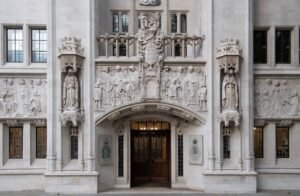
The restrictions were rooted in laws inherited from British colonial rule, including legislation dating back to the 1920s. Britain itself decriminalised consensual homosexual relations between men in England and Wales in 1967, yet similar restrictions remained in several former colonies.
After gaining independence, Trinidad and Tobago retained constitutional protections for certain pre-independence laws, making it difficult to challenge them under modern fundamental rights provisions.
However, the Privy Council ruled that the particular provisions introduced under the 1986 legislation were not protected from constitutional scrutiny in the manner argued by the government.
The outcome has raised questions about why independent Caribbean countries continue to retain laws abandoned by their former colonial ruler.
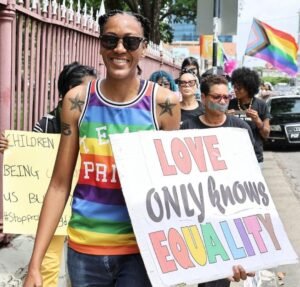
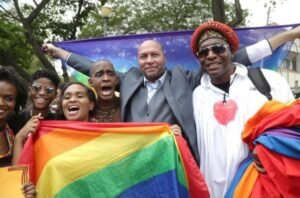
Jason Jones described the outcome as a major victory for equality, while human rights organisations welcomed the decision as an important step towards ending discrimination against LGBTQ+ people.
Human Rights Watch said the judgment was the first time the Privy Council had ruled on the constitutionality of laws criminalising consensual same-sex conduct.
The decision is expected to attract attention across the Caribbean, where several countries still maintain laws criminalising consensual same-sex relations.
Jamaica, Grenada and Saint Vincent and the Grenadines are among the countries where similar restrictions remain in force.
Although the judgment is legally binding on Trinidad and Tobago alone, activists and legal experts believe its reasoning could strengthen future constitutional challenges in other jurisdictions that use the Privy Council as their final court of appeal.
The ruling also adds to a series of legal victories for LGBTQ+ rights in the Caribbean, following successful challenges to similar restrictions in countries including Barbados, Dominica and Saint Lucia.
Despite the breakthrough, campaigners have cautioned that removing criminal penalties does not automatically eliminate discrimination, social stigma or unequal treatment in employment, healthcare, education and other areas of public life.
For Trinidad and Tobago, the decision represents both a significant constitutional development and a wider conversation about national identity, inherited colonial laws and the meaning of equality in an independent society.