
International
US Supreme Court to Review Trump’s Order Suspending Asylum Access at Southern Border

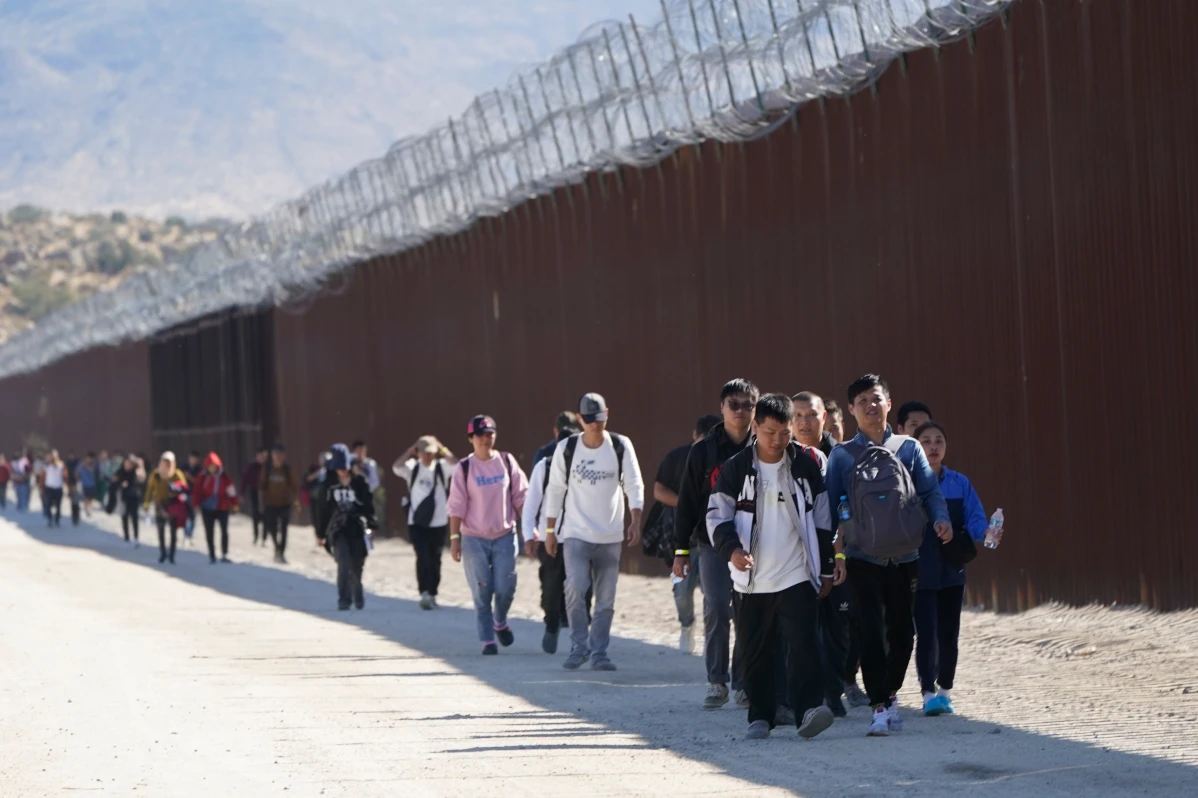
The United States Supreme Court has agreed to consider the legality of President Donald Trump’s executive order suspending access to asylum at the country’s southern border, setting up a major legal battle over presidential authority and immigration protections.
The court’s decision, announced on Friday, November 13, means the justices will review the Trump administration’s appeal against lower court rulings that found the policy unlawful.
Trump introduced the controversial restrictions on January 20, 2025, shortly after returning to the White House for his second term, declaring that an alleged “invasion” at the southern border justified extraordinary measures to restrict migrant entry.
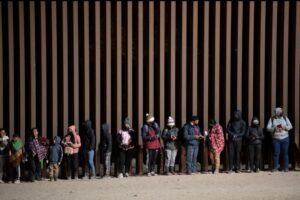
Under the policy, migrants attempting to cross the US-Mexico border illegally are barred from applying for asylum and accessing certain other legal protections. The restrictions also cover some people arriving at official border crossings who do not meet specified requirements.
The administration has argued that the president possesses broad authority to control immigration and that the restrictions are necessary to address pressure on border enforcement agencies.
Government lawyers have also maintained that years of lengthy asylum processing procedures encouraged irregular migration, with many migrants being released into the United States while awaiting decisions on their applications.

The administration credits the policy with contributing to a significant reduction in illegal border crossings, arguing that it has allowed authorities to redirect resources towards other security concerns.
However, immigrant rights organisations have challenged the restrictions, arguing that the president cannot unilaterally eliminate protections established by Congress under federal immigration law.
The American Civil Liberties Union (ACLU), alongside other immigration advocacy organisations, brought the legal challenge on behalf of migrants and service providers affected by the policy.
A federal judge in Washington ruled against the administration in July 2025, finding that the president had exceeded his authority by effectively shutting down access to the asylum system.
The US Court of Appeals for the District of Columbia Circuit subsequently upheld the ruling in April 2026, agreeing that the executive branch could not categorically prevent migrants from applying for asylum.

The Trump administration appealed to the Supreme Court, asking the justices to overturn those decisions.
Immigration advocates argue that US law provides people who arrive in the country or present themselves at its borders with an opportunity to apply for asylum, particularly when they fear persecution because of their race, religion, nationality, political opinions or membership of a particular social group.
They also warn that denying access to the process could expose vulnerable migrants, including families and children, to deportation and further danger.
The ACLU said the Supreme Court’s decision to hear the case presents an important opportunity to determine whether a president can override protections established by Congress.
The justices are expected to hear arguments in spring 2027, with a ruling anticipated before the end of June.
The case, known as Mullin v. Refugee and Immigrant Center for Education and Legal Services (RAICES), is among several major immigration disputes facing the Supreme Court this term.
The justices are also expected to examine other Trump administration policies involving the deportation of migrants to third countries and the detention of immigrants without access to bond hearings.
The Supreme Court’s eventual decision could determine the extent of presidential authority over asylum procedures and shape the future of immigration protections at the US southern border.
For now, the disputed asylum restrictions remain in effect while the legal battle continues.