
World News
China, Russia and US Agree on UN Reforms, Higher Fuel Supplies and Nuclear Dialogue

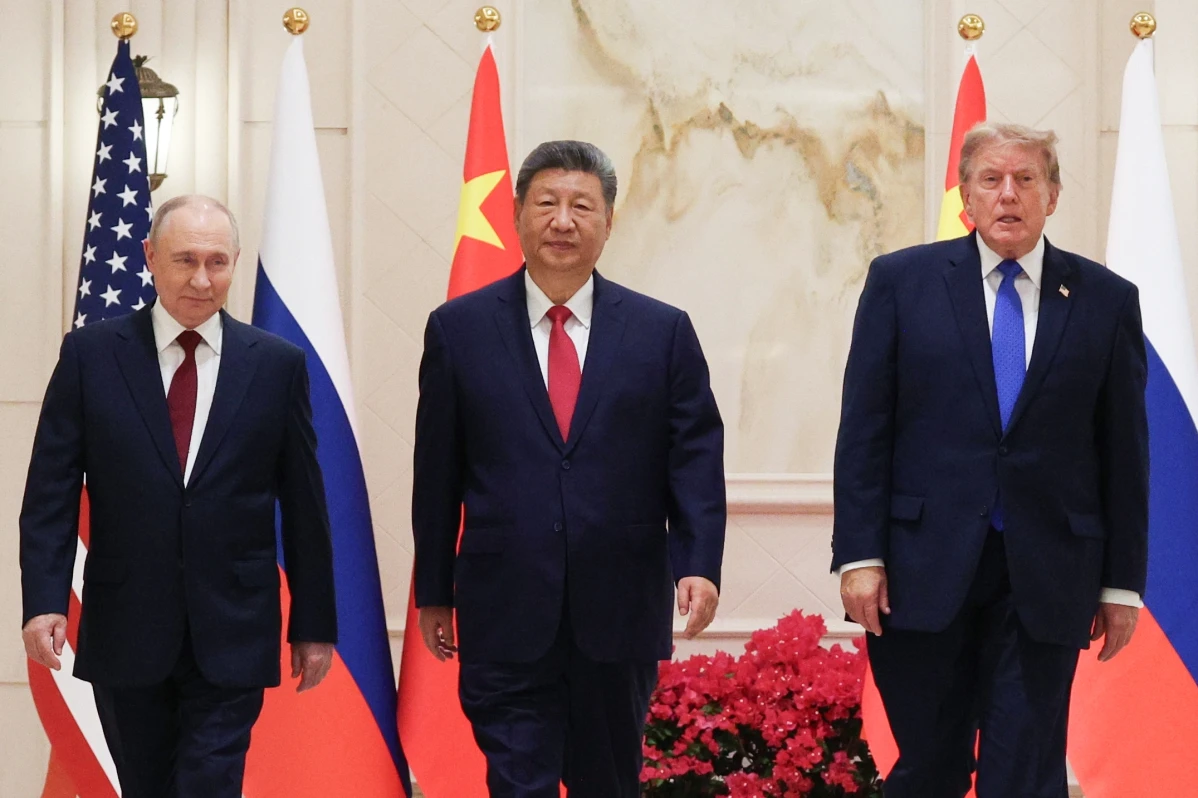
China, Russia and the United States have agreed to pursue reforms at the United Nations, increase the production and supply of refined petroleum products, and engage in dialogue to reduce nuclear risks following a historic three-way meeting between their leaders in Shenzhen, China.
The agreement was announced in a joint declaration after US President Donald Trump met Chinese President Xi Jinping and Russian President Vladimir Putin on Thursday, November 19, on the sidelines of the Asia-Pacific Economic Cooperation (APEC) summit.
According to Chinese state media and Russian officials, the three countries, which are permanent members of the UN Security Council, pledged to support reforms that would enable the organisation to respond more effectively to global challenges and strengthen its role in maintaining international peace and security.
On energy, the declaration said the countries planned to increase the production and supply of refined petroleum products for the benefit of all nations, while reaffirming the importance of maintaining stable energy flows.
The announcement comes amid disruptions to global energy supplies linked to the conflict involving Iran and instability around the Strait of Hormuz, a major route for international oil shipments.
The leaders also reaffirmed that a nuclear war cannot be won and must never be fought. They agreed to engage in dialogue aimed at reducing nuclear risks and preventing the proliferation of nuclear weapons.
However, the declaration did not outline specific measures, targets or timelines for reducing nuclear arsenals. It also made no direct mention of the wars in Ukraine or Iran, despite Trump saying he had raised both issues during discussions with the leaders.
Another significant aspect of the declaration was its position on international criminal justice. The three countries emphasised the importance of national consent and immunity for state officials, while warning the International Criminal Court (ICC) and similar institutions against abusing their jurisdiction.
The position is likely to attract attention because the ICC issued an arrest warrant for Putin in 2023 over alleged war crimes connected to Russia’s invasion of Ukraine. Russia rejects the court’s jurisdiction.
The trilateral meeting, described as the first of its kind involving the leaders of the three major powers, lasted about 90 minutes. It brought together countries with significant influence over global security, energy markets and international diplomacy.
Although the declaration sets out areas of cooperation, it does not establish detailed implementation plans. Analysts have cautioned against expecting immediate breakthroughs, particularly on nuclear arms control, given the differences between the countries.
The meeting nevertheless offers a platform for renewed engagement among the three powers at a time of heightened geopolitical tensions and uncertainty over global security.