
World News
Russia, Ukraine Agree to Major Prisoner Exchange After Peace Talks End Without Breakthrough

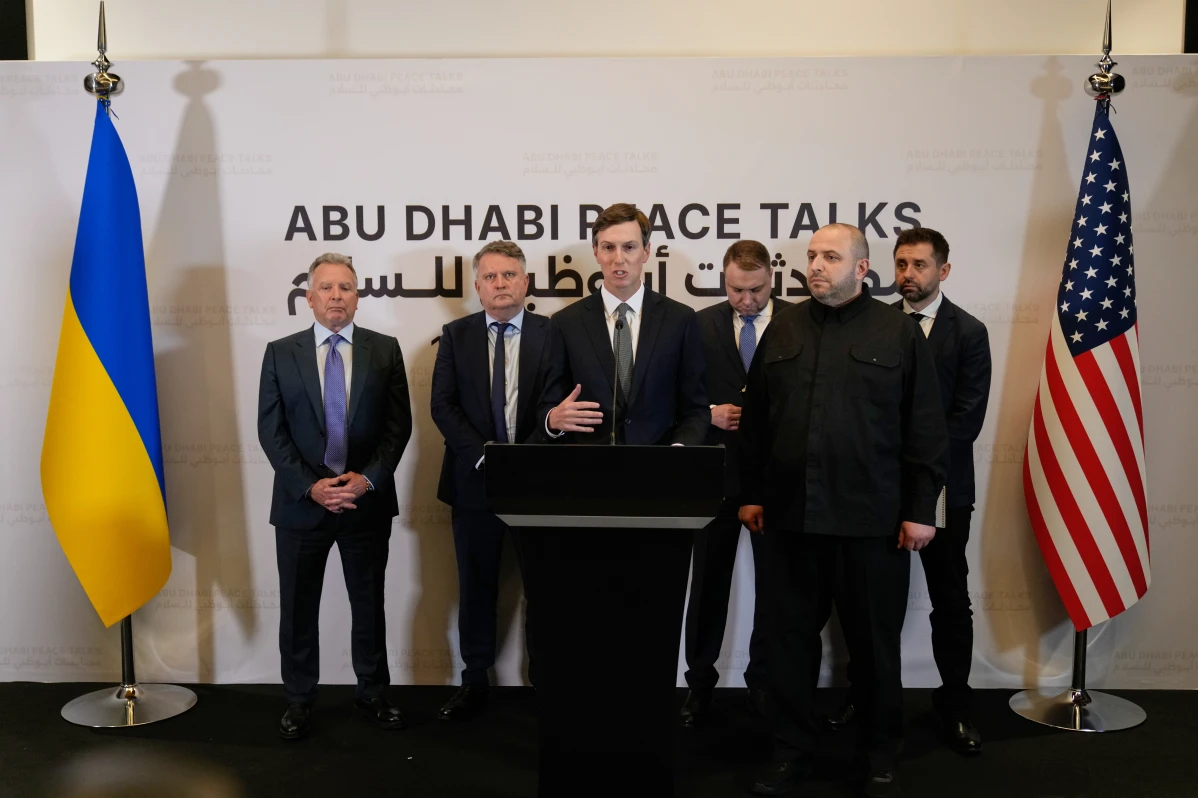
Russia and Ukraine have agreed in principle to carry out a major prisoner-of-war exchange following two days of United States-mediated peace talks in Abu Dhabi, United Arab Emirates, although negotiations ended without a significant breakthrough towards ending the nearly five-year conflict.
The agreement was announced on Wednesday, November 11, by American and Russian officials, who described the proposed exchange as a major humanitarian development amid continued fighting between the two countries.
US envoy Jared Kushner said both sides had agreed to what could become the largest humanitarian release of prisoners since Russia launched its full-scale invasion of Ukraine in February 2022.
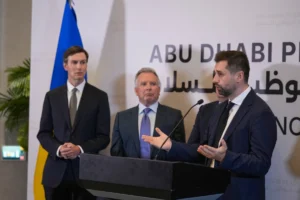
He added that the final number of prisoners involved would be determined on Thursday, while Russian officials indicated that the exchange could take place within two to three weeks.
Russian chief negotiator Vladimir Medinsky and Ukraine’s lead negotiator Rustem Umerov also confirmed the agreement, although Medinsky stressed that it had been reached in principle.
Ukrainian President Volodymyr Zelenskyy had earlier indicated that discussions included a possible exchange involving 1,000 prisoners from each side, with the possibility of increasing the number to 1,500.
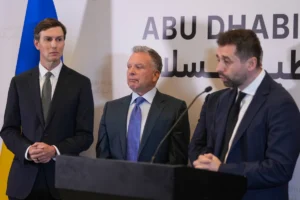
However, neither government had officially confirmed the final figures following the conclusion of the talks.
Despite the humanitarian agreement, the negotiations failed to produce a significant breakthrough on the central issues preventing a peace settlement.
The discussions, which marked the first direct trilateral meeting between Russia, Ukraine and the United States in nine months, focused on territorial disputes, post-war security guarantees and the future European security arrangement.
Russia continues to demand control over Ukrainian territories it occupies and has insisted on broader changes to Europe’s security structure, including restrictions on Ukraine’s relationship with NATO.
Ukraine, meanwhile, has rejected territorial concessions that could undermine its sovereignty and is seeking credible international security guarantees to prevent another Russian invasion.
Kushner acknowledged the difficulties facing negotiators, describing the discussions as tough but productive. He also noted that deep mistrust between Moscow and Kyiv remained a major obstacle
The absence of European representatives from the main three-way negotiations also emerged as a significant point of disagreement.
Although European officials were present in Abu Dhabi, Moscow excluded them from the direct discussions, arguing that their military and financial support for Ukraine made their participation difficult.
Ukraine maintained that Europe must be involved in any arrangement concerning the continent’s future security.
Kushner said European countries, the European Union and NATO would need to participate in discussions on post-war security arrangements to ensure wider acceptance of any eventual agreement.
Ukrainian negotiator David Arakhamia also called for future discussions to involve a broader multilateral format.
Following the conclusion of the Abu Dhabi talks, Kushner and fellow US envoy Steve Witkoff were expected to travel to Moscow on Thursday to meet Russian President Vladimir Putin.
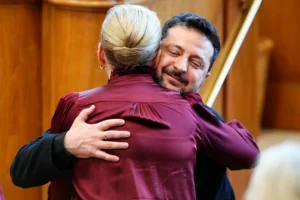
The American officials also planned to travel to Dublin, Ireland, to meet Zelenskyy and discuss the proposals raised during the negotiations.
The meetings are part of President Donald Trump’s renewed diplomatic effort to secure an agreement that would end the war.
However, fighting continued while the negotiations were taking place. Russian attacks reportedly killed three people in Ukraine’s Odesa region, while Ukrainian drone strikes caused a fire at the Russian oil-export port of Ust-Luga.
The planned prisoner exchange therefore represents the clearest humanitarian outcome of the latest diplomatic engagement, even as the wider conflict remains unresolved.