
World News
Voyager 1 Phones Home From 16 Billion Miles Away in Historic Space Milestone

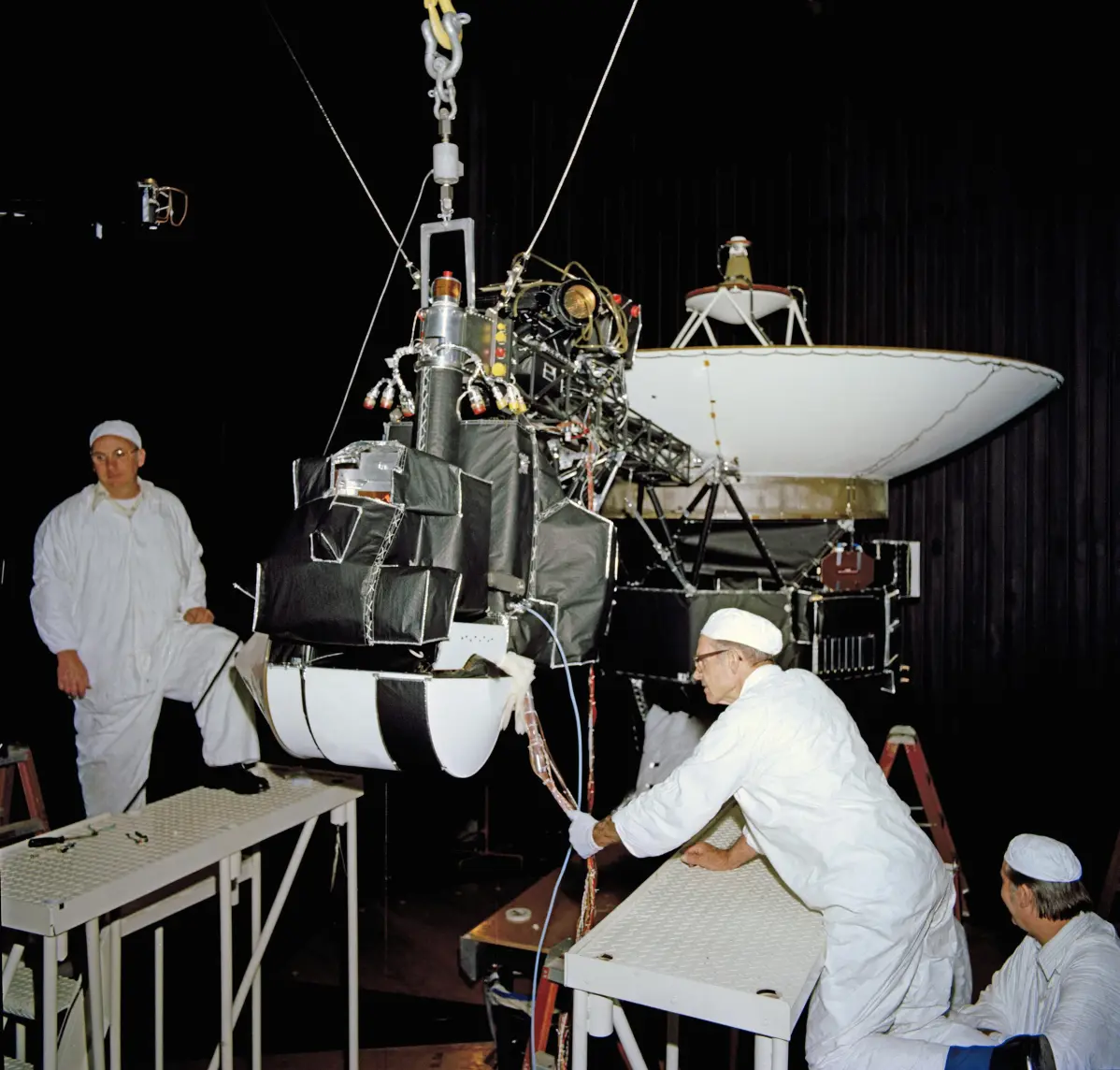
NASA’s Voyager 1 spacecraft has reached a historic milestone, becoming the first human-made object to travel a distance of one light-day from Earth, with its latest radio signal taking 24 hours to reach flight controllers.
The US space agency confirmed the achievement on Thursday, November 19, after receiving a signal sent by the spacecraft a day earlier. Voyager 1 reached the milestone at 2:16 a.m. Pacific time on Wednesday, November 18, when it was approximately 16.1 billion miles (25.9 billion kilometres) from Earth.
A light-day is the distance light travels in 24 hours. Since radio signals travel at the speed of light, it now takes a full day for a message from Earth to reach Voyager 1 and another day for a response to return.
NASA described the achievement as another historic moment in the spacecraft’s nearly five-decade journey through space.
“Voyager 1 crossing the light-day threshold is yet another historic feat on an extraordinary voyage of discovery,” Jet Propulsion Laboratory Director Dave Gallagher said.
Launched on September 5, 1977, Voyager 1 was originally designed to explore the outer planets of the solar system. It flew past Jupiter in 1979 and Saturn in 1980, sending back images and scientific observations that transformed scientists’ understanding of the planets and their moons.
In 1990, the spacecraft captured the famous image of Earth known as the “Pale Blue Dot”, showing the planet as a tiny speck from billions of miles away.
Voyager 1 became the first human-made spacecraft to enter interstellar space in 2012, crossing beyond the heliosphere; the vast bubble of particles and magnetic fields created by the Sun. Its twin, Voyager 2, followed in 2018.
Despite travelling at approximately 38,000 miles (61,000 kilometres) per hour, Voyager 1 remains operational after 49 years, although its ageing systems and limited power supply have forced NASA engineers to shut down some instruments and introduce energy-saving measures.
However, the latest milestone comes amid a communications challenge. NASA said Voyager 1 stopped transmitting science and engineering data on November 14, although its carrier signal continued reaching Earth. Engineers used that signal, together with calculations of the spacecraft’s trajectory, to confirm that it had crossed the one-light-day distance.
The agency is investigating the problem, which may involve the onboard computer responsible for collecting and preparing scientific and engineering information for transmission. NASA has previously resolved a similar issue with the spacecraft.
Voyager 1 and Voyager 2 are powered by radioisotope generators that convert heat from decaying plutonium into electricity. Their available power continues to decline, making the mission’s energy-conservation efforts increasingly important.
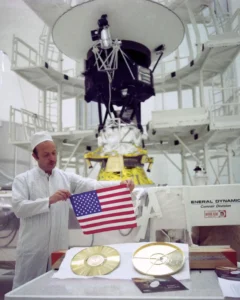
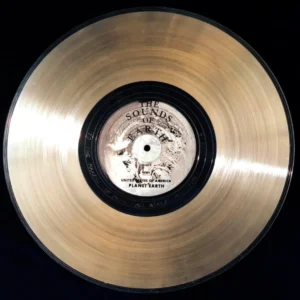
Both spacecraft also carry a Golden Record, a gold-plated disc containing sounds, music, images and greetings from Earth. The record was designed as a message to any intelligent life that might encounter the probes in the distant future.
NASA says Voyager 2, which is travelling along a different and longer route, is not expected to reach the one-light-day distance until 2035.
The Voyager mission, managed by NASA’s Jet Propulsion Laboratory, remains one of the longest-running and most ambitious space exploration projects in history.