
World News
Trump Heads To Asia Amid Political Setback And Growing China Spy Controversy

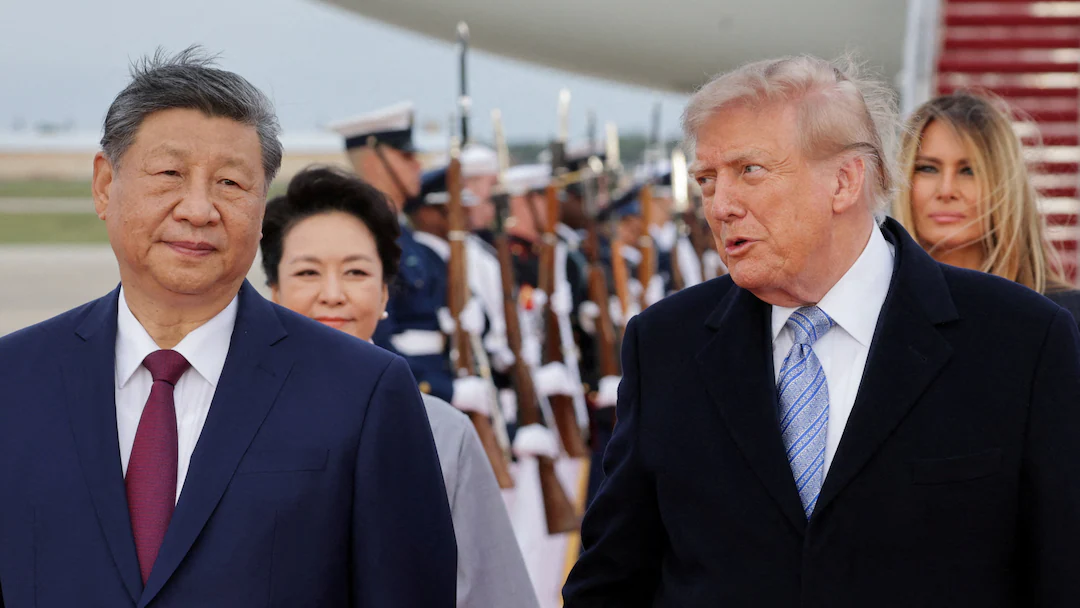
US President Donald Trump is heading to Asia this week under mounting political pressure following his party’s disappointing midterm election performance and a growing espionage controversy involving Nvidia chief executive Jensen Huang and an alleged Chinese spy.
The developments have raised the stakes for Trump’s anticipated meeting with Chinese President Xi Jinping in Shenzhen, where both leaders are expected to discuss trade, technology restrictions and broader diplomatic relations between the world’s two largest economies.

Trump is scheduled to begin his Asian tour in Manila on Tuesday, November 17, where he will meet Southeast Asian and other regional leaders before travelling to Shenzhen for the Asia-Pacific Economic Cooperation (APEC) forum.
The visit will also feature proposed three-way discussions involving Trump, Xi and Russian President Vladimir Putin.
The diplomatic engagement comes at a difficult time for Trump, whose Republican Party suffered significant losses in the November 3 midterm elections, with Democrats securing control of both chambers of Congress ahead of January 2027.
The election setback is expected to increase scrutiny of the administration’s foreign policy decisions, particularly its dealings with China and the handling of sensitive technology exports.
Adding to the pressure is an espionage controversy surrounding Huang, whose close relationship with Trump has attracted attention following allegations that he had an affair with a woman suspected of being a Chinese intelligence operative.
The allegations have also raised questions about whether US intelligence concerns involving Huang were properly communicated to the president and whether the administration adequately addressed possible national security implications.
Huang has reportedly denied wrongdoing, while China has rejected the espionage claims, describing them as fabricated allegations intended to justify Washington’s restrictions on Chinese access to advanced technology.
The controversy has intensified calls in Washington for tighter controls on the export of advanced semiconductor chips to China.
US House Speaker Mike Johnson has indicated that there is growing bipartisan support for additional restrictions, while Democrats are expected to pursue investigations when they assume control of Congress in January.
The developments could complicate Trump’s efforts to maintain a fragile trade truce with Beijing, which is currently expected to remain in place until January 10, 2027.
Washington has urged China to honour its commitments under the agreement, while both governments remain cautious about reigniting a trade dispute capable of disrupting global markets.

Another major issue expected to feature in the discussions is a proposed $14 billion US arms package for Taiwan, which Beijing strongly opposes.
Trump has described the proposed weapons sale as a negotiating tool in his dealings with China, raising concerns among Taiwan supporters about whether Washington could make concessions to secure a broader agreement with Beijing.
Beyond trade and technology, Trump is also expected to pursue diplomatic initiatives aimed at strengthening his international legacy, including possible nuclear arms-control discussions with China and Russia.
He could also seek support from Xi and Putin in arranging another meeting with North Korean leader Kim Jong Un.
However, analysts have questioned whether China would agree to meaningful nuclear arms-control negotiations, given its considerably smaller nuclear arsenal compared with the United States and Russia.
The proposed three-way engagement has also attracted comparisons with the 1945 Yalta Conference, where major powers negotiated the post-war international order, raising concerns about the possibility of powerful countries making decisions affecting smaller nations without their participation.
Ukraine is among the countries likely to be concerned by such discussions, particularly as Russia’s war against the country continues.
Despite the growing disagreements, analysts believe Washington and Beijing have strong reasons to preserve their fragile trade relationship and avoid another confrontation that could damage both economies.
Trump’s Asia visit is therefore expected to test his ability to balance domestic political challenges with his administration’s ambitions to maintain American influence in the region.