
World News
Baboons’ Invasion Sparks Heated Row Between Residents and Animal Rights Activists in South Africa

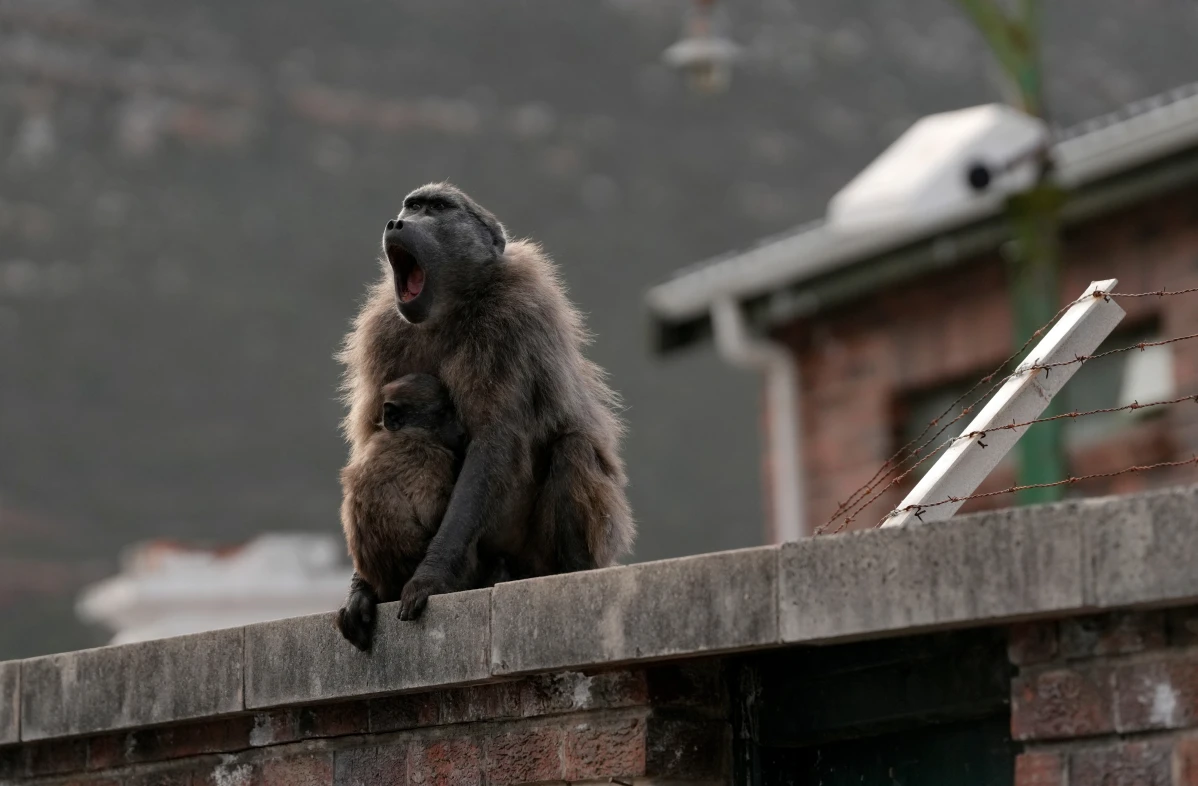
A growing conflict over the presence of wild baboons in a coastal town in South Africa has divided residents, with some demanding their removal while others are campaigning for their protection.
The dispute is centred on Simon’s Town, a coastal community near Cape Town, where approximately 60 chacma baboons belonging to two troops have made the town part of their regular habitat.
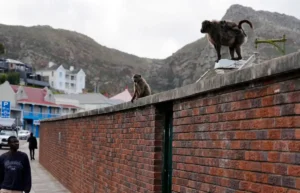
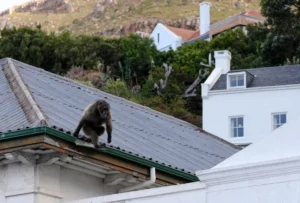
The animals reportedly move through the town during the day before returning to the surrounding hills at night. However, their growing presence has created tensions among residents, with complaints that the baboons break into houses, smash windows, steal food, damage property, rummage through rubbish bins and sometimes fight with domestic dogs.
Following years of disagreements, Cape Town authorities have decided to relocate the two troops to specially designated enclosures measuring between two and 3.5 hectares.
The proposed enclosures will be surrounded by electric fencing, while the male baboons will be neutered to prevent further breeding. Authorities expect the populations to gradually disappear over the next 20 to 30 years.
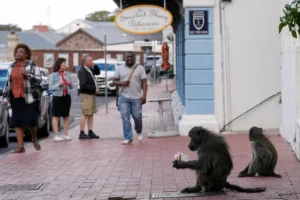
City environmental official Gregg Oelofse said the situation had become increasingly difficult to manage, arguing that humans and baboons could live more safely alongside each other if they occupied separate spaces.
He described the relocation plan as the best available alternative to killing the animals, which could otherwise face increasingly hostile responses from frustrated residents.
However, the decision has triggered fresh protests from animal rights activists and residents who believe the baboons should not be confined.
Some campaigners have staged demonstrations at the proposed relocation site, displaying homemade representations of baboons behind bars to express their opposition to the plan.
They argue that the animals have occupied the surrounding natural environment long before urban development expanded into the area. They have also questioned whether authorities have done enough to address poor waste management and other human activities attracting the baboons into residential neighbourhoods.
The disagreement has occasionally escalated beyond social media arguments, with reports of confrontations between residents and activists, as well as vandalism involving vehicles.
One resident, Peter Willis, reportedly organised mediation meetings between opposing groups in an attempt to prevent the dispute from further dividing the community.
Willis, who has personally experienced baboon break-ins, supports the relocation plan, describing the difficulty of protecting homes from the animals after years of repeated encounters.
However, primatologist David Gaynor has suggested an alternative approach, proposing the construction of barriers that would prevent baboons from entering residential areas without completely restricting their movement.
The controversy extends beyond Simon’s Town, as Cape Town reportedly has approximately 500 baboons living in around a dozen troops that regularly interact with urban communities.
The situation highlights the growing challenge of managing human-wildlife conflict in expanding urban environments, particularly where human settlements increasingly overlap with natural habitats.
While authorities maintain that relocation is necessary to protect both people and animals, conservationists insist that wildlife protection and responsible urban planning must remain central to any lasting solution.