
Opinion
Andrew Uwe Says: “I’m Ready to Serve” — He Captained The Flying Eagles, Then Applied Three Times to Coach Them — Should He Finally Get A Fair Hearing?

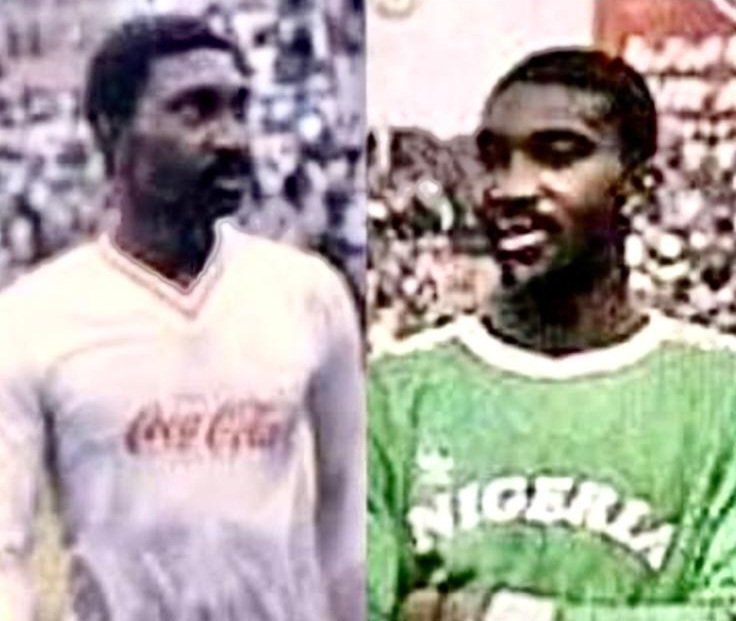
By Paul Lucky Okoku
Nigeria is talking about a new beginning in football.
President Bola Tinubu has directed a comprehensive reform of Nigerian football, with attention to governance, administration, development pathways and accountability.
That conversation should not stop with who occupies offices at the Nigeria Football Federation. It should also examine how Nigeria identifies, evaluates and appoints the people entrusted with developing its footballers.
That brings me to my former national-team colleague, Andrew Uwe.
After reading an article I recently wrote about him, Andrew sent me a message expressing an ambition that has remained with him for years: he would like an opportunity someday to lead the Nigerian U20 team he once captained — the Flying Eagles — or another Nigerian age-grade national team.
He has publicly stated that he applied three times to coach the Flying Eagles and was never invited for an interview.
He is not asking to be handed the job.
The question is whether someone with his background and preparation should at least receive a fair opportunity to compete for it.
FROM CAPTAIN TO COACH
Andrew Uwe captained the Flying Eagles at the 1985 FIFA World Youth Championship in the Soviet Union, where Nigeria finished third.
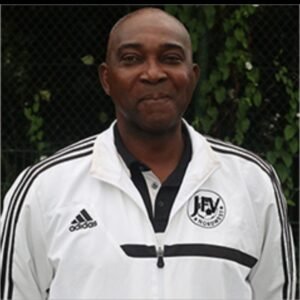
He later represented Nigeria at senior level and built much of his professional career abroad, particularly in Germany.
But playing for Nigeria should never, by itself, qualify anyone to coach a national team.
What matters more is what Andrew did after his playing career.
Rather than relying solely on his reputation as a former international, he pursued coaching education and began building experience from the other side of the touchline.
That distinction is important.
His case is not simply about what he once did as a player. It is about what he subsequently did to prepare himself as a coach.
HE INVESTED IN THE PROFESSION
Published accounts of Andrew’s career document coaching qualifications obtained in the United States and Germany, including a UEFA B Licence and German elite-youth coaching qualification.
His coaching work has taken him through different environments.
He has worked with young players in Houston, Texas, and within youth-development structures in Germany, including involvement with VfB Oldenburg and JFV NordWest.
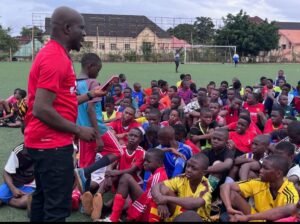
He also returned to Nigeria, where he led the Vandrezzer FC Academy and later held technical-development responsibilities with Real Sapphire FC in Lagos.
That gives him something beyond a former player’s résumé.
He has taken coaching courses, obtained licences, worked with developing players and experienced different football cultures.
Those credentials do not automatically make him the best candidate.
But they make him a legitimate one.
THREE APPLICATIONS, NO INTERVIEW
This is where Andrew’s story becomes bigger than Andrew.
He has publicly said that he applied three times for the Flying Eagles coaching position and was never invited for an interview.
That does not prove that anything improper occurred.
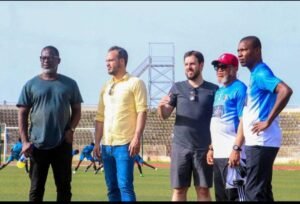
There may have been stronger candidates. There may have been requirements he did not satisfy. There may have been technical reasons for choosing others.
But when national-team positions are advertised, the process should be transparent enough for qualified applicants to understand how decisions are reached.
Who screens the applications?
What qualifications matter most?
How is player-development experience assessed?
Who gets shortlisted and interviewed?
These are not merely Andrew Uwe questions.
They are Nigerian football governance questions.
THIS AMBITION DID NOT START TODAY
Andrew’s interest in coaching Nigeria has been documented publicly for several years.
Veteran journalist Kunle Solaja reported in 2024 that Andrew had offered his services as a possible coach of the Flying Eagles or Golden Eaglets and wanted an opportunity to contribute to the football system that helped produce him.
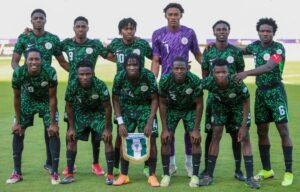
Daily Trust later reported his claim that he had applied three times for the Flying Eagles position without receiving an interview.
Other interviews have similarly documented his desire to return and use his experience to help develop younger Nigerian players.
That matters because this is not a sudden campaign for employment.
It is an ambition he has expressed consistently.
AGE-GRADE FOOTBALL SHOULD DEVELOP PLAYERS
Andrew’s interest in the Flying Eagles also connects directly with the kind of coaching work he has done.
Much of his experience has involved young players.
That matters because the Flying Eagles and Golden Eaglets should not exist merely to qualify for tournaments or win trophies.

They should form part of a development pathway through which Nigeria identifies, teaches and prepares footballers capable of progressing eventually into the Super Eagles.
That requires coaches who understand more than match results.
It requires people capable of teaching, identifying talent, developing discipline and preparing young footballers for the next level.
Andrew’s background in youth football is therefore relevant to any serious assessment of his candidacy.
REFORM SHOULD WIDEN THE DOOR
Nigeria has qualified coaches at home and abroad.
Some are former internationals who later obtained professional coaching education.
Others never played international football but have spent years studying and teaching the game.
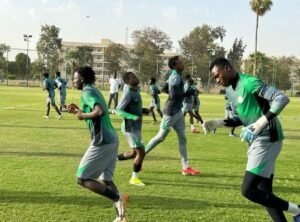
Both groups should have a pathway.
The answer is not simply to replace familiar names with unfamiliar ones.
What Nigerian football needs is a wider competitive pool of qualified candidates.
Publish the requirements.
Invite applications.
Shortlist transparently.
Interview the strongest candidates.
Examine their coaching philosophy, tactical understanding, player-development record and ability to connect youth football with the senior national team.
Then appoint the best person.
That would make reform meaningful.
LET HIS CREDENTIALS COMPETE
I have known Andrew Uwe from our playing days, and precisely because of that relationship, the distinction must be clear.
I am not asking anyone to give him a job.
I am asking something simpler:
Let his credentials compete.
Put his qualifications beside those of other serious candidates.
Evaluate his experience.
Question his philosophy.
Study his work with young players.
Ask what he would bring to Nigerian football.
Then let a credible selection process determine whether he is the right man.
Perhaps Andrew emerges as the strongest candidate.
Perhaps somebody else does.
Either outcome should be acceptable if the process is fair.
What should concern Nigerian football is the possibility that a former Flying Eagles captain who later invested in coaching education, worked with young players in different countries and says he applied three times to coach that same team could go through three application processes without receiving one opportunity to explain what he could offer.

Andrew Uwe is saying again:
“I’m ready to serve.”
He is not asking to be carried through the door.
He is asking for the opportunity to walk through it and make his case.
If Nigerian football reform is truly about a new beginning, then qualified coaches — Andrew included — should know that when opportunity comes, merit will at least receive a fair hearing.