
Opinion
As Flood Disaster Sing Nunc Dimittis In The Economic And Political Capitals Of Nigeria

AVM RTD AKUGBE IYAMU MNSA fsi
PRESIDENT ASSOCIATION OF ENVIRONMENTAL PROTECTION AND CLIMATE CHANGE PRACTITIONERS
CONSULTANT ON CLIMATE CHANGE AND ANALYST ON ENVIRONMENTAL POLICIES AND COMMENTATOR ON NATIONAL ISSUES
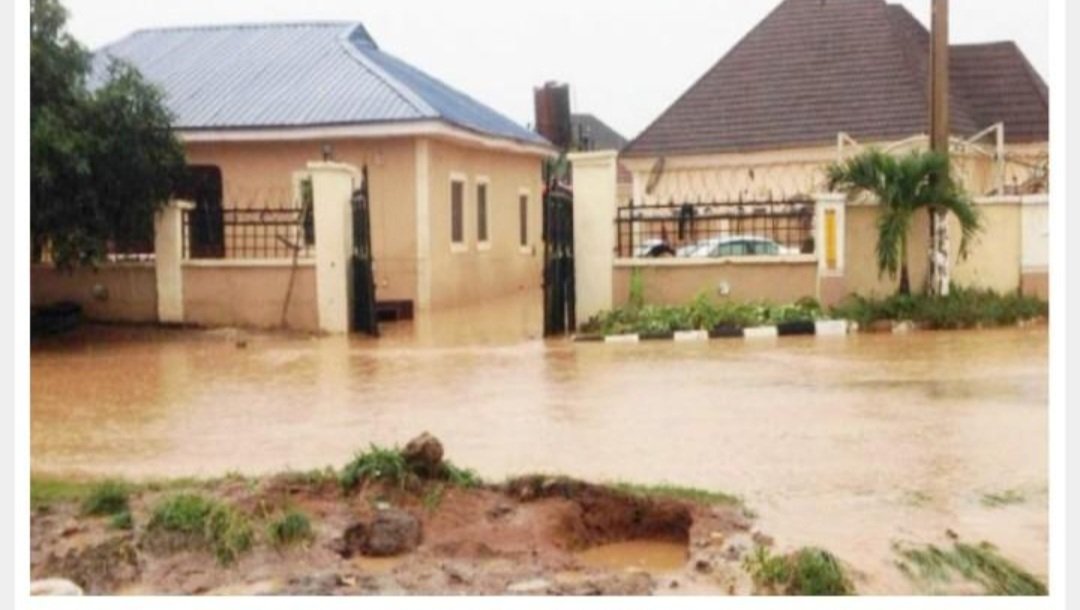
The recent Lagos and Abuja flooding further exposed the gravity of the nation’s disaster management crisis as a national malaise that need urgent attention. If Lagos and Abuja could be so battered by flooding, it will be worse for other states with lesser resources.
Reasons abound why flooding is prevalent in Nigeria, apart from climate change, there are excessive underfunding of the response agencies and lack of advanced knowledge, technology and equipment. With the response agencies constrained by resources, it will be an uphill battle to evolve pragmatic practices that will adequately reduce disaster.
Disaster management systems cannot operate without adequate funding. Therefore, the three tiers of government: federal, state and local government must intentionally improve ecological funding while also exploring other areas of alternative options.
This has been orchestrated by the recent events that made it obvious that Nigeria is a disaster ravaged country. The reality of Lagos and Abuja flooding have plunged the country into the darkness catastrophe corroborated by the NO-GAIN ranking of the country as the 58 most vulnerable countries and 176 in preparation and response.
This is a non cheering badge that Nigeria is sharing with countries facing high risks from extreme weather, climate change, and economic or political instability. Groups like the UN and research institutes group these nations by geographical and structural limits. The most affected regions are heavily concentrated in Sub-Saharan Africa, parts of South Asia, and low-lying island states.
Nigeria may be rich but she is least prepared to contain the disaster bogey that is as old as mankind. One would have expected that at this time there should be optimal performances from the institutions: a strong reason for Nigeria to prioritize disaster management systems. Here is the elephant in the room: flooding affecting the country are no longer natural disasters but man made disasters. To hold these views even at this age and time of climate is to live in denial.
The manifest truth is that flooding now affects the economy and national security and climate change is the pulley. Countries like Nigeria have become vulnerable. The actions deployed to address the Lagos and Abuja unprecedented flooding were not cheering enough to succour the soul of the country. Nigeria need to ramp up disaster management through equipment and modernisation of response.
WARNING!!!!!!
NO PART OF THIS PUBLICATION CAN BE REPRODUCED OR EDITED BY ANYONE WITHOUT THE NECESSARY PERMISSION OF THE AUTHOR