Foreign
Asian Nations Race to Stockpile Oil and Accelerate Renewables as Iran War Exposes Energy Vulnerability

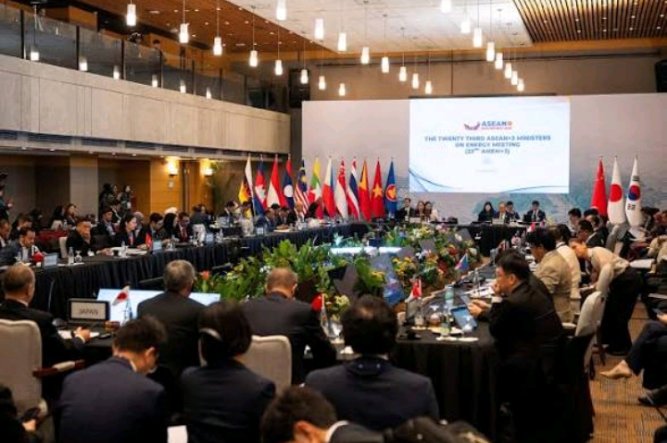
Southeast Asian countries are racing to expand oil stockpiling capacity, finalize a long-delayed regional power grid and accelerate renewable energy deployment in response to supply risks laid bare by the Iran war.
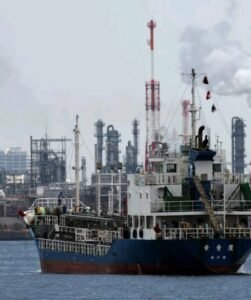
The region has been worst hit by the energy impact, as 80 percent of the oil transported through the Strait of Hormuz from the Gulf flowed to Southeast Asia before the conflict began.
Nine Southeast Asian nations, along with Japan and Australia, said in a joint statement that “the most advanced efforts are support for the development of oil stockpiling systems in each country and regional joint stockpiling on a voluntary basis.”
Japan has agreed on action plans with its Asian partners to boost crude oil reserves across the region following a meeting of the Japan-led Asia Zero Emission Community.
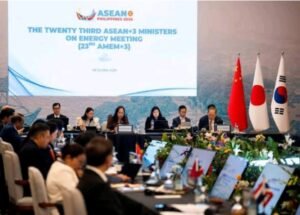
After a separate session with Saudi Arabia and the United Arab Emirates, Japan’s State Minister of Economy, Trade and Industry Takagi Kei said both countries had expressed willingness to cooperate on strengthening Asia’s oil stockpiling capacity.
The Philippines, which imports nearly all of its oil and fuel, will create a national reserve by the end of 2027, according to Energy Secretary Sharon Garin.
She said the reserve could subsequently be converted into a regional stockpile. The Southeast Asian archipelago chairs the Association of Southeast Asian Nations this year.
Garin said countries will decide whether they want to host a regional oil stockpile, with the terms of sale determined by the host country.
“In the Philippines, what we want is if there’s any country that wants to store the crude or their petroleum products here. In case of any emergency the country gets priority on this on the stocks,” she said.
ASEAN members also pledged to increase the share of clean energy in power generation, targeting 30 percent renewables in total primary energy supply and 45 percent in installed power capacity.
The region remains among the biggest laggards in green energy, with renewables making up 14.1 percent of primary energy, well short of a 2025 target of 25 percent. Green power has accounted for 33.7 percent of total capacity since 2020 against a 2025 target of 35 percent, according to the ninth ASEAN energy outlook.
The countries also reached an enhanced preliminary agreement on developing the long-delayed regional power grid, which Garin called a landmark accomplishment. The concept of a regional electricity network was first announced in December 1997.
“The first study was to connect with 2045, and that’s too far because that’s 20 years. So they’re reviewing again to make it a faster implementation,” Garin said.