Foreign
US and Russia Explore Gas Sales to Europe Amid Ukraine War

Top Russian and US officials have held confidential talks about bringing a US investor into the Nord Stream pipelines that once delivered gas to Germany before Russia’s invasion of Ukraine.
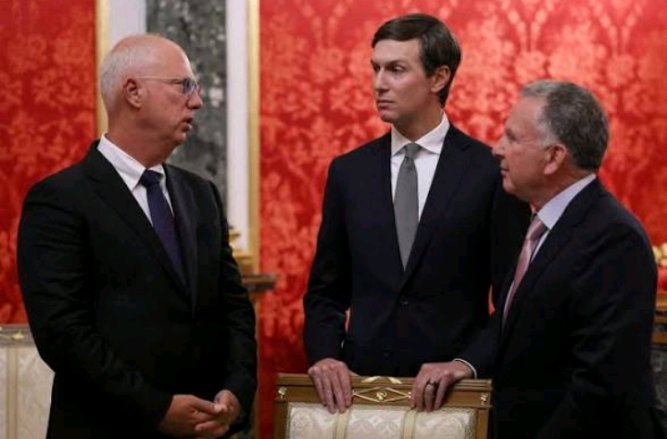
The discussions included US Special Envoy Jared Kushner, son-in-law of President Donald Trump, and Kirill Dmitriev, a close adviser to Russian President Vladimir Putin, according to five people with knowledge of the situation. The two have met in Moscow and New York in recent weeks.

Kushner, who has been trying to broker a truce between Russia and Ukraine, views doing business as central to restoring peace. Such a deal would enable US investors to profit from energy flows to Europe once the war ends.
“Any deals will have to be negotiated by Russia with DFC (US International Development Finance Corporation) and Treasury and must benefit United States taxpayers and companies,” a White House official said, when asked about the pipeline discussions.
The Nord Stream pipelines are sanctioned by both the US and the EU, making any restart illegal. A US official said that given the obstacles, a deal is unlikely in the medium term.
Dmitriev, who has campaigned for a resumption of Russian gas sales to Germany, met last month with US Energy and Treasury Department representatives to discuss potential US-Russia energy initiatives. A representative for Dmitriev declined to comment.
It remains unclear how interested Washington is in pursuing the restarting of Russian gas flows to Germany, Europe’s biggest energy consumer.
Germany’s economy and energy ministry said Nord Stream and Russian gas are sanctioned in Europe and that Germany had found alternatives. Any reopening of the pipelines would require government approval, which is not desired, a spokeswoman said.
Before Russia’s invasion in February 2022, Germany bought more than half of its gas from Russia through the two Nord Stream pipelines. They were mothballed after Moscow throttled supply and were blown up in underwater explosions in September 2022.
Talks between Moscow and Washington are taking place against a backdrop of deep European mistrust of Russia’s motives. Some German lawmakers have voiced strong opposition.
“This threatens to be a dirty deal that will cost Europe dearly,” said Michael Kellner, a lawmaker who was in charge of German energy policy after the Ukraine invasion. “Americans and Russians will share the profits.”
The company that controls Nord Stream is 51% owned by Russian state energy giant Gazprom, with 31% split between two German entities and the rest held by French and Dutch firms.
Kushner and Dmitriev have also been discussing the sale of a collection of businesses, from oil refineries to petrol stations, belonging to Russian energy company Lukoil.