Foreign
US Bans Nearly $1 Billion in Canadian Alcohol, Dairy and Motorcycle Imports

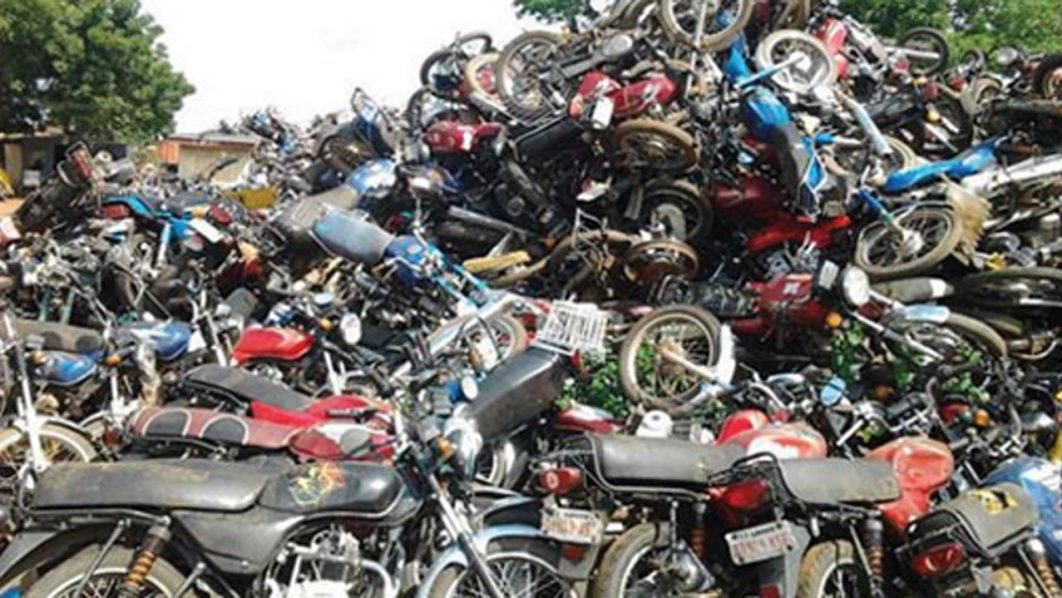
The United States has enacted a ban on nearly $1 billion worth of Canadian imports, including alcoholic beverages, dairy products and motorcycles, marking a further escalation in the trade dispute between the two longtime allies.
The restrictions took effect at 12:01 a.m. Eastern time on Tuesday, following an executive order signed by President Donald Trump earlier this month.
According to an analysis by Jacob Jensen, director of trade policy at the American Action Forum, the ban covers approximately $967 million worth of Canadian imports based on 2025 figures. Of that total, 87 percent consists of alcoholic beverages.

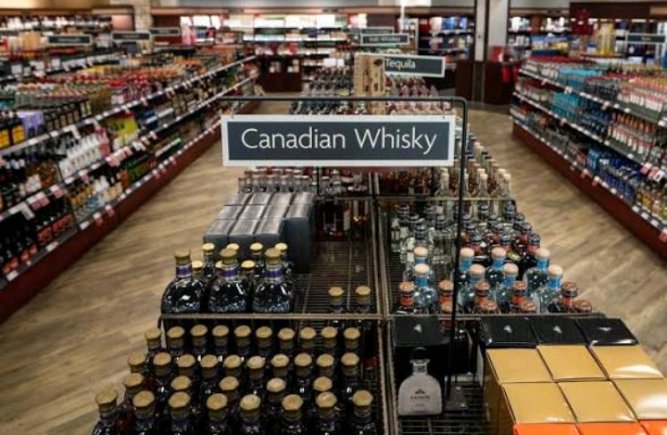
The prohibited list includes a wide range of Canadian alcohol such as beer, wine, cider, whiskies, rum, gin, vodka, brandy and tequila, as well as molasses, whey products and non-alcoholic beer. Motorcycles are also included.
Bombardier Recreational Products in Quebec confirmed that its three-wheel Can-Am Spyder and Canyon motorcycles will be excluded from importation into the U.S., though the company noted the impact likely won’t be felt until next year since most production and shipments for the current season are complete.
Trade attorney Patrick Childress, a partner at Holland & Knight and a former U.S. trade official, said the ban “certainly won’t do anything to help the trade tensions between the United States and Canada”. He noted that many of the banned products were already facing 50 percent tariffs, which were “acting as a de facto ban by making importation from Canada into the United States uneconomical”.
The latest escalation stems from a breakdown in trade negotiations in August. Trump imposed 50 percent tariffs on about $20 billion worth of Canadian imports, accusing Canada of discriminating against U.S. dairy, auto and alcoholic beverage producers. Canada retaliated with tariffs of 15, 25 or 50 percent, matching U.S. imports dollar for dollar.
Jensen said the ban “marks yet another escalation in the trade war that may result in further retaliation on the Canadian side”. He expects Canadian exporters and U.S. importers to be “highly motivated” to push for a resolution.
Canadian Prime Minister Mark Carney has said the measures will have a “modest” impact overall, though he acknowledged they will hurt certain businesses and sectors directly targeted.
Speaking to reporters, Carney said the best response is focusing on his government’s plan to reinforce the domestic economy and diversify trade relationships.
“We think there is a mutually beneficial deal possible that respects our sovereignty and is in the interests of both countries,” Carney said.
Gabriel Brunet, a spokesman for Canada-U.S. Trade Minister Dominic LeBlanc, said in a statement that Canada’s “first priority remains on protecting and supporting Canadian workers, farmers, families, and businesses from these unjustified actions”.
He added that Canada’s core focus is “building strength at home, diversifying our partnerships abroad, and building Canada strong for all Canadians”.
Trump expressed confidence that Canada would eventually capitulate. “They’re gonna come in and they’re gonna say, ‘Sir, we are sorry,’” he told reporters Monday. “They’ve treated the United States very, very badly. I think a deal will be made but it’s gonna be fair”.
The dispute imperils efforts to renew the US-Mexico-Canada Agreement, the North American trade pact that allows most goods to cross borders duty free.
Since returning to the White House, Trump has announced a series of tariffs that have clouded the future of regional trade.
Derek Holt, an economist with Scotiabank, wrote in an analysis that the bans are “face-saving by the U.S. administration, not substantive in nature and that’s a positive”.
However, he warned that the actions will add uncertainty to the future of Canada’s trade relationship with its largest trade partner.
The two countries have been embroiled in a trade dispute since Trump took office for his second term in early 2025.
The relationship deteriorated further after negotiations for a new deal collapsed at the 11th hour in August.