
International
Germany on Alert After Suspected Sabotage Hits Two Power Substations

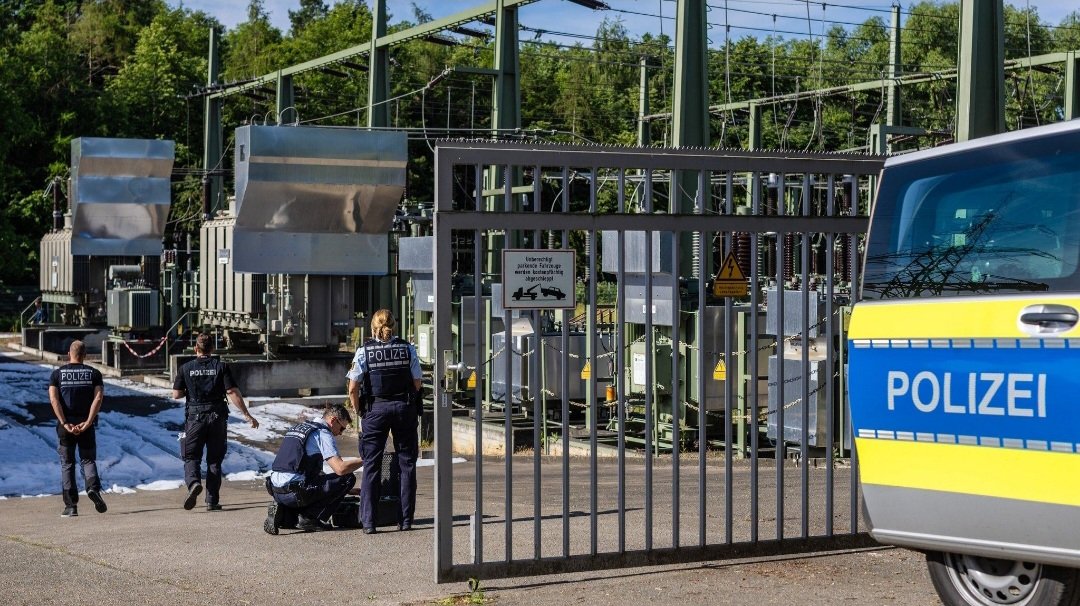
German authorities have launched investigations into suspected sabotage at two electricity substations in separate parts of the country, raising fresh concerns over attacks on critical infrastructure and the possibility of a wider hybrid threat.
The incidents occurred within hours of each other on Tuesday, with one involving explosive devices near a substation in Brandenburg in northeastern Germany and the other involving a deliberately caused short circuit at a substation near Bergheim, west of Cologne.
Authorities say there is currently no evidence that the two incidents are connected, but investigators are examining possible links.
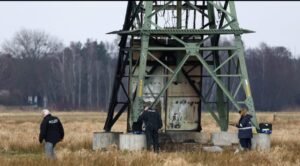
In Brandenburg, police discovered more than a dozen devices described as rocket-like objects with propellant charges near a substation serving the Jänschwalde coal-fired power plant.
Investigators said the devices appeared to have been designed to interfere with high-voltage electricity lines. At least one succeeded in creating a conductive connection to the ground, causing a short circuit.
The incident triggered a terrorism investigation, with Brandenburg police examining the possible formation of a terrorist organisation and the destruction of important infrastructure.
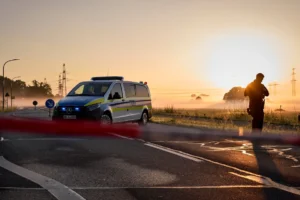
No injuries or widespread power outage were reported. The operator, 50Hertz, said electricity lines were briefly interrupted but subsequently returned to service.
Brandenburg Interior Minister Jan Redmann said authorities could not rule out the involvement of a foreign power, describing the situation as part of what he called a “hybrid threat.”
Investigators have not, however, identified a suspect or publicly established a motive.
Hours later, a separate incident occurred at an Amprion substation in Bergheim, near Cologne.

Police and energy officials determined that the disruption was not the result of an equipment failure. Instead, investigators believe unknown perpetrators deliberately placed conductive material, apparently cables, over an overhead power line, creating a short circuit.
North Rhine-Westphalia Interior Minister Herbert Reul said the incident was intentional and described it as a criminal act.
Investigators subsequently discovered six launching devices in a nearby cornfield, according to German authorities.
The incident temporarily knocked five coal-fired power units with a combined capacity of about 4,200 megawatts offline. However, the wider electricity supply remained stable and some of the affected units were brought back online.
Officials are investigating two possible directions; foreign-directed sabotage and left-wing extremism, while stressing that neither has been established.

The incidents come at a particularly sensitive time for Germany, which has been increasingly concerned about sabotage, espionage and other forms of hybrid activity targeting critical infrastructure.
Germany’s government on Tuesday accused Russia of being behind an attempted drone attack at Leipzig/Halle Airport on August 4. Berlin said the incident fitted what it described as a pattern of Russian hybrid operations in Europe. Moscow has rejected such accusations.
German authorities have also reported suspicious drone activity around military and industrial sites in recent months.
The latest attacks have therefore intensified debate about the vulnerability of Germany’s electricity, transport and industrial infrastructure.
Reuters reported that officials are particularly concerned about the possibility that critical infrastructure could be targeted as part of broader hybrid warfare, although there is currently no proof linking the substation incidents to Russia.
Large teams of investigators were deployed around the affected sites to search for evidence and identify those responsible.
Authorities are also comparing evidence from Brandenburg and North Rhine-Westphalia to determine whether the incidents were coordinated.
Officials have cautioned against jumping to conclusions.
The Washington Post, citing AP reporting, noted that German officials themselves have stressed that an investigation into possible foreign involvement does not amount to proof that a foreign government was responsible.
For now, Germany’s power grid remains stable, but the incidents have renewed concerns about how easily relatively small acts of sabotage could disrupt important energy infrastructure.
As investigators work to establish who carried out the attacks and why, security agencies are also assessing whether the incidents represent isolated criminal acts or part of a broader campaign against Germany’s critical infrastructure.