General News
Iran Says No Oil Will Leave Region Until Attacks Stop; Trump Threatens Heavy Strikes

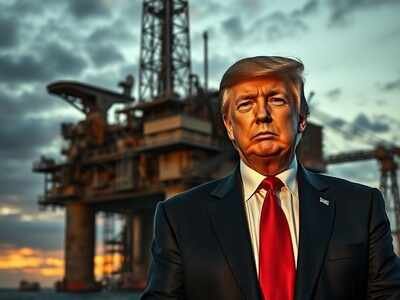
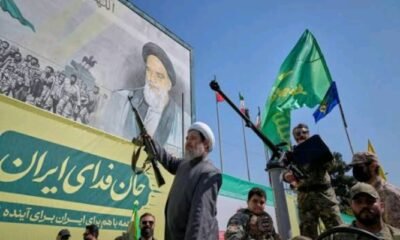
Tensions between Iran and the United States escalated on Tuesday after Iran’s Islamic Revolutionary Guard Corps (IRGC) warned that it would prevent oil shipments from leaving the Middle East if the U.S. and Israeli attacks on Iranian targets continue.
According to Iranian state media, the Revolutionary Guards said they would not allow “one litre of oil” to be exported from the region until the military operations against Iran are halted, raising fears of a major disruption to global energy supplies.
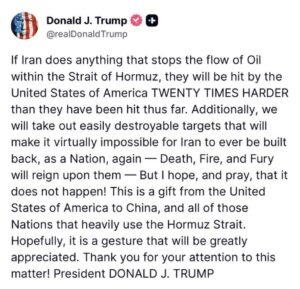
The warning prompted a sharp response from the U.S. President Donald Trump, who threatened severe retaliation if Tehran attempts to block oil exports, particularly through the strategic Strait of Hormuz. Trump said the United States would strike Iran “twenty times harder” if it interferes with the flow of oil through the critical shipping route.
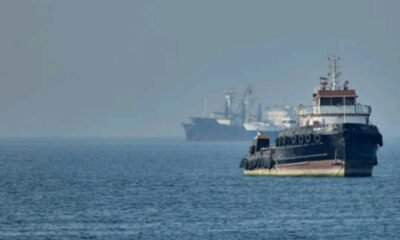
The Strait of Hormuz is one of the world’s most important energy chokepoints, with roughly one-fifth of global oil supply passing through the narrow waterway daily. Any disruption could trigger sharp increases in oil prices and widespread economic instability.
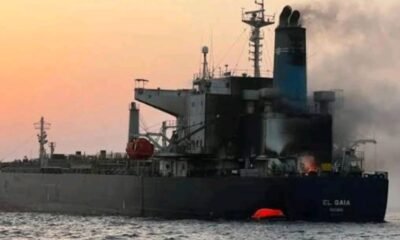
The latest exchange of threats comes amid an escalating conflict involving Iran, the United States, and Israel, which has already disrupted shipping and energy markets across the region. Iran has launched missile and drone attacks in retaliation for joint U.S.–Israeli strikes, while Western governments warn the situation could significantly affect global oil supplies.
Energy analysts say an Iranian blockade of Middle Eastern oil exports could have catastrophic consequences for global markets, given the region’s central role in supplying crude oil to Asia, Europe, and other parts of the world.
Despite the heated rhetoric, global markets have shown cautious optimism that the conflict may de-escalate, with some investors betting that diplomatic or military developments could bring the crisis to an end before it severely damages the global economy.
The situation remains volatile as both sides continue to exchange warnings, raising concerns about the risk of a broader regional confrontation and its potential impact on international energy security.