
Entertainment
Legendary Robin Hood Oak Tree Dies After More Than 1,000 Years

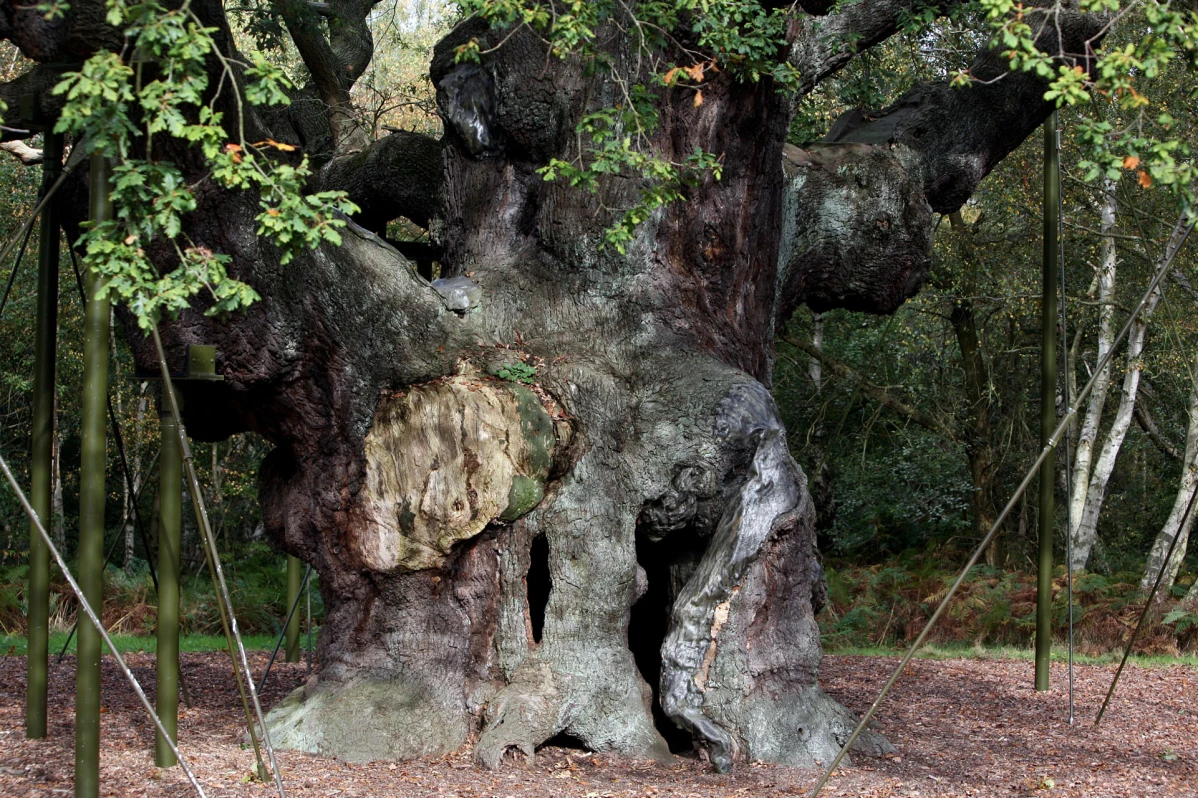
The legendary Major Oak, an ancient tree long associated with the folklore of Robin Hood, has died after standing in England’s Sherwood Forest for more than a millennium, conservationists have confirmed.


The Royal Society for the Protection of Birds (RSPB), which manages the forest, announced that the iconic oak failed to produce leaves this spring, a strong indication that the tree has reached the end of its life after centuries of survival.
Estimated to be between 1,000 and 1,200 years old, the Major Oak is one of Britain’s most famous trees and has become a symbol of Sherwood Forest through its connection to the Robin Hood legend. According to folklore, the outlaw hero and his band of Merry Men used the giant oak as a hideout while evading the Sheriff of Nottingham.
Conservation experts say a combination of factors likely contributed to the tree’s decline. These include prolonged heatwaves, drought conditions linked to climate change, and centuries of heavy tourist foot traffic that compacted the soil around the tree, making it difficult for water and nutrients to reach its roots.
The oak had shown signs of deterioration for years despite extensive conservation efforts. Support structures, fencing, soil treatments and specialist monitoring were introduced in attempts to preserve the historic landmark. However, experts ultimately concluded that the damage to the tree’s root system and overall health could not be reversed.
“The tree’s failure to produce leaves this year is heartbreaking for everyone,” said Hollie Drake of the RSPB, describing the Major Oak as an irreplaceable part of Britain’s natural and cultural heritage.
Despite its death, the tree will remain standing in Sherwood Forest for years to come. Conservationists say the dead oak will continue to provide a valuable habitat for insects, birds and other wildlife, playing an important role in the forest ecosystem even after its life has ended.
The Major Oak attracted hundreds of thousands of visitors annually and was regarded as one of Europe’s most celebrated ancient trees. Conservation groups are using its passing to call for stronger protections for historic trees facing increasing threats from climate change and environmental pressures.
Although the ancient oak has died, its legacy is expected to live on through saplings grown from its acorns and cuttings, many of which have already been planted across Britain and other parts of the world.
For many admirers, the death of the Major Oak marks the end of a remarkable chapter in British history, but not the end of the legend it helped inspire.