
Crime
Lindsay Clancy Jury Ends Third Day Without Verdict in Children’s Deaths

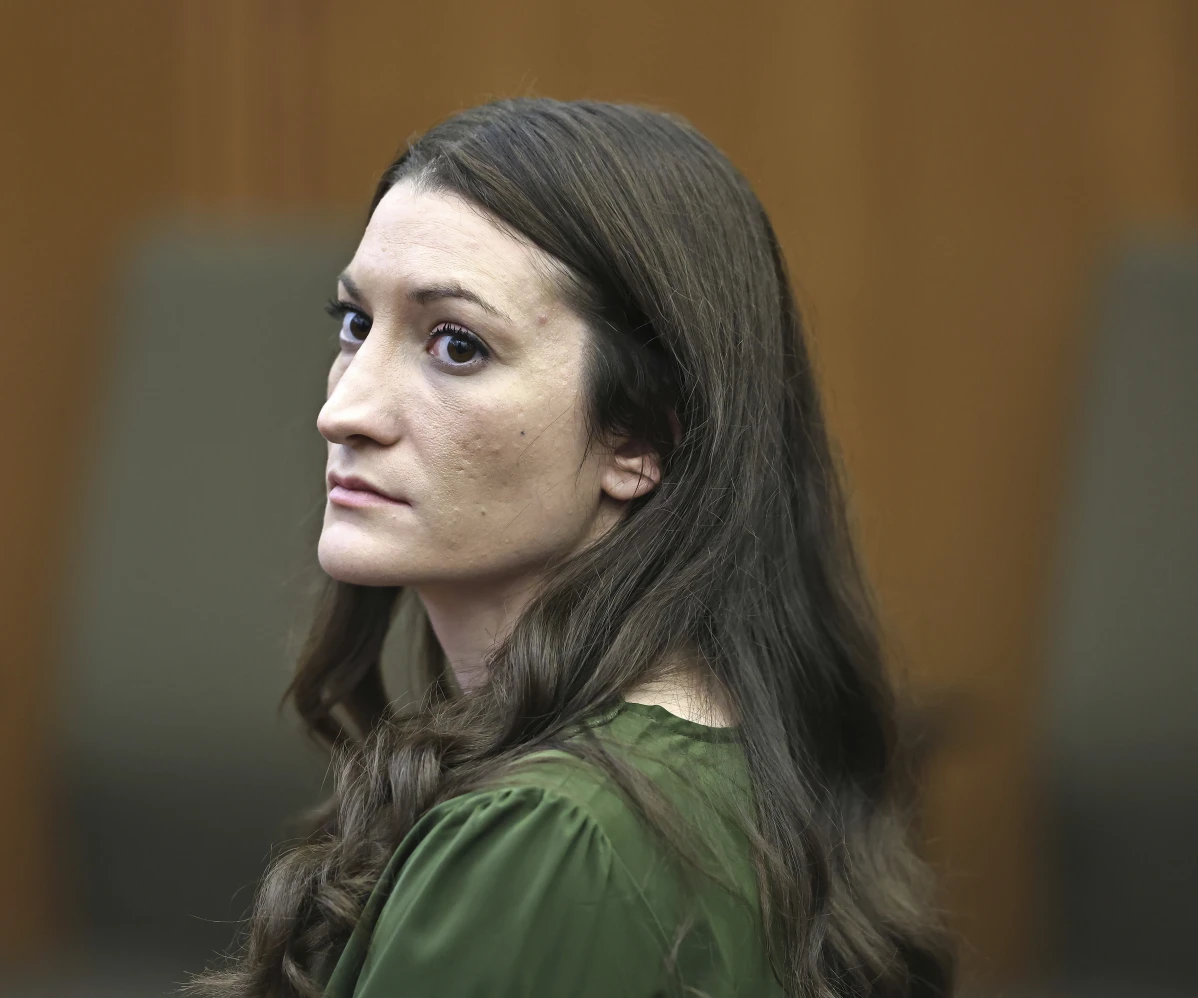
Jurors in the closely watched trial of Lindsay Clancy ended their third day of deliberations without reaching a verdict over whether the Massachusetts mother was criminally responsible for the deaths of her three young children.
The 12-member jury spent nearly seven hours deliberating on Monday, bringing the total time spent considering the case to more than 16 hours over three days. The jurors were dismissed shortly before 4 p.m. and are expected to return Tuesday to continue their discussions.
Clancy, a former labor and delivery nurse, is accused of killing her three children; Cora, 5, Dawson, 3, and Callan, 8 months at the family’s Duxbury home in January 2023. She does not dispute that she strangled the children, but has pleaded not guilty by reason of insanity.
The central question before the jury is whether Clancy was legally responsible for her actions at the time of the killings.
Clancy’s defence has argued that she was suffering from severe postpartum psychosis, a rare mental-health condition that can occur after childbirth and can cause a person to lose contact with reality.
Her attorneys have pointed to her deteriorating mental health, psychiatric treatment and medication history before the killings. They argue that she experienced hallucinations and intrusive thoughts and had lost the ability to understand the nature or wrongfulness of her actions.

The prosecution has presented a different picture, arguing that Clancy knew what she was doing and deliberately created an opportunity to kill her children while her husband was away from the house. Prosecutors have also challenged the claim that she was experiencing psychosis at the time.
The jury received the case after a trial that lasted roughly five weeks and included testimony from more than 70 prosecution witnesses and 10 defence witnesses.
Among those who testified was Clancy’s husband, Patrick Clancy, who has publicly said that he forgives his wife. Medical professionals also offered conflicting assessments of her mental state, making the question of criminal responsibility particularly complicated for jurors.
The jury has several possible outcomes to consider, including convictions for murder or manslaughter, a finding that Clancy was not criminally responsible because of mental illness, or an acquittal.
The fact that deliberations have continued for three days does not necessarily mean the jury is deadlocked.
Jurors can take as long as they need to review the evidence and reach a unanimous decision. If they ultimately tell the judge that they cannot agree, the judge could declare a mistrial. Prosecutors could then potentially seek a retrial.
For now, however, the jury remains in deliberations.
The case has attracted widespread attention not only because of the deaths of the three children but also because of the difficult questions it raises about postpartum mental illness, psychiatric treatment and criminal responsibility.
As jurors prepare to return to the courthouse, Clancy remains without a verdict, leaving both sides waiting for a decision that could determine whether she spends the rest of her life in prison or is found legally not responsible because of severe mental illness.