
War
New Ukraine Defence Chief Calls for Smarter, Asymmetric Warfare Against Russia

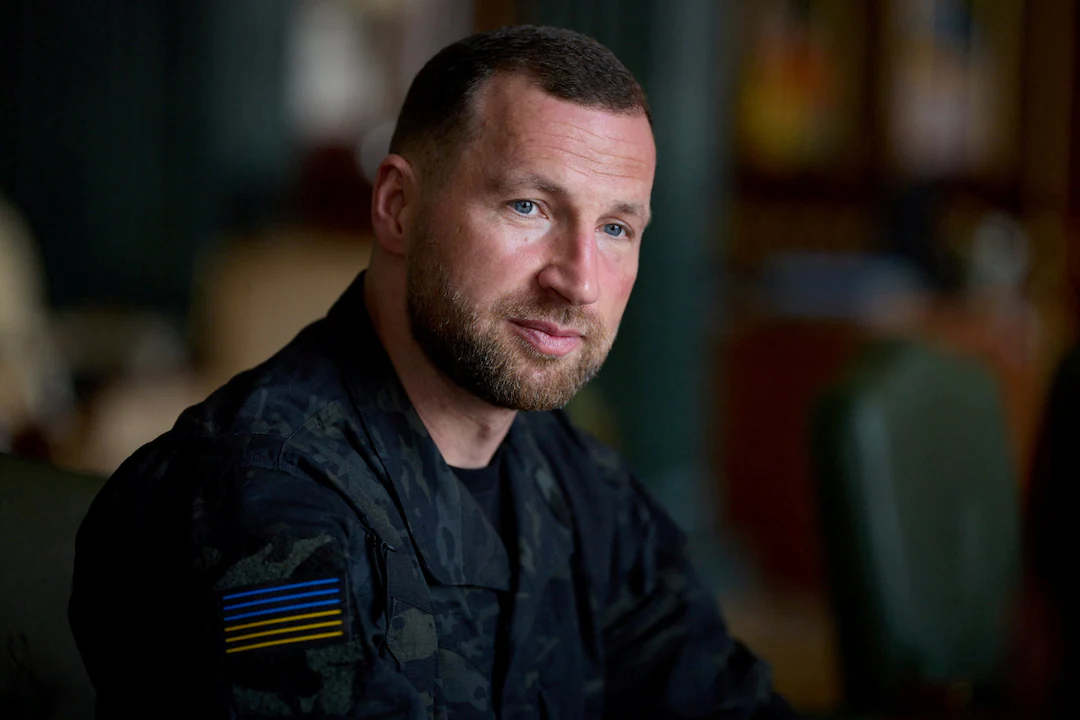
Ukraine’s newly appointed acting Defence Minister, Yevhenii Khmara, has said Kyiv must rely on “asymmetric” military tactics rather than attempting to match Russia in a conventional war, arguing that targeted, technology-driven strikes offer the best chance of weakening Moscow’s war effort. Speaking in his first interview since taking office, Khmara outlined a strategy focused on precision attacks against critical infrastructure, logistics and military production deep inside Russian territory.
Khmara, who previously headed Ukraine’s Security Service (SBU), was appointed acting defence minister earlier this month following a government reshuffle ordered by President Volodymyr Zelenskyy. His appointment came after the dismissal of former Defence Minister Mykhailo Fedorov, whose departure exposed deep disagreements within Ukraine’s military leadership over how the war should be fought.
In the interview, Khmara said Ukraine lacks the manpower, equipment and resources to defeat Russia through a direct war of attrition. Instead, he argued that Kyiv should maximise the impact of every weapon by carrying out strategic attacks that inflict economic and logistical costs on Russia while minimising Ukraine’s own losses. He pointed to long-range drone strikes on Russian oil facilities and transport infrastructure as examples of operations that have disrupted fuel supplies and complicated Moscow’s military logistics.
According to the acting minister, Ukraine’s expanding drone programme has become one of its most effective tools. He said attacks on energy facilities, supply depots and military infrastructure have slowed Russian operations along parts of the more than 1,200-kilometre front line, demonstrating how relatively inexpensive unmanned systems can produce significant strategic effects against a much larger military force.
Khmara also stressed that success depends not only on advanced technology but on efficient logistics, faster battlefield decision-making and better allocation of resources. He said Ukraine must continue adapting to modern warfare by integrating drones, intelligence and precision strikes into a unified strategy capable of offsetting Russia’s numerical advantages.
The acting minister welcomed signs of closer defence cooperation with the United States, particularly following recent discussions between Presidents Donald Trump and Volodymyr Zelenskyy over allowing Ukraine to manufacture Patriot missile interceptors under licence. Khmara said expanding domestic defence production would strengthen Ukraine’s ability to withstand sustained Russian missile and drone attacks while reducing dependence on foreign deliveries.
His comments come at a critical stage in the conflict as both sides intensify long-range strikes. Ukraine has expanded attacks on Russian military, industrial and energy targets, while Russia continues launching large-scale missile and drone barrages against Ukrainian cities and infrastructure. Military analysts say the war is increasingly characterised by the use of drones, electronic warfare and precision-guided weapons rather than large-scale manoeuvre operations alone.
Although Khmara expressed hope that renewed diplomatic engagement could eventually help end the conflict, he insisted that Ukraine must first strengthen its battlefield position. He argued that demonstrating the ability to impose significant costs on Russia through innovative, asymmetric operations would improve Kyiv’s leverage in any future peace negotiations.