
Opinion
Nigeria Football Federation Election Sept. 27, 2026: From 84.1% to 68.5% — Did the Reform Really Change Who Chooses the NFF President?

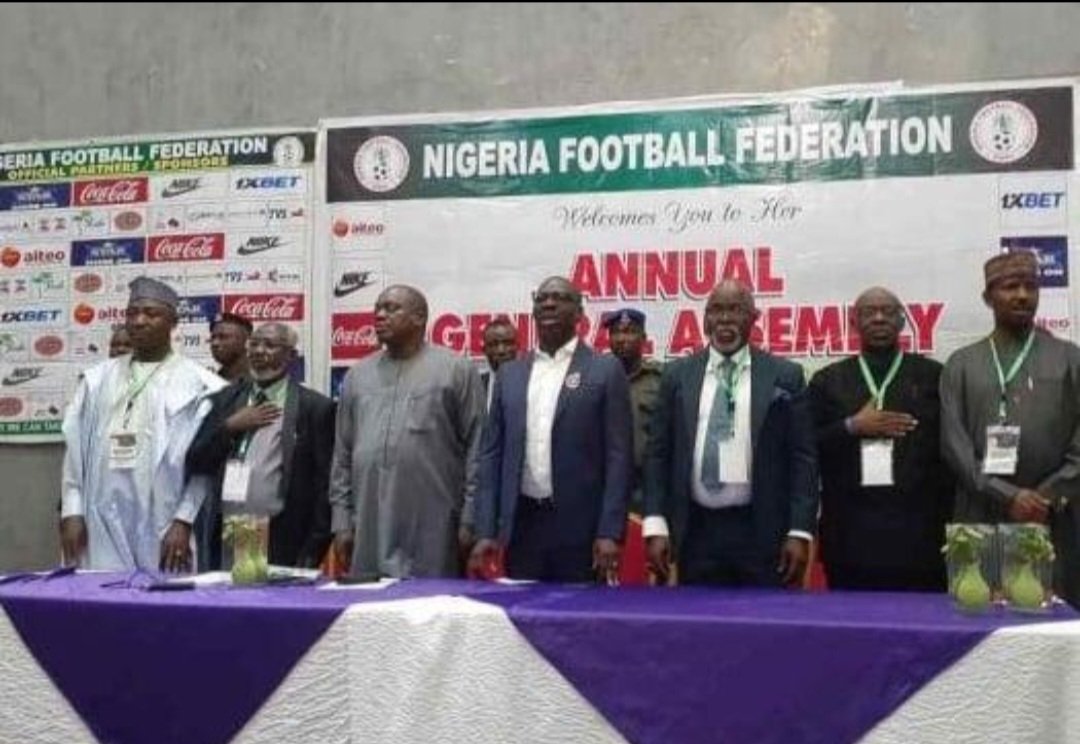
By Paul Lucky Okoku
The electorate has expanded. But has the balance of power really changed?
A NOTE BEFORE WE BEGIN
This examination should not be mistaken for an attack on any candidate, individual or administration.
I have no candidate in this election.
My interest is in the structure through which Nigerian football chooses its leadership. The current NFF administration should be judged, like any administration, on the totality of its record, and the electorate should ultimately make that judgment.
Indeed, the present leadership deserves acknowledgement for overseeing the March 2026 reforms that expanded representation within the Congress.
But supporting reform also means being willing to examine how far that reform has gone.
This article is therefore not about personalities.
It is about the system, the numbers and whether the distribution of electoral power adequately reflects the Nigerian football family.
Before Nigerians debate who should become the next President of the Nigeria Football Federation, perhaps we should first ask a more fundamental question:
Who actually chooses the NFF President?
Not who has the biggest name.
Not who played football.
Not who presents the best programme.
Not even who may be the most qualified.
Who has the votes?

For years, the answer could be found in a remarkable piece of electoral mathematics.
Under the previous NFF structure, the 36 State Football Associations and the Federal Capital Territory controlled 37 of the 44 votes in the NFF Congress.
That was 84.1 percent of the entire electorate.
Think about what that means.
One constituency within the Nigerian football family possessed more than four out of every five votes used to determine the leadership of the national game.
The structure operated under the NFF’s 2010 Statutes and became the subject of sustained criticism from stakeholders who argued that representation within the Congress was too heavily concentrated.
At the 2018 NFF election, for example, the electorate consisted of the 37 State FA/FCT representatives alongside representatives of the referees, players, coaches and the four national leagues — 44 voters altogether.
So although Nigerian football contains many different interests, one group accounted for 37 of those 44 votes.
That deserves examination.
WHAT DOES 84.1% REALLY MEAN?
Put football aside for a moment.
Imagine a hypothetical Nigerian presidential election.
Nigeria contains teachers, doctors, lawyers, farmers, traders, engineers, civil servants, business owners, artisans and people from countless other professions.
Now imagine that the electoral system gave one occupational group — let us use teachers purely as an illustration — 84.1 percent of the voting power.

Everyone else could participate.
Everyone else could campaign.
Everyone else could express an opinion.
But the teachers’ bloc, acting together, would possess enough votes to choose the President without needing the support of everybody else.
Would we consider that a broadly balanced electorate?
That is not a comparison between the constitutional election of a Nigerian President and an NFF election. They are obviously different institutions.
It is simply an illustration of what 84.1 percent concentration of voting power looks like when translated into everyday democratic language.
WHY DOES CONCENTRATED VOTING POWER MATTER?
Concentrated voting power does not, by itself, prove corruption.
That distinction is essential.
The concern is about institutional design and vulnerability to influence.
If candidates know that one relatively small constituency possesses enough votes to determine an election, political attention will naturally concentrate on that constituency.
Relationships with those voters become particularly valuable.
Their support becomes particularly valuable.
Their collective position becomes particularly powerful.
That does not mean anyone has done anything improper.
It means a well-designed electoral system should consider whether too much power has been concentrated in too few hands.
History gives Nigerians a reason to examine that question carefully.
Ahead of the 2010 FIFA World Cup in South Africa and the football elections that followed, contemporary Nigerian newspaper reports raised concerns about State FA chairmen travelling to major tournaments and about the possible electoral implications of those relationships.
Those were allegations and concerns raised at the time; they should not now be converted into established facts of vote-buying.
The more important governance question survives regardless:
Should an electoral system be designed in a way that makes the support of one constituency overwhelmingly decisive?
Good governance should protect the institution, the candidates and the voters themselves from situations capable of creating reasonable questions about influence.
THEN CAME MARCH 2026
On March 23, 2026, at an Extraordinary General Assembly in Yenagoa, Bayelsa State, the NFF unanimously approved amendments to its Statutes, Electoral Code and Standing Orders.
That reform deserves recognition.
The new framework broadened participation considerably.
The NFF Congress now comprises 108 delegates exercising 54 votes, bringing additional representation from clubs, leagues, women’s football, players, coaches, referees and other parts of the football family.
That is progress.
Credit should be given where credit is due.
But expanding an electorate and redistributing electoral power are not necessarily the same thing.
That brings us to the new mathematics.
FROM 84.1% TO 68.5%
Under the previous structure:
State FAs + FCT: 37 votes
Total votes: 44
Share: 84.1%
Under the new structure:
State FAs + FCT: 37 votes
Total votes: 54
Share: 68.5%
So the proportion controlled by the State FAs and FCT has fallen by approximately 15.6 percentage points.
That is a meaningful reduction.
But consider what remains.
The State FAs and FCT have:
37 votes.
All the other constituencies combined have:
17 votes.
That is 37 versus 17.
And this is where the reform deserves further examination.
A majority of a 54-vote electorate is 28 votes.
Therefore, if 28 or more State FA/FCT votes align behind one candidate, that candidate can reach a majority without requiring a single vote from any of the other 17 votes available to the rest of the football constituencies.
That is not an accusation.
It is simply the mathematics of the electorate.
THE QUESTION IS NOT WHETHER STATE FAs SHOULD VOTE
State Football Associations are essential parts of Nigerian football.
There are 36 states and the Federal Capital Territory. Football development happens locally, and State FAs deserve meaningful representation in the national structure.
The question is not whether they should vote.
Of course they should.
The question is whether any one constituency — State FAs, players, clubs, leagues, coaches, referees or anybody else — should possess enough electoral strength to determine the leadership of Nigerian football without requiring meaningful support from the other major stakeholders.
There is another question worth considering.
State Football Associations are important to the administration and development of the game, and they deserve representation.
But football ultimately exists because footballers take the field.
If State FA chairmen collectively decided tomorrow not to attend a football match, the match could still be played.
If the players collectively decided not to take the field, there would be no match.
No television product.
No gate receipts.
No sponsorship spectacle.
No national team.
No professional football.
That does not mean players should control the electorate either. It raises a narrower question about proportionality: does the distribution of voting power reasonably reflect the roles of the different constituencies that make football possible?
Under the current structure, the 36 State Football Associations plus the FCT possess 37 votes.
The Players Association possesses one vote.
Thirty-seven votes to one.
That comparison deserves examination — not because State FAs should lose their voice, and not because players should dominate the system, but because representation should reasonably reflect the different constituencies that sustain the game.
That is a question of balance and proportionality.
A healthier representative system should encourage anyone seeking the NFF presidency to build support across Nigerian football.
Talk to the State FAs.
But also persuade the players.
Persuade the coaches.
Persuade the referees.
Persuade the clubs and leagues.
Persuade women’s football.
Build a coalition across the game.
When candidates need several constituencies to win, those constituencies have a reason to demand answers, programmes and accountability.
REFORM HAS STARTED. SHOULD IT STOP HERE?
The March 2026 changes should not be dismissed.
Moving from 84.1 percent to 68.5 percent is movement.
Broadening representation is progress.
And those responsible for achieving that reform deserve acknowledgement for taking that step.
But acknowledging progress should never prevent us from examining what remains.
Before the reform, one constituency held 37 of 44 votes.
After the reform, that same constituency holds 37 of 54 votes.
The electorate became larger.
The percentage became smaller.
But the 37 votes remained 37.
That may be the most important number in this entire discussion.
On September 27, 2026, Nigerian football will elect its leadership in Lafia, Nasarawa State.
Before the conversation becomes entirely about personalities, Nigerians should examine the architecture through which those personalities obtain power.
The reforms have changed the numbers.
They deserve credit for doing so.
But Nigerian football should still be willing to ask:
Has the electorate merely been expanded, or has electoral power been sufficiently redistributed?
From 84.1 percent to 68.5 percent is progress.
Whether it represents enough progress is a legitimate question.
And that question should be answered not with accusations, personalities or insults—
but with the numbers.