General News
Nigerian Filling Stations Begin Pump Price Reduction 120 Hours After Dangote Refinery Price Cut

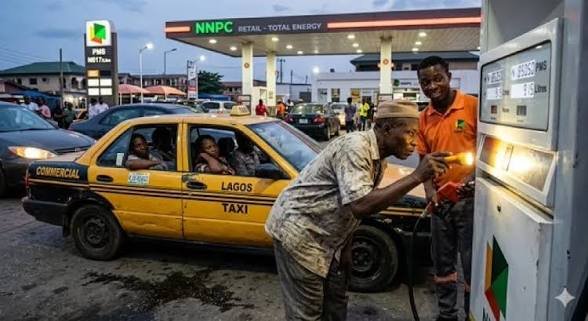
Nigerian filling stations have finally begun reducing their fuel pump prices, five days after Dangote Refinery announced a significant cut to its gantry price, bringing relief to motorists across the country.
A market survey conducted on Sunday morning showed that major retail outlets including Eterna, NIPCO, AA Rano, and Ranoil have all dropped their fuel pump price to between N1,280 and N1,300 per litre in Abuja and environs, down from the previous rate of N1,340 per litre. This represents a reduction of about N35 to N55 per litre.

In Ilorin, Kwara State, similar adjustments were observed, with NIPCO, Matrix, BOVAS, and Ranoil filling stations reducing their pump prices to between N1,250 and N1,280 per litre, from about N1,300 previously.
The domestic fuel price reduction followed Dangote Refinery’s decision to slash the gantry price of petrol to N1,175 per litre from N1,250 per litre, a cut of N75 per litre, effective from midnight on June 16, 2026.
The refinery attributed the price review to the easing of geopolitical tensions in the Middle East and a sharp decline in international crude oil prices.
Dangote Refinery-backed MRS filling stations had earlier on Friday reduced their petrol price by N76 to N1,241 per litre, setting the pace for other marketers to follow.
However, retail outlets operated by the Nigerian National Petroleum Company Limited have yet to reduce their pump prices, currently selling at N1,335 per litre in Abuja and N1,295 in some other locations . This delay mirrors a trend observed earlier when marketers retained high prices despite the refinery’s reduction.
The Petroleum Products Retail Outlets Owners Association of Nigeria has called on refiners, depot owners, and petroleum products importers to reduce ex-depot and retail pump prices in line with the global crude oil decline.
PETROAN National President, Billy Gillis-Harry, said the downward trend should be reflected across the downstream value chain, stressing that market realities demand fairness and responsiveness from industry operators.