
General News
INEC Declares Readiness for Osun Governorship Election, Unveils Security and Technology Plans

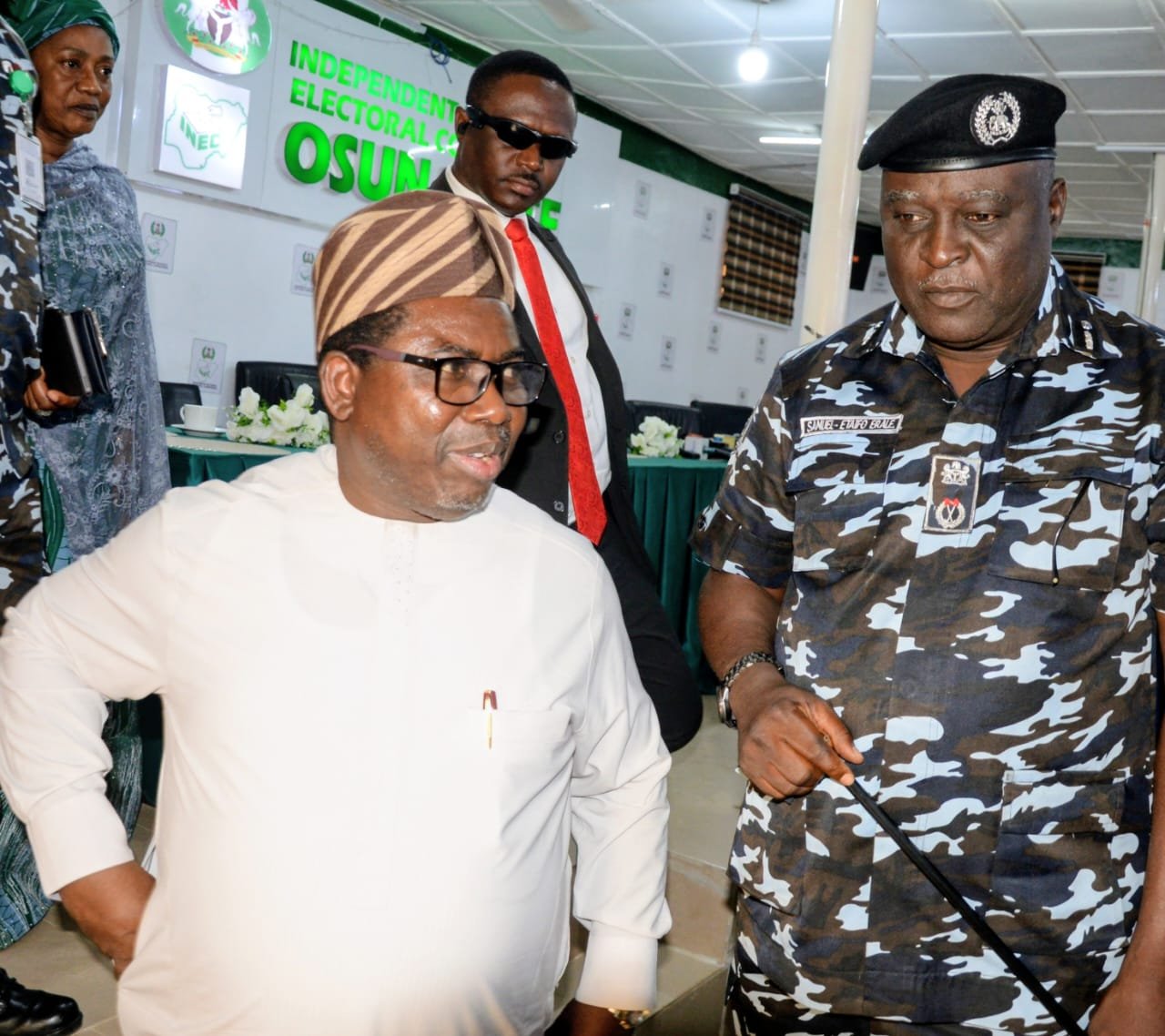
The Independent National Electoral Commission (INEC) says it is fully prepared for the August 15, 2026 Osun State governorship election, assuring voters that comprehensive security, logistics and technological measures have been put in place to deliver a free, fair and credible poll.


Speaking during an interactive session with media executives in Osogbo on Saturday, INEC Chairman Prof. Joash Ojo Amupitan (SAN) said the Commission had completed major stages of its election preparations and was entering the final phase ahead of the off-cycle governorship election.
He described the media as a critical partner in Nigeria’s democratic process, urging journalists to prioritise factual reporting and help combat misinformation capable of undermining public confidence in the election.
The INEC chairman disclosed that the Commission had just concluded a statewide mock accreditation exercise across the three senatorial districts to test the efficiency of the Bimodal Voter Accreditation System (BVAS).
According to him, the exercise showed that voter accreditation took between 30 seconds and two minutes, while the dual biometric verification system significantly reduced cases of failed authentication.
To strengthen the process, INEC increased the number of BVAS machines allocated for the election from 4,427 to 5,130, while backup devices were doubled from 664 to 1,328 to ensure immediate replacement in the event of technical failures.
He said the additional machines would also cater for split polling units in several local government areas, including Ife East, Irewole, Egbedore, Ede North and Osogbo.
INEC said 2,339,233 registered voters are expected to participate in the election across 3,763 polling units, 320 wards and 30 local government areas.
The Commission also confirmed that 14 political parties will contest the governorship election.
According to Amupitan, the Commission is concluding the training of ad hoc personnel, supported by approximately 32,000 members of the National Youth Service Corps (NYSC) recruited through INEC’s portal.
Responding to growing concerns over political violence, the INEC chairman said the Commission had adopted a proactive security strategy in collaboration with the Inter-Agency Consultative Committee on Election Security (ICCES).
He said intelligence assessments had identified potential flashpoints across several local government areas, including Atakunmosa East, Atakunmosa West, Boripe, Ede North, Ede South, Ife Central, Ifedayo, Ila, Ifelodun, Oriade and Osogbo, where additional security personnel would be deployed.

INEC said specialised security teams would work to prevent ballot disruption, electoral violence, cult-related activities and voter intimidation while maintaining strict neutrality throughout the election.
Addressing recent attacks on INEC facilities, Amupitan confirmed that criminals stole batches of uncollected Permanent Voter Cards (PVCs) during attacks on the Commission’s offices in Okuku and Ife Central.
He, however, assured voters that the stolen cards cannot be used to cast votes because every voter must undergo live biometric verification using the BVAS before accreditation.
He added that the serial numbers of the stolen PVCs could be blacklisted electronically and announced that affected voters would either receive reprinted cards or be allowed to use downloadable PVCs during the election.
INEC also announced stronger collaboration with the Economic and Financial Crimes Commission (EFCC), the Independent Corrupt Practices and Other Related Offences Commission (ICPC) and other security agencies to tackle vote buying.
The Commission said plainclothes anti-corruption operatives would monitor polling units to arrest individuals involved in buying or selling votes, including transactions carried out through electronic transfers.
To improve inclusiveness, the electoral body said assistive materials would be available for persons living with disabilities.
These include Braille ballot guides, magnifying glasses for voters with visual impairments, priority voting arrangements for the elderly, pregnant women and nursing mothers, as well as communication materials designed for hearing-impaired voters.
Amupitan disclosed that INEC had consulted major traditional rulers in Osun State, including the Ooni of Ife, Oba Adeyeye Enitan Ogunwusi, and the Ataoja of Osogbo, Oba Jimoh Olanipekun Oyetunji, who pledged to promote peaceful participation during the election.
The Commission also finalised logistics arrangements with transport unions, including the National Union of Road Transport Workers (NURTW) and the Nigerian Association of Road Transport Owners (NARTO), while directing that drivers with political affiliations or criminal records should not participate in election duties.
The INEC chairman urged journalists to avoid spreading misinformation, warning that false reports and premature declaration of election results could undermine public confidence and threaten peace.
He reminded Nigerians that only accredited voters with valid PVCs would be allowed to vote and reiterated that INEC’s responsibility is not to determine who wins the election but to ensure that every valid vote counts.
According to him, the Osun governorship election will serve as an important test ahead of the 2027 General Election, expressing confidence that collaboration between INEC, security agencies and the media would produce a credible electoral process.