
General News
NNPCL Sells Petrol at ₦1,405/Litre as FG’s ₦1,350 Price-Cap Plan Faces Test

Nigeria’s efforts to stabilise petrol prices are facing renewed scrutiny as the Nigerian National Petroleum Company Limited (NNPCL) continues to sell petrol at ₦1,405 per litre at some retail outlets, despite the Federal Government’s proposed mechanism to limit wholesale price increases.
The Federal Government announced the proposed ₦1,350-per-litre ceiling on petrol’s ex-gantry or landing cost as part of measures to cushion households and businesses against rising fuel prices. Finance Minister Taiwo Oyedele said the arrangement was designed to prevent sudden increases in international crude oil prices and exchange-rate movements from immediately translating into higher domestic fuel costs.
Under the proposal, refiners and importers would initially absorb costs above the agreed ceiling and recover the difference when market conditions improve. The government said the arrangement was intended to smooth price fluctuations rather than restore the petrol subsidy removed in 2023.
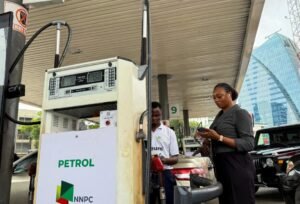
However, petrol prices at filling stations have remained elevated. Reports published by Vanguard on October 11 showed that some NNPCL, AA Rano, AYM Shafa and MRS outlets in Abuja had raised pump prices to ₦1,405 or ₦1,409 per litre. Prices at some Lagos stations ranged from ₦1,350 to ₦1,400, depending on the outlet and location.
NNPCL’s pump price has also raised questions about the reach of the company’s temporary price-relief initiative. The company introduced a ₦66-per-litre discount in October and extended it until October 31, 2026. However, a report by Punch found that motorists paying directly at some NNPCL stations in Abuja were charged ₦1,405 per litre, while customers using the company’s mobile application paid ₦1,339.
The arrangement means the advertised discount is not automatically available to every customer at the pump, potentially limiting its immediate benefit to motorists who cannot or do not use the digital payment platform.
The Federal Government has maintained that NNPCL’s discount is funded by the company foregoing its retail profit margin, rather than through a government-funded subsidy. The administration has also presented the proposed wholesale price ceiling as a separate measure aimed at reducing volatility in the fuel market.
The developments come amid continued pressure from international oil prices and the cost of supplying petrol to the Nigerian market. Reuters reported in September that petrol prices had climbed to around ₦1,400 per litre in Lagos and Abuja, while some stations in northern Nigeria charged as much as ₦1,500. The report also linked rising domestic prices to an increase in Dangote Refinery’s wholesale price to ₦1,350 per litre.
For Nigerian households and businesses, sustained high petrol prices threaten to increase transport fares, distribution costs and the cost of operating petrol-powered generators. Commercial drivers and small businesses are particularly exposed because fuel expenses feed directly into their daily operating costs.
Although the latest reported prices raise questions about how effectively the government’s measures will protect consumers, the ₦1,350 proposal should not be confused with a fixed national pump price. Its intended effect depends on the wholesale pricing arrangement, how any excess costs are managed and whether the resulting savings reach motorists.
The key test for the Federal Government will be whether the proposed mechanism can deliver more predictable prices and meaningful relief to consumers without creating fresh uncertainty for refiners, importers and petroleum marketers.