
International
Pilot Challenges Alaska’s Attempt to Confiscate $95,000 Plane Over Beer Shipment


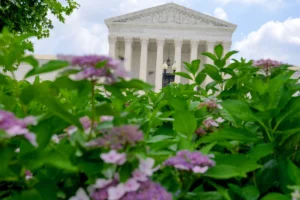
The U.S. Supreme Court has agreed to hear an unusual constitutional case involving an Alaska bush pilot who is fighting the state’s attempt to confiscate his $95,000 aircraft after a passenger brought a six-pack of beer aboard a flight bound for a “dry” Alaska village. The case is expected to test the limits of government asset forfeiture and the constitutional protection against excessive fines.
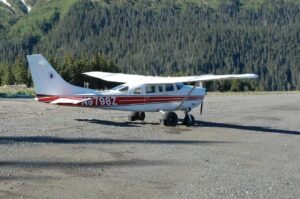
The case centers on Kenneth Jouppi, an 82-year-old Air Force veteran and longtime bush pilot, whose legal battle has stretched on for more than a decade. In 2012, Jouppi was preparing to fly a passenger from Fairbanks to the remote village of Beaver, where local law prohibits the sale and possession of alcohol. Before takeoff, Alaska State Troopers discovered beer in the passenger’s luggage, including a visible six-pack of Budweiser. Authorities charged Jouppi with a misdemeanor for knowingly transporting alcohol into a dry community.

A trial court convicted Jouppi, sentencing him to three days in jail and imposing a $1,500 fine. However, under Alaska law, authorities also sought to permanently seize his 1969 Cessna aircraft, arguing that any airplane used to transport alcohol into a dry village is subject to criminal forfeiture. The Alaska Supreme Court later upheld the seizure, ruling that it did not violate constitutional protections.
Jouppi, represented by the Institute for Justice, argues that confiscating an airplane worth approximately $95,000 for an offense involving a six-pack of beer amounts to an excessive punishment prohibited by the Eighth Amendment’s Excessive Fines Clause. His attorneys contend that courts should consider whether the value of the property being seized is grossly disproportionate to the underlying offense.
In a statement released after the Supreme Court agreed to hear the appeal, Jouppi said he hoped the case would protect constitutional rights beyond his own circumstances. “I’m in my 80s now, and I’ve been fighting this for over a decade,” he said, describing the case as a stand against government overreach.
Alaska, however, argues that strict enforcement is necessary because many isolated communities have chosen to ban alcohol due to its devastating social consequences. Since many villages can only be reached by aircraft, the state maintains that allowing authorities to seize planes used to transport alcohol serves as an important deterrent against illegal deliveries.
Legal experts say the Supreme Court’s decision could have implications far beyond Alaska. Asset forfeiture laws have long been controversial, with critics arguing that governments sometimes seize property whose value far exceeds the seriousness of the alleged offense. A ruling in Jouppi’s favor could make it more difficult for states to impose forfeitures that are viewed as disproportionate under the Constitution.
The justices are expected to hear oral arguments during their next term, with a decision likely in 2027. The outcome could become one of the court’s most significant recent rulings on the Eighth Amendment and help define how far governments may go when using asset forfeiture as a criminal penalty.