
World News
Trump, Xi Conclude High-Level Summit With Claims of Progress, But Deep Differences Persist

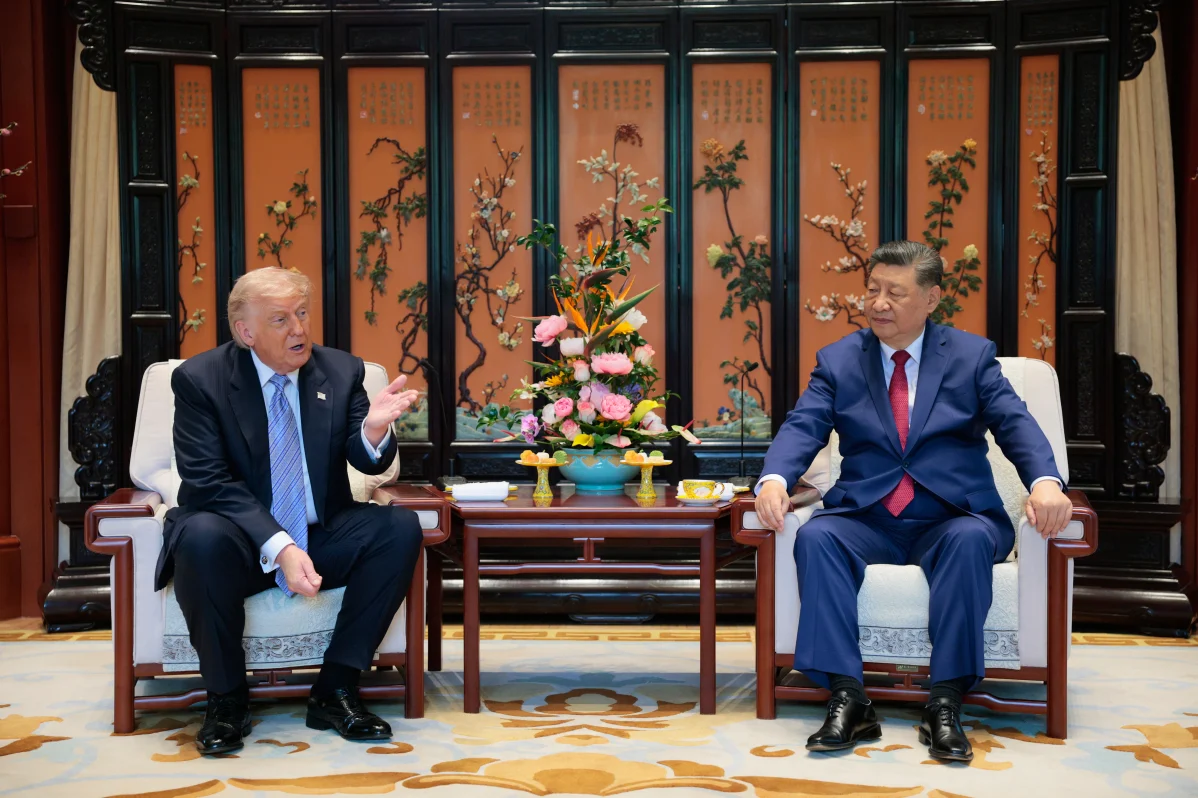
U.S. President Donald Trump and Chinese President Xi Jinping have concluded a closely watched summit aimed at stabilizing strained relations between the world’s two largest economies, with both sides acknowledging limited progress while admitting that significant differences remain unresolved.
According to statements and briefings from officials on both sides, the talks focused on trade tensions, technology restrictions, military activity in the Indo-Pacific, and broader economic cooperation. While both leaders described the discussions as “constructive” and “forward-looking,” there was no announcement of a major breakthrough agreement.
Sources familiar with the negotiations indicated that both delegations agreed in principle to strengthen communication channels to prevent misunderstandings, especially in military and economic policy. There were also indications of tentative steps toward easing certain trade frictions, though no formal tariff rollbacks or binding commitments were confirmed.
Analysts cited in multiple international reports noted that the summit appeared more focused on “damage control” than transformation, with both governments seeking to avoid further escalation in an already fragile relationship.
Despite the tone of cooperation, deep divisions remain over semiconductor restrictions, Taiwan’s security status, and competing influence in the Indo-Pacific region. U.S. officials reiterated concerns over what they describe as “unfair trade practices,” while Chinese representatives criticized ongoing export controls and sanctions imposed by Washington.
Observers from various policy institutes noted that while dialogue has resumed at the highest level, trust between both sides remains limited.
Financial markets reacted cautiously to the outcome of the summit, with investors interpreting the lack of concrete agreements as a sign that structural tensions between Washington and Beijing are likely to persist in the near term.