
War
U.S. Launches Airstrikes on Iran After Drone Attack on Cargo Ship in Strait of Hormuz

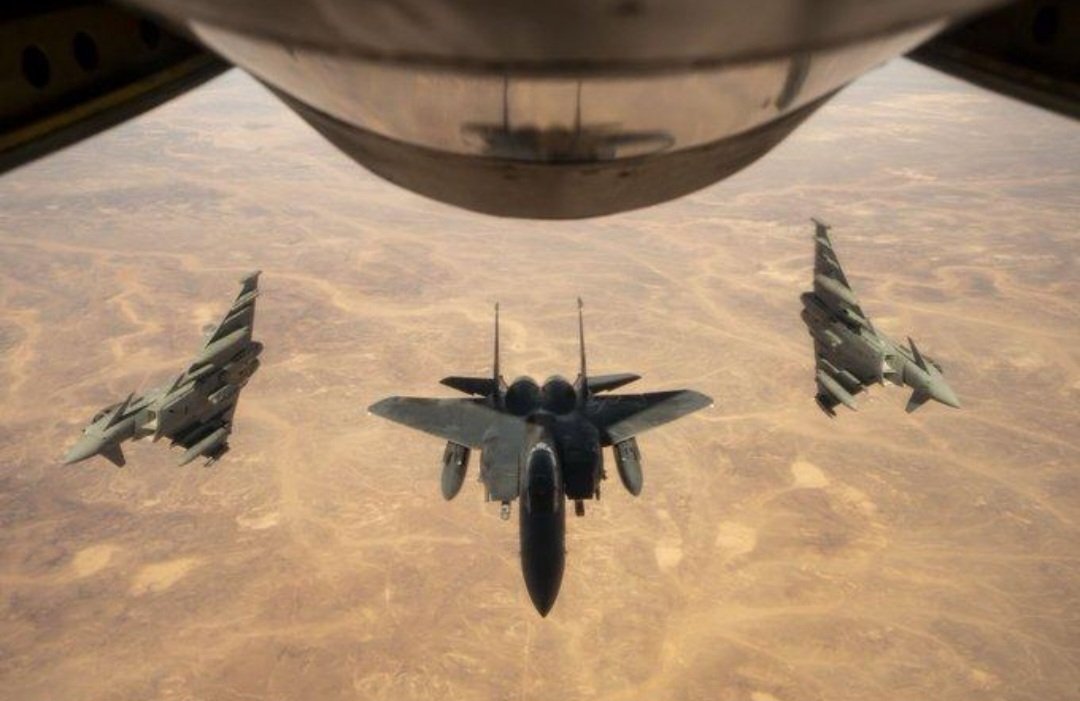
The United States launched a series of military strikes against Iranian targets on Friday after Tehran was accused of carrying out a drone attack on a commercial cargo ship transiting the strategically vital Strait of Hormuz, dramatically escalating tensions in the Gulf and threatening a fragile ceasefire agreement reached only days earlier.
According to the U.S. Central Command (CENTCOM), American aircraft struck Iranian missile and drone storage facilities as well as coastal radar installations used to monitor shipping traffic in the Strait of Hormuz. U.S. officials described the operation as a direct response to what Washington called an “unwarranted attack” on international commercial shipping.
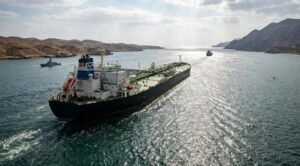
The strikes followed an incident involving the Singapore-flagged cargo vessel M/V Ever Lovely, which was reportedly hit by a one-way attack drone while exiting the Strait of Hormuz along the Omani coast. U.S. officials blamed Iran for the attack, arguing that it violated a ceasefire framework negotiated between the two countries the previous week.
President Donald Trump condemned the attack and warned that Iran would face consequences for breaching the agreement. Speaking to reporters before the strikes, Trump described the drone attack as a “foolish violation” of the ceasefire and indicated that a military response was under consideration. Hours later, American warplanes launched the operation against Iranian military infrastructure.
Military officials said the strikes focused on facilities believed to support Iran’s drone and missile capabilities. These included storage sites housing unmanned aerial vehicles and missile systems, along with radar stations positioned along Iran’s southern coastline. Such facilities play a critical role in monitoring and controlling maritime traffic through the Strait of Hormuz, one of the world’s most important shipping corridors.
The Pentagon has not released details regarding casualties or the extent of the damage inflicted during the operation. However, Iranian media reported that projectiles struck areas around the southern port city of Sirik, located near the Strait of Hormuz.
Iranian officials swiftly condemned the strikes, accusing Washington of violating the same ceasefire agreement it claims to be defending. Tehran argued that it retains the right to regulate shipping movements through the Strait of Hormuz and insisted that vessels operating in the area must comply with Iranian maritime directives.
Iran’s Revolutionary Guard Corps (IRGC) reportedly warned that further military action could trigger additional retaliation. Iranian state-linked media claimed that Iranian forces subsequently targeted U.S. military assets in the region, though independent verification of those claims has not yet emerged.
The dispute reflects a broader disagreement over control of the Strait of Hormuz, a narrow waterway connecting the Persian Gulf to international markets. Roughly one-fifth of the world’s oil supplies pass through the strait, making any disruption a major concern for global energy markets and international trade.
The latest confrontation has renewed concerns about maritime security in one of the world’s busiest shipping lanes. Shipping companies and maritime authorities have already reported disruptions to vessel traffic following the attack on the cargo ship. Some operators have delayed voyages, altered routes, or increased security measures amid fears of additional attacks.
Industry analysts warn that continued instability in the Strait of Hormuz could lead to higher insurance costs, shipping delays, and increased energy prices. The waterway serves as a critical artery for oil exports from major Gulf producers, including Saudi Arabia, Iraq, Kuwait, and the United Arab Emirates.
Vice President JD Vance defended the strikes, stating that the United States remained committed to protecting freedom of navigation and ensuring the safety of international commerce.

“Violence will be met with violence,” Vance said, warning that any further attacks on commercial vessels or U.S. interests would trigger additional responses.
Administration officials stressed that the operation was designed to be limited in scope and focused solely on military targets linked to the attack on the cargo vessel. However, analysts caution that even limited strikes risk provoking a wider confrontation between the two countries.
The escalation comes at a delicate moment for the Middle East. Diplomatic efforts aimed at reducing tensions have recently produced modest progress, including a U.S.-brokered framework agreement between Israel and Lebanon intended to reduce hostilities involving Hezbollah. Yet the renewed exchange between Washington and Tehran threatens to overshadow those developments.
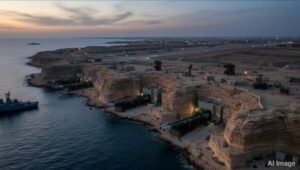
Regional governments are closely monitoring the situation, fearing that a broader conflict could destabilize the Gulf and undermine ongoing diplomatic initiatives. Gulf states have repeatedly called for unrestricted navigation through the Strait of Hormuz and have urged all parties to avoid actions that could escalate tensions further.
Financial markets reacted cautiously to the developments. Investors are increasingly concerned that any prolonged disruption in the Strait of Hormuz could affect global energy supplies and fuel inflationary pressures worldwide. Oil traders are closely watching whether additional military incidents occur in the coming days.
Security experts note that the latest confrontation demonstrates how quickly localized incidents can evolve into broader geopolitical crises. With both Washington and Tehran accusing each other of violating ceasefire commitments, prospects for de-escalation remain uncertain.
For now, the immediate focus remains on preventing further attacks in the Strait of Hormuz and avoiding a wider military confrontation. However, with both sides signaling a willingness to respond forcefully to perceived provocations, the latest exchange has heightened fears that the fragile peace established only days ago could unravel entirely.