
World News
US Expects Strait of Hormuz Deal Soon as Saudi Arabia, Turkey and Pakistan Seal Defence Pact

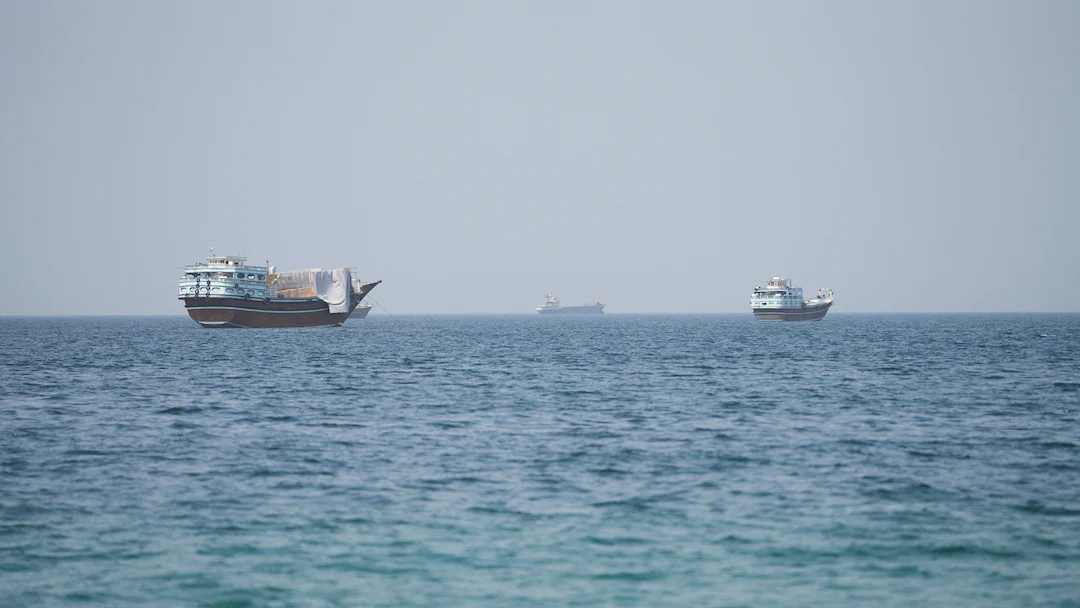
Washington says Iran and Oman are making progress toward an agreement that could restore unrestricted commercial shipping through the Strait of Hormuz, while Saudi Arabia, Turkey and Pakistan have formed a new mutual-defence framework amid escalating regional tensions.
The Middle East is witnessing two potentially significant diplomatic and security developments at the same time: the United States says a deal to reopen the Strait of Hormuz could be reached soon, while three influential Muslim-majority countries; Saudi Arabia, Turkey and Pakistan, have signed a collective defence agreement in Mecca.
The developments come against the backdrop of the ongoing US-Iran conflict, attacks on Gulf shipping and mounting concerns over the disruption of one of the world’s most important energy corridors.

A US official said Friday that Washington expects Iran and Oman to reach an agreement soon that would allow normal commercial traffic to resume through the Strait of Hormuz.
The official told Reuters that once an agreement is announced to restore commercial shipping “without impediments”, the United States would lift its blockade of Iranian ports. Washington also said its actions would remain dependent on Iran fulfilling its commitments under any eventual arrangement.

The proposed reopening is particularly important because the Strait of Hormuz has traditionally carried roughly one-fifth of the world’s oil consumption, making it one of the most strategically important maritime chokepoints on the planet.
The prolonged disruption has already contributed to higher energy prices and inflationary pressure, while attacks on commercial vessels have added to insurance and transportation costs.
Iran-Oman agreement faces major obstacles
Despite Washington’s optimism, the proposed arrangement is far from settled.
Iran and Oman have been discussing how commercial traffic would operate through the waterway, with one proposal giving Tehran the ability to intervene in inbound traffic while outbound ships would use a route between Iran and Oman and obtain clearance through Oman after notifying Iranian authorities.

The shipping industry has warned that such an arrangement could be difficult to implement.
One of the biggest disagreements concerns fees. A senior Iranian official told Reuters that Tehran was seeking charges equivalent to between 5% and 7% of cargo value, while Oman was discussing a lower figure of around 3%. Washington, meanwhile, wants shipping through the strait to carry no fees.
International shipping organisations have also warned that compulsory charges could effectively amount to a toll on a waterway that has traditionally been open to international navigation.
The International Maritime Organization’s governing council said in July that countries around the strait should guarantee the non-discriminatory and unimpeded right of transit passage and that passage should remain free of tolls and charges.
Insurance creates another complication
The disagreement is not simply political.
US sanctions against Iran’s Strait Authority could create serious compliance problems for international shipping companies that make payments to Iranian authorities.
There is also a new insurance complication. The Lloyd’s Market Association introduced a clause in late July under which war-risk insurance could be terminated for vessels that pay a transit fee, toll or other charge to pass through the Strait of Hormuz.
That leaves shipping companies facing a difficult choice: comply with an Iranian demand for payment and potentially jeopardise insurance coverage, or refuse payment and risk being denied passage.
As a result, even if Washington and Tehran reach a political understanding, restoring normal commercial traffic could take time.
While negotiations over Hormuz continue, Saudi Arabia, Turkey and Pakistan signed the Mecca Joint Defence Agreement on Friday.
The agreement states that an armed attack against any one of the three countries would be regarded as an attack against all three. It also calls for broader cooperation across defence and security matters.
The agreement was signed in Mecca by Saudi Crown Prince Mohammed bin Salman, Turkish President Recep Tayyip Erdogan and Pakistani Prime Minister Shehbaz Sharif.
The three countries bring different strategic capabilities to the arrangement. Saudi Arabia is a major global oil exporter and a leading Gulf power; Turkey possesses one of the region’s largest militaries and is a NATO member; while Pakistan is the world’s only nuclear-armed Muslim-majority state.
The pact therefore brings together substantial financial, military, technological and strategic capabilities.
Pact comes amid fears of regional escalation
The timing of the agreement is significant.
Saudi Arabia has faced growing security concerns as the wider conflict has spilled into the Gulf, threatening oil infrastructure and shipping routes. Turkey and Pakistan have also sought to prevent the conflict from spreading further and threatening their own economic and security interests.
The agreement does not explicitly name Iran or Israel as a target.
Turkish officials stressed that the pact is defensive and is not directed against any particular country. A Saudi official likewise said the agreement was not intended to create a military axis or sectarian bloc and was not connected to nuclear ambitions or an arms race.
Nevertheless, the agreement is being viewed against a backdrop of worsening tensions between Iran and several Gulf states.
Is this a new ‘Islamic NATO’?
The agreement is already attracting comparisons with NATO because of its collective-defence language.
However, there are important differences.
The three governments have not described the arrangement as an Islamic NATO, and the publicly available details do not establish a NATO-style integrated military command or specify exactly what military response would be required if one member were attacked.
Reuters reported that the agreement did not spell out the precise commitments each country had undertaken or how far the pact would legally bind them to particular military action.
A Turkish official said the agreement could support areas including military cooperation, while reports have also pointed to possible joint exercises, training, technology cooperation and intelligence sharing.
The pact also does not replace existing bilateral or multilateral defence agreements involving the three countries.
Building on Saudi-Pakistani military ties
The new agreement builds on a defence relationship between Saudi Arabia and Pakistan that was strengthened last year.
In September 2025, Riyadh and Islamabad signed their own Strategic Mutual Defence Agreement, under which aggression against either country would be considered aggression against both.
The addition of Turkey now expands that security relationship into a trilateral framework involving three countries with significant military and geopolitical influence.
Analysts quoted by Reuters described the development as part of a broader move toward a more regionally driven security architecture, as Middle Eastern powers reassess their dependence on traditional security arrangements.

Energy markets watching the Hormuz talks
The outcome of the Iran-Oman negotiations could have consequences well beyond the Middle East.
The Strait is a critical route for oil and gas exports from the Persian Gulf. Disruption has already reduced shipping activity and created uncertainty for energy traders, shipowners and consumers.
UN Trade and Development has previously warned that disruption to Hormuz could affect energy markets, fertiliser supplies, maritime transport and vulnerable economies around the world.
For countries that import fuel, including many developing economies, a sustained reopening could eventually ease pressure on oil prices, freight costs and inflation.
But markets are likely to remain cautious until ships can actually transit the waterway reliably and without restrictions.
The two developments; the prospective Hormuz agreement and the Mecca defence pact, illustrate the changing dynamics of the Middle East.
On one side, Washington is seeking a practical arrangement that would restore commercial navigation and potentially ease one of the biggest economic consequences of the war.
On the other, Saudi Arabia, Turkey and Pakistan are strengthening their own collective security capabilities as regional governments confront the possibility that instability could persist.
The immediate test will be whether Iran and Oman can resolve the questions surrounding control, fees and safe passage through Hormuz.
Until those issues are settled, the US expectation of an imminent deal remains just that an expectation rather than a completed agreement. Shipping companies, insurers and global energy markets will be watching closely for evidence that vessels can once again move through the waterway safely, predictably and without costly restrictions.