
World News
Iran Will Not Surrender to US Pressure, Pezeshkian Tells UN

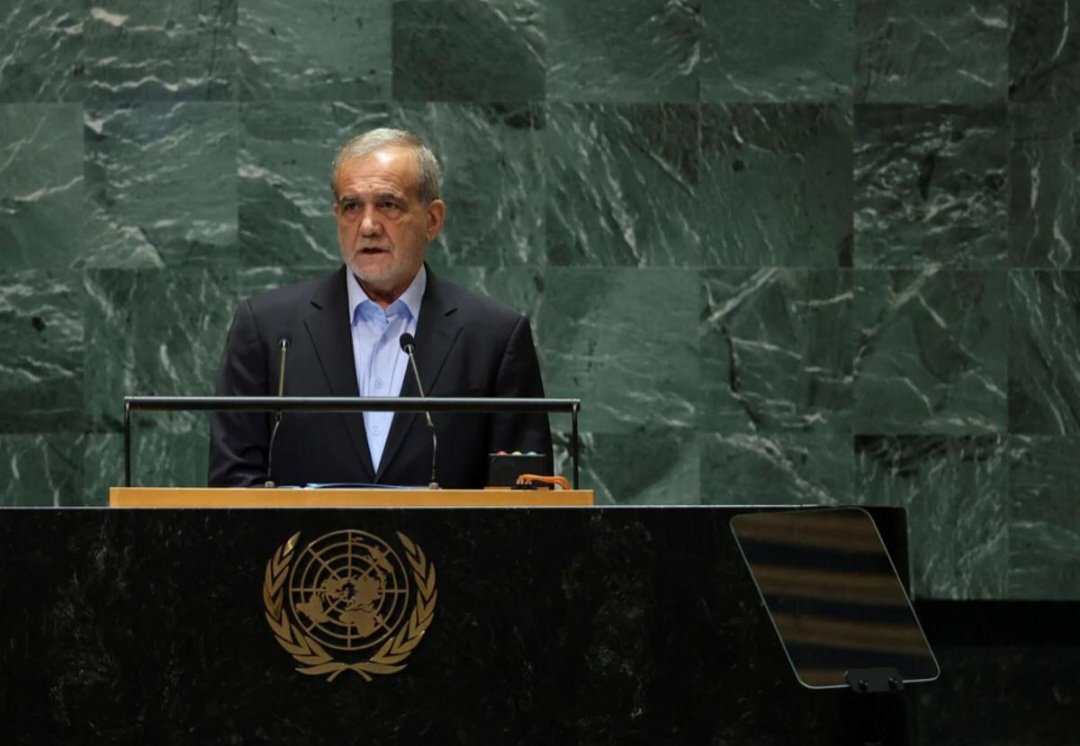
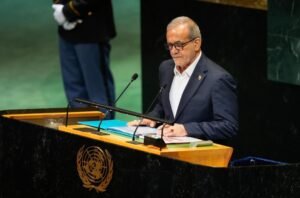
Iranian President Masoud Pezeshkian has told the United Nations that Tehran will not surrender to US pressure, while insisting that Iran remains willing to pursue dialogue and diplomacy to end the conflict with Washington.
Pezeshkian made the remarks on Wednesday, September 23, during his address to the 81st United Nations General Assembly in New York, a day after US President Donald Trump used the same platform to warn that he could “annihilate” the Islamic Republic if a deal was not reached.
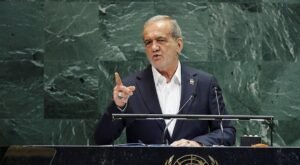
The contrasting speeches came as Washington and Tehran showed signs of renewed diplomatic contact, even as their public positions remained sharply divided. US and Iranian officials held their first known indirect talks in months on the sidelines of the UN gathering, with mediators carrying messages between the two sides.
Pezeshkian said Iran was prepared to negotiate but would not accept what he described as negotiations conducted under threats or military pressure.
“We are ready for dialogue and diplomacy and negotiations,” Pezeshkian said, while rejecting what he described as the language of force.
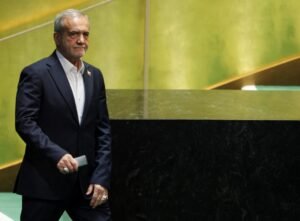
He also defended Iran’s military actions as self-defence and rejected accusations that Tehran was pursuing nuclear weapons. In his address, Pezeshkian portrayed Iran as having come under attack and said the country had responded to defend itself.
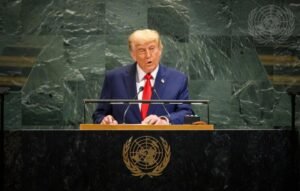
The speech followed Trump’s address to the General Assembly on Tuesday, in which the US president said he faced a choice between reaching an agreement with Iran and “annihilating” the Islamic Republic. Trump also called on Tehran to return to negotiations and said he believed a deal could eventually be reached.
The Iranian president’s remarks therefore came against the backdrop of a complicated diplomatic picture. While both sides have indicated some willingness to communicate, disagreements over the war, sanctions, Iran’s nuclear programme and access to the Strait of Hormuz remain unresolved.
The Strait of Hormuz has become a major point of contention between Washington and Tehran because of its importance to global oil and gas shipments. Pezeshkian argued that Iran could not be expected to accept restrictions on its access to the waterway while foreign military forces maintained a presence there.
Reuters reported that a senior Iranian official said after the UN speeches that Washington and Tehran remained far apart over how to end the war, although diplomacy would continue. The diplomatic contacts in New York have so far produced no publicly announced breakthrough.
The US delegation also walked out at the beginning of Pezeshkian’s address, according to Reuters and other reports, underscoring the continuing tension between the two governments.
Pezeshkian’s speech nevertheless left open a diplomatic channel. His message was that Iran would resist pressure but remained prepared to negotiate if talks were conducted without threats of military action.
The competing addresses at the UN have highlighted the difficult balance facing efforts to end the conflict: Washington is demanding major concessions from Tehran, while Iran says it will not negotiate under coercion but remains open to diplomacy.