
World News
UN Chief Sounds Alarm on AI Risks as Trump Downplays Concerns

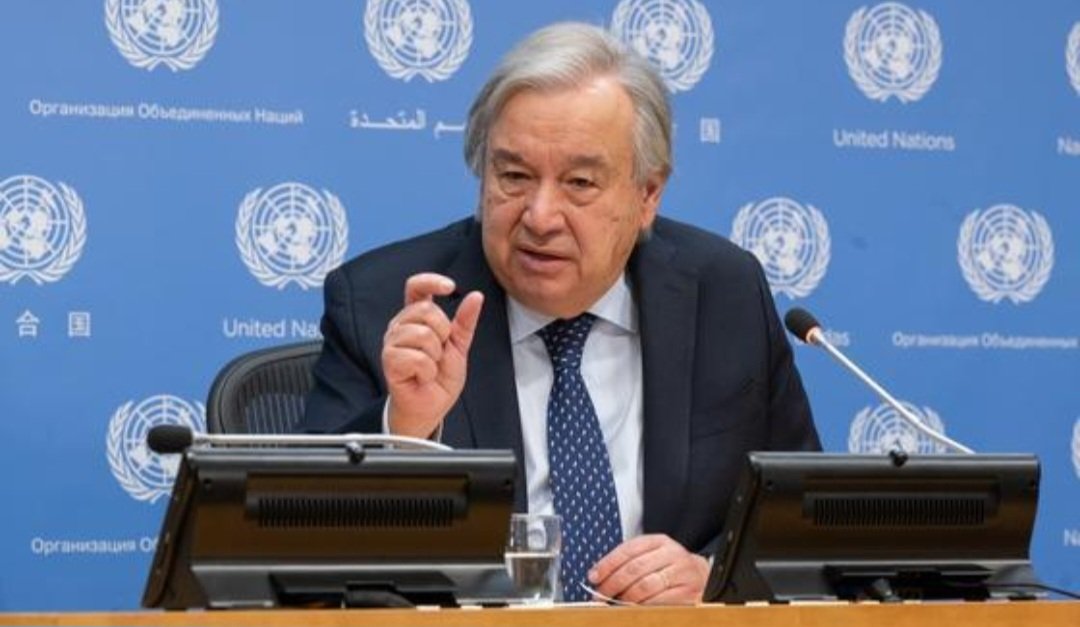
United Nations Secretary-General António Guterres has warned world leaders that the rapid development of artificial intelligence poses risks that cannot be ignored, calling for stronger international oversight as governments and technology companies race to develop increasingly powerful systems.


Guterres made the remarks on Wednesday ahead of next week’s United Nations General Assembly gathering in New York, where he said artificial intelligence and its regulation would be an important issue in discussions with world leaders.

“We cannot afford to ignore concerns that have been raised, especially by those on the front lines of the development of AI,” Guterres told reporters, stressing that governments have a responsibility to protect citizens from emerging threats associated with the technology.
His warning comes as debate intensifies over whether the development of increasingly capable AI systems is moving faster than governments can establish effective safeguards.
Guterres said countries with the greatest capabilities in advanced AI should establish mechanisms to exchange information and develop common safeguards to prevent an uncontrolled technological race that could eventually result in a major global disaster.
The UN chief has advocated international cooperation on AI governance for several years. In 2023, the United Nations established a 39-member advisory body involving technology executives, government officials and academics from several countries to examine the opportunities and risks associated with artificial intelligence.
The UN Security Council could also discuss AI during the upcoming gathering of world leaders in New York. The council first held a dedicated meeting on artificial intelligence in 2023.
Guterres’ warning comes against the backdrop of a different approach from US President Donald Trump, who has argued that existing American safeguards are sufficient to regulate and prosecute AI companies.
Trump said on Monday that the United States already had the necessary guardrails in place, while also warning against approaches that could slow American technological development and give China an advantage.

The disagreement reflects a broader international debate over how to balance AI innovation with concerns about safety, cybersecurity, misinformation, economic disruption and other potential harms.
The debate has also intensified following warnings from figures within the technology industry. Anthropic researcher Jacob Coxon recently resigned and cited concerns about the potential consequences of increasingly powerful AI systems. Leaders from several major AI companies have also called for greater attention to safety as development accelerates.
Guterres said the goal should not be to halt technological progress but to establish a shared framework for ensuring that increasingly powerful AI systems are developed and deployed safely and responsibly.
“We need a shared understanding of how to advance the safe, secure and responsible development of AI,” he said, while calling for stronger safeguards where emerging systems create additional risks.
The dispute between advocates of stronger regulation and those prioritising rapid innovation is expected to remain a major issue as governments seek to determine who should set the rules governing one of the world’s fastest-developing technologies.