
Media
US To Make Social Media Screening Mandatory For Foreign Journalists, Other Visa Applicants From October 1

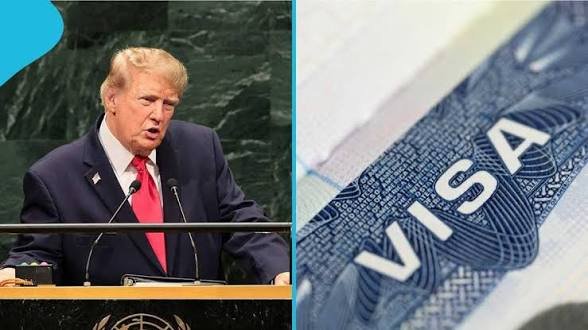
The United States has announced an expansion of its visa screening process that will subject foreign journalists and other categories of applicants to mandatory online presence reviews from October 1, 2026.
Under the new measure, applicants for I, TN and TD nonimmigrant visas will be required to make their social media profiles public or open to facilitate scrutiny by U.S. consular officials.
The U.S. Department of State announced the expansion on September 18, saying the measure would extend its existing online presence review to three additional visa classifications. The I visa covers foreign media representatives, including journalists and other eligible media professionals travelling to the United States for qualifying activities.

The TN category covers qualifying professionals from Canada and Mexico under the United States-Mexico-Canada Agreement (USMCA), while TD visas are issued to eligible spouses and unmarried children of TN visa holders.
The State Department said applicants in all three categories must adjust the privacy settings on all their social media profiles to “public” or “open” as part of the vetting process.
The department said it uses available information during visa screening to determine whether applicants are admissible, including whether they may pose risks to U.S. national security or public safety.
“Every visa adjudication is fundamentally a national security decision,” the department said, adding that applicants must also demonstrate their eligibility for the visa category sought and their intention to comply with the terms of admission.
The expansion means foreign journalists applying for I visas will become part of a broader group of visa applicants whose online presence is subject to formal review. The policy already applies to several other categories, including student and exchange visitor visas, H-1B and certain H-4 visas, as well as a range of diplomatic, religious, cultural exchange and humanitarian-related categories.

The latest requirement is also distinct from the broader U.S. visa application requirement under which applicants have been asked to provide social media identifiers used in previous years. The new measure specifically directs affected applicants to make their accounts publicly accessible for review.
Immigration specialists say the expanded review could have implications for processing times because online screening may lead to additional scrutiny in individual cases. Fragomen, a global immigration law firm, said the State Department had not specified in its announcement exactly what standards would be applied to the content reviewed.
For foreign journalists, the change adds another layer to the visa application process, requiring them to consider the accessibility of their social media accounts when seeking entry into the United States for professional assignments.
The measure takes effect on October 1, 2026, extending the U.S. government’s increasingly broad use of applicants’ digital footprints as part of its visa screening and vetting procedures.