
Security
US Withdraws Most Troops from Nigeria After Anti-ISIS Mission, Intelligence Support Continues

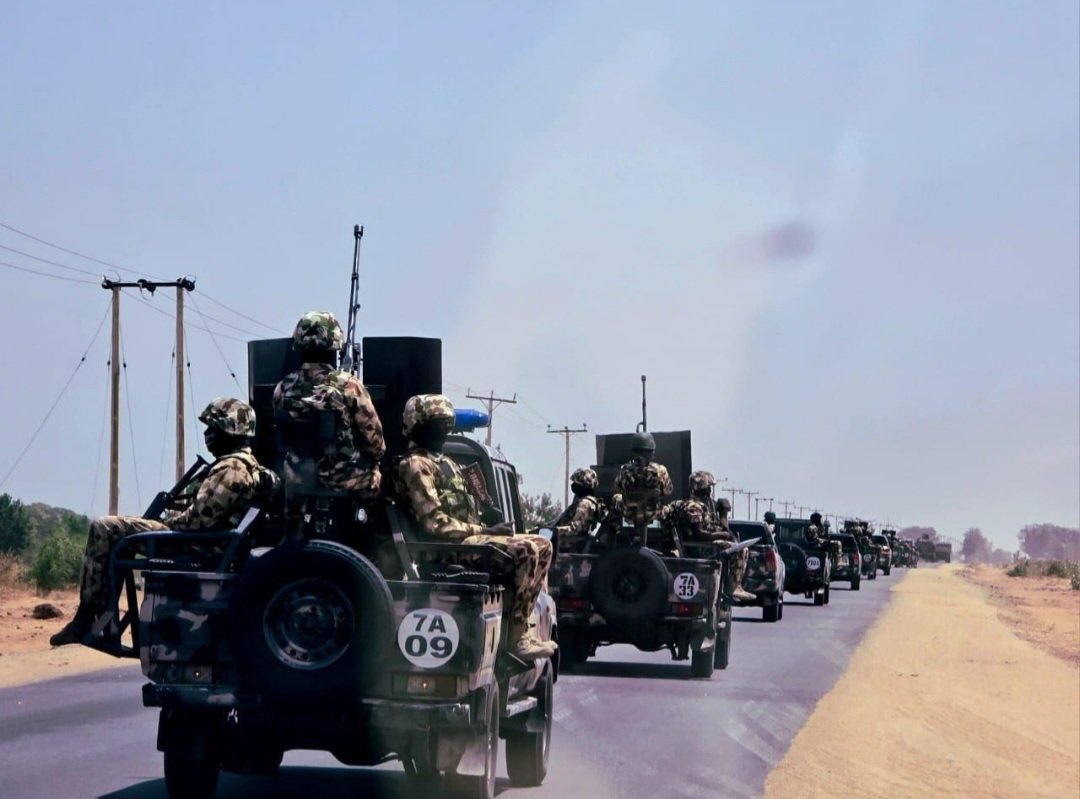
The United States has withdrawn most of the military personnel it deployed to Nigeria earlier this year following the completion of a joint counterterrorism operation targeting Islamic State (ISIS) militants in the Lake Chad Basin, marking the end of a temporary combat deployment while maintaining a long-term security partnership with Abuja.
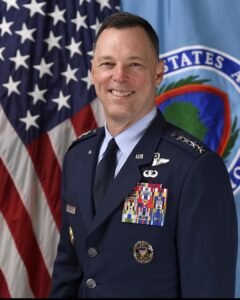
The announcement was made by General Dagvin R.M. Anderson, commander of the U.S. Air Forces in Europe-Air Forces Africa, during a briefing after the 2026 African Chiefs of Defense Conference. Anderson said the specific mission requiring additional U.S. forces had achieved its objectives, allowing the majority of American troops involved in the operation to return home.
According to Anderson, the operation significantly disrupted Islamic State networks operating in Nigeria’s Lake Chad region, with effects extending beyond the country’s borders.
“That operation in the Lake Chad Basin not only helped the countries in that immediate region, it also helped countries globally as it disrupted the ISIS network,” Anderson said.
Although the combat deployment has largely ended, the United States stressed that its military partnership with Nigeria remains active. At the request of the Nigerian government, Washington will continue providing intelligence sharing, surveillance support, and technical assistance to help Nigerian security forces pursue remaining extremist groups independently.
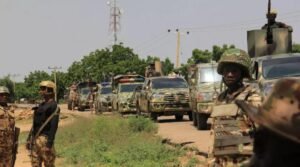
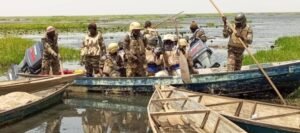
The temporary deployment followed a major joint offensive carried out in May in northeastern Nigeria. During that campaign, U.S. and Nigerian forces launched coordinated airstrikes and ground operations against Islamic State fighters in the Lake Chad Basin. U.S. officials said approximately 200 ISIS militants were killed, including Abu-Bilal al-Minuki, identified as the terrorist group’s global second-in-command. The operation is regarded as one of the most significant blows against ISIS leadership in Africa in recent years.
Nigerian Defence Minister Christopher Musa confirmed that the American combat troops were deployed specifically for the counterterrorism mission and departed after completing their objectives. He distinguished them from roughly 200 U.S. personnel already stationed in Nigeria for training, advising, and technical support roles.
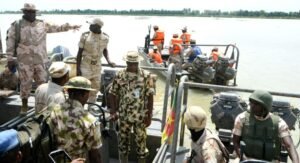
General Anderson emphasized that the withdrawal reflects AFRICOM’s strategy of supporting African-led security operations rather than maintaining a permanent combat presence. He described Nigeria as a capable regional power with a professional military, adding that U.S. assistance focuses on providing specialized 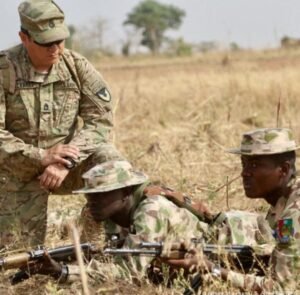 ; particularly intelligence, that enable Nigerian forces to conduct complex operations more effectively.
The troop drawdown comes after months of expanded U.S.-Nigeria military cooperation. Earlier this year, the United States deployed approximately 200 troops to train Nigerian forces as the country intensified operations against Boko Haram and Islamic State West Africa Province (ISWAP). The collaboration followed U.S. airstrikes against Islamic State targets in northwestern Nigeria in late 2025, which were carried out in coordination with the Nigerian government.
Security analysts say the withdrawal does not signal an end to U.S. involvement in Nigeria’s fight against terrorism. Instead, it marks a transition from direct operational support to intelligence cooperation, with Nigerian forces expected to sustain pressure on extremist groups using capabilities developed during the joint mission.
Despite recent gains, Nigeria continues to face security threats from Boko Haram, ISWAP and other armed groups operating across the northeast and parts of the northwest. Officials from both countries say continued intelligence sharing and military cooperation will remain critical in preventing extremist organizations from regrouping and launching new attacks.