
Opinion
When Justice Becomes Selective, Nigeria Bleeds

By Chris Okobah, PhD Award-Winning Author
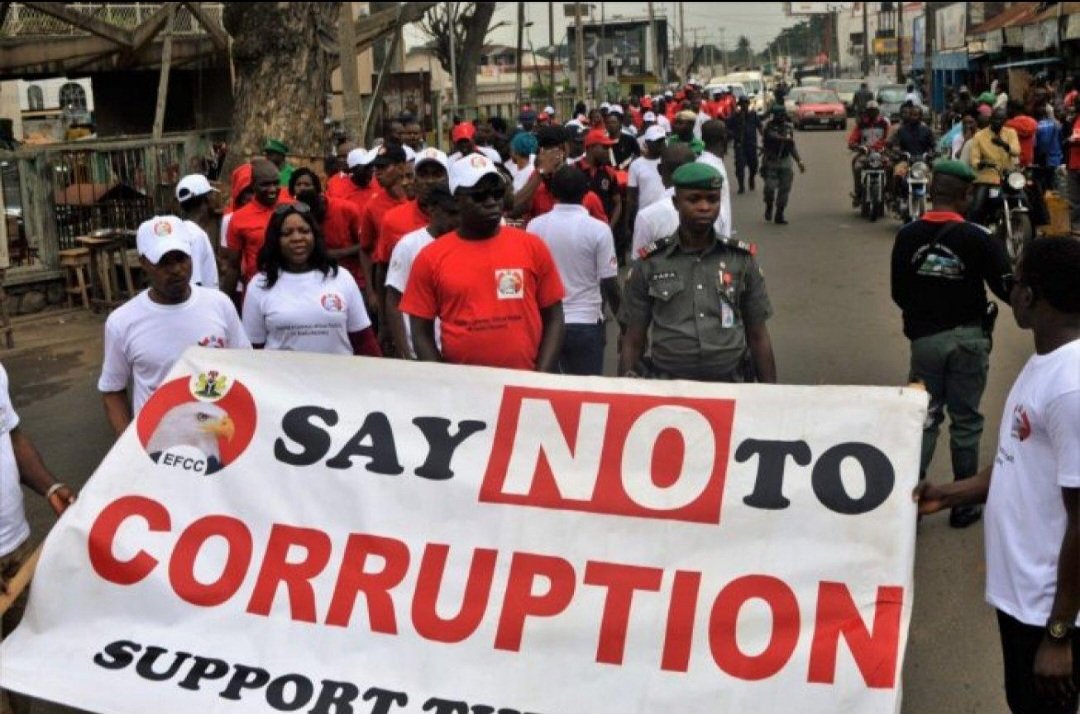
The EFCC Must Fight Corruption Without Fear, Favour or Political Color
Nigeria is bleeding—not from a single wound, but from a thousand cuts inflicted by corruption, impunity, poverty and the dangerous erosion of public trust.
The reported freezing of Osun State Government accounts by the Economic and Financial Crimes Commission (EFCC), coming at a politically sensitive period around an election, should concern every Nigerian who believes in democracy, institutional independence and the rule of law.
Let me be unequivocal: I support the fight against corruption.
No governor, minister, senator, political party or political godfather should be above investigation. If credible evidence exists, investigate. If crimes have been committed, prosecute. If guilt is established, punish.
But justice loses its moral authority when its sword appears sharp against some and blunt against others.
As Martin Luther King Jr. reminded humanity, “Injustice anywhere is a threat to justice everywhere.”
The question Nigerians are therefore entitled to ask is: Why now?
Why freeze the accounts of a state at such a politically sensitive moment? If the evidence existed long before the election, why was the action not taken earlier?
These questions do not prove political interference. But institutions entrusted with enormous coercive powers must understand that justice must not only be done; it must manifestly and undoubtedly be seen to be done.

An anti-corruption agency cannot afford even the appearance that it is ferocious against political opponents but accommodating toward the politically connected.
ONE COUNTRY, ONE STANDARD OF JUSTICE
Nigerians are tired of selective outrage.
We have witnessed elections accompanied by allegations of vote buying and the brazen distribution of inducements. Where were the financiers? Which accounts were traced? How many prosecutions followed?
In Delta State, former Governor Ifeanyi Okowa has faced an EFCC investigation concerning extremely serious allegations involving public resources. Nigerians continue to await a transparent conclusion to the matter. Yet he has subsequently emerged as a senatorial candidate.
Former Kogi State Governor Yahaya Bello, who enjoys the constitutional presumption of innocence, is currently standing trial over an alleged ₦110.4 billion fraud case. Yet he too has emerged as a senatorial candidate.
This raises a deeper moral question:
When did elective office become a sanctuary from questions of public accountability?
The presumption of innocence must always be respected. But political parties must equally understand that public leadership demands something beyond mere legal eligibility. It demands character, integrity, accountability and public confidence.
The EFCC must therefore have only one political party: the law.
It must have only one godfather: the Constitution.
And it must owe allegiance only to the evidence and the Nigerian people.
Corruption does not become innocent because an accused person joins the ruling party. Neither does an opposition politician become guilty merely because he belongs to the opposition.
Justice cannot have a party card.
EVERY NAIRA STOLEN HAS A HUMAN FACE
Perhaps Nigeria’s greatest tragedy is that we have become accustomed to discussing stolen billions and trillions as though they were merely figures in an accountant’s ledger.
They are not.
Every naira stolen represents something denied to somebody.
A stolen billion is a hospital that was never built.
It is medicine that never reached a dying child.
It is a classroom without desks.
It is a road that remains a death trap.
It is electricity that never reaches a struggling business.
It is a police station without equipment.
It is a graduate roaming the streets without opportunity.
It is a family pushed deeper into poverty.
Corruption does not merely steal money—it steals possibilities, dignity, dreams and sometimes life itself.
As Chinua Achebe famously observed, “The trouble with Nigeria is simply and squarely a failure of leadership.”
But our tragedy today goes beyond leadership. It includes institutions that fail to hold leadership accountable and citizens who sometimes reward failure at the ballot box.
You cannot give an armed robber the keys to a bank vault, appoint him its security guard and then express surprise when the vault is empty.
Yet politically, Nigeria repeatedly risks doing precisely that.
THE MOST EXPENSIVE LOAF OF BREAD
There is another uncomfortable truth.
Politicians alone did not create this tragedy.
Citizens have power too.
We complain about corruption, hunger, unemployment, insecurity and collapsing infrastructure, yet during elections some citizens surrender their most valuable democratic possession for a bag of rice, a loaf of bread, a few thousand naira or a temporary favour.
That loaf of bread may ultimately become the most expensive loaf of bread you will ever eat.
Because when someone buys your vote today, he may spend the next four years recovering his investment from your future.
The money he gave you may last one day.
The consequences of the government you elect may last four years—or generations.
Nelson Mandela said, “Poverty is not an accident.” Like slavery and apartheid, he argued, it is man-made and can be overcome by human action.
Nigeria’s poverty is made worse when public resources disappear and citizens surrender their power to demand better.
YOUR VOTE IS MORE POWERFUL THAN A BULLET
Nigeria does not need violence to rescue itself.
We need courage.
We need conscience.
We need institutions that cannot be bought, intimidated or politically manipulated.
And above all, we need our votes.
A bullet can take a life.
A vote can change the direction of a nation.
So when election day comes, do not ask where a candidate worships.
Do not ask what language he speaks.
Do not ask whether he comes from your village.
Ask instead:
Is he competent? Is he honest? Can he be trusted with our commonwealth? Will he defend the Constitution? Will he leave Nigeria better than he found it?
If the answer is no, then ethnicity, religion, friendship and political patronage must never compel you to surrender your future.
Nigeria belongs to all of us.
WE MUST STOP THE BLEEDING
The EFCC must fight corruption without fear, favour, friendship or political colour.
Political parties must stop behaving as though elective office should provide refuge from legitimate questions of public accountability.
And citizens must stop selling the one instrument capable of peacefully changing their destiny.
Fight corruption with honesty. Fight it with courage. Fight it with consistency. Fight it with sincerity. Fight it with purpose.
Because Nigeria is bleeding.
Every stolen naira deepens the wound.
Every compromised institution widens it.
Every vote sold keeps it open.
And every corrupt leader protected from accountability pours salt into it.
We have reached the point where neutrality is becoming dangerous.
The choice before us is stark:
Either we extinguish corruption, or corruption will extinguish Nigeria.
The ballot is in our hands.
Our conscience must guide it.
Our children will inherit the consequences.
And history will remember whether, when Nigeria was bleeding, we found the courage to stop the bleeding—or simply stood by and watched her bleed to death.