
General News
80% Military Pay Rise Takes Effect As Public Servants Down Tools Over Economic Hardship

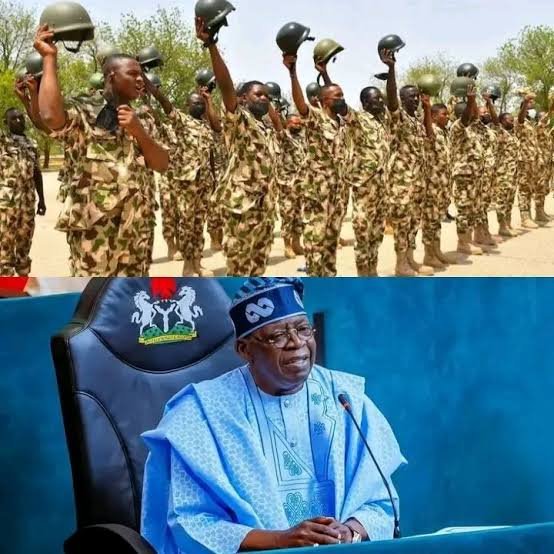
The newly approved salary increase for personnel of the Armed Forces of Nigeria has begun reflecting in their September pay, with junior military personnel receiving increases of up to 80 per cent.
The development coincides with the commencement of a three-day warning strike by public service workers protesting worsening economic hardship and demanding measures to improve workers’ welfare.

The Defence Headquarters confirmed on Thursday that military personnel had started receiving their September salaries under the revised salary structure.
The Director of Defence Information, Maj.-Gen. Samaila Uba, confirmed the development in Abuja, describing the adjustment as part of efforts to improve the welfare and conditions of service of military personnel.
Some soldiers also confirmed that the revised salaries had begun reflecting in their bank accounts from Wednesday evening.

Under the new structure, personnel from the rank of Private to Staff Sergeant are to receive an 80 per cent increase, while those from Warrant Officer to Colonel will receive a 50 per cent increase. Officers above the rank of Colonel are to receive a 30 per cent increase.
The adjustment was approved by President Bola Tinubu in August and took effect from September 1, 2026.
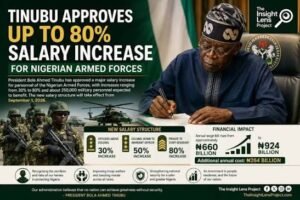
Figures provided by military personnel showed that a Private previously earning about N103,000 now receives approximately N190,000, while a Lance Corporal whose previous salary was about N110,000 now receives approximately N202,000.
About 250,000 members of the Armed Forces are expected to benefit from the revised salary package. The Presidency had projected that the adjustment would increase the annual salary bill for the Armed Forces from N660 billion to N924 billion.
Meanwhile, the Joint National Public Service Negotiating Council has commenced a three-day warning strike scheduled to run from October 2 to 4.

The council directed its national and state leaders to mobilise public service workers for the industrial action, citing worsening economic and mental hardship affecting workers and their dependants.
A circular dated October 1 and signed by the National Secretary of the JNPSNC, Olowoyo Gbenga, said the decision followed the Federal Government’s alleged failure to address demands earlier submitted to the President on September 21.
The council is demanding measures including a reduction in the pump price of petrol to N500 per litre, a wage award and other interventions to cushion the impact of the economic situation.
The JNPSNC said the decision to proceed with the warning strike followed the failure of President Tinubu’s Independence Day address to announce the measures sought by the workers.
The Nigeria Labour Congress has also raised concerns over the rising cost of living.
In an Independence Day statement, NLC President Joe Ajaero cited rising petrol prices, inflation, stagnant wages, unemployment and insecurity as factors contributing to economic pressure on workers and other Nigerians.
The NLC said the purchasing power of workers had been eroded by inflation, while increased transportation costs had contributed to higher prices of food, school fees, rent and other essential goods and services.