Connect with us

General News

NIGERIA PLEDGES TO STRENGTHEN PARTNERSHIP WITH UN ON HUMANITARIAN EFFORTS

Published

on

Share

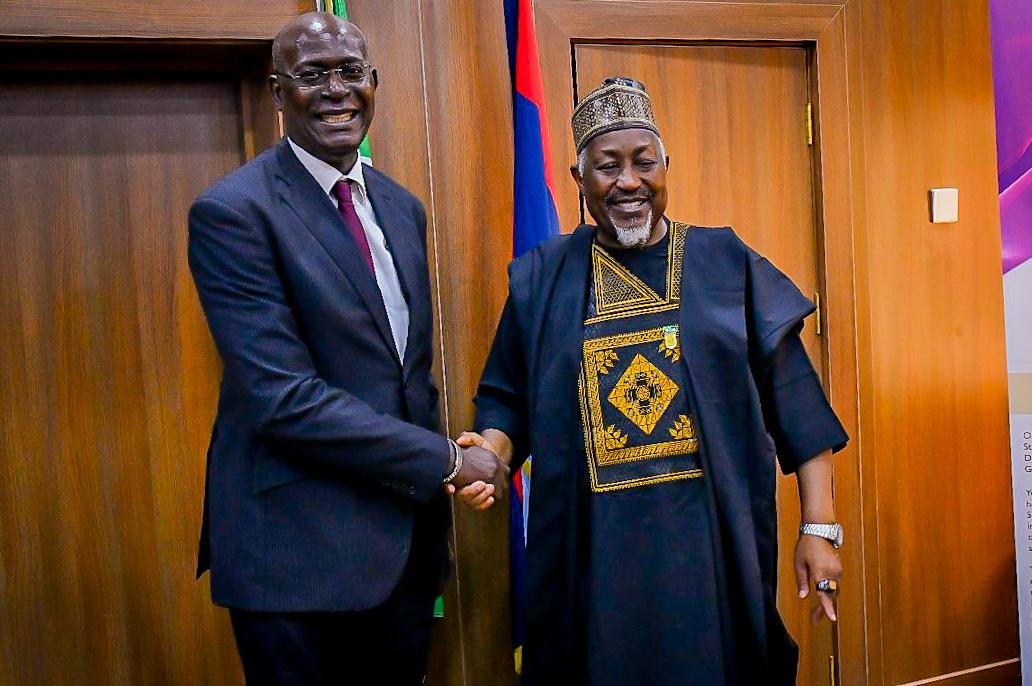
The Minister of Defence, Mohammed Badaru Abubakar, has reaffirmed Nigeria’s commitment to supporting the United Nations Resident Coordinator and humanitarian services operating across the nation. Director of Information and Public Relations, Pat Ndidi Ituk, in a statement, said Badaru made the pledge during a meeting with Mr. Mohamed Malick Fall, the UN Resident and Humanitarian Coordinator, at the Minister’s office in Ship House, Abuja.
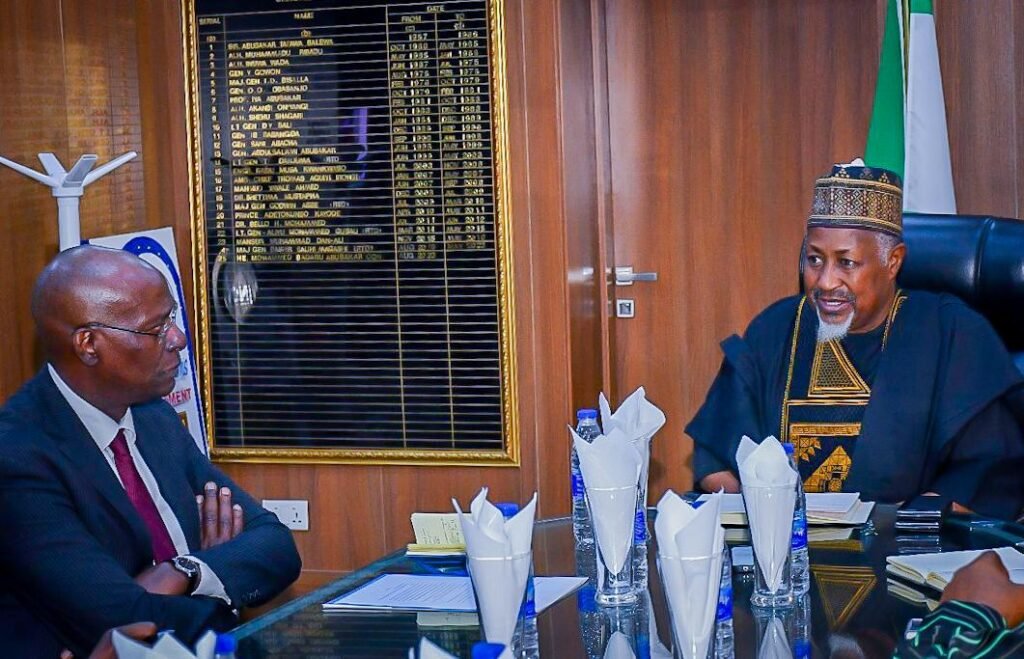
Ituk said Badaru emphasized the importance of strengthened coordination, collaboration, and sustainable development, stating that the meeting was “long overdue.” Badaru highlighted the need to rekindle long-standing partnerships and build upon previous successes in critical areas such as health, water and sanitation, education, and livelihood support. Ituk quoted Badaru as saying the meeting was an opportunity to drive development outcomes.

The Minister reflected on past collaborations, acknowledging the positive impact of healthy inter-state competition and benchmarking. Ituk said Badaru recounted his tenure as Governor, during which several states excelled in national development indices, particularly in water access, health services, and livelihood initiatives.

In response, the United Nations Resident Coordinator, Mohamed Malick Fall, expressed appreciation for Badaru’s leadership and reaffirmed the UN’s readiness to collaborate with federal and state actors. Ituk said Fall welcomed the Minister’s initiative to enhance humanitarian and development responses across Nigeria. Badaru and Fall discussed key topics, including the establishment of test points for new service delivery models and engaging with national security institutions.
See also  THREE SUICIDE BOMBERS NEUTRALIZED IN GWOZA INTELLIGENCE-DRIVEN OPERATION
Continue Reading
Click to comment

Leave a Reply

Your email address will not be published. Required fields are marked *

General News

Global Oil Prices Rise on Strait Disruptions, as Iran Rejects U.S. Dialogue, Supply Risks Persist

Published

on

Share

Global oil prices climbed sharply on Tuesday as ongoing supply disruptions in the Middle East and renewed geopolitical tensions between Iran and the United States rattled energy markets.


Benchmark crude prices rose above the $100 per barrel mark, with Brent crude gaining nearly $2 and U.S. West Texas Intermediate also posting significant increases. The surge comes amid persistent concerns over disrupted supply routes, particularly through the strategic Strait of Hormuz; a critical chokepoint that handles roughly 20% of global oil shipments.


Tensions escalated further after Iran denied claims by the U.S. officials that negotiations were underway to ease the conflict. The denial contradicted earlier remarks, suggesting progress in diplomatic engagement, adding to uncertainty in global markets.


The ongoing conflict has already disrupted energy infrastructure across the region, with reports indicating that dozens of oil and gas facilities have been damaged. Analysts warn that these disruptions could keep prices elevated for an extended period, even if hostilities ease in the near term.


Adding to market volatility are continued military exchanges and attacks on energy assets, which have heightened fears of a prolonged supply crunch. Oil prices have already surged significantly since late February as traders factor in the risk of further escalation.


Energy experts caution that if the disruption to shipping routes persists, prices could spike even higher, potentially exceeding previous record levels. The uncertainty surrounding diplomatic efforts and the ongoing damage to infrastructure continue to weigh heavily on global energy markets.


The developments underscore the fragile state of global oil supply chains, with markets reacting swiftly to both geopolitical tensions and conflicting signals on potential negotiations.

See also  NIGERIA, BRAZIL STRENGTHEN BILATERAL DEFENCE COOPERATION
Continue Reading

General News

Court Adjourns El-Rufai’s Bail Hearing to March 31 After Arraignment

Published

on

Share

A Federal High Court sitting in Kaduna has adjourned the hearing of the bail application of former Kaduna State governor, Nasir El-Rufai, to March 31, 2026, following his arraignment on alleged corruption-related charges.

El-Rufai was on Tuesday brought before the court by the Independent Corrupt Practices and Other Related Offences Commission (ICPC) and arraigned before Justice Rilwan M. Aikawa.

During the proceedings, the former governor was docked on one count out of a 10-count charge filed by the anti-graft agency. The charge, according to his counsel, Ubong Akpan, relates to alleged deposits into a domiciliary account and the monetisation of earnings.

El-Rufai was arraigned alongside a co-defendant, Joel Adoga.

Despite pending applications earlier filed before the court, Justice Aikawa proceeded with the arraignment and subsequently adjourned the matter to March 31 to consider all outstanding applications, including the bail request.

No bail application was moved or granted during Tuesday’s session.

Speaking to journalists after the court sitting, Akpan maintained that there was nothing unusual about the proceedings, adding that the defence team was yet to be served with processes relating to other potential charges.

The case is expected to resume on the adjourned date for hearing of the bail application and other pending matters.

See also  UN WARNS OF EXPONENTIAL RISE IN CASUALTIES FROM AFGHANISTAN EARTHQUAKE
Continue Reading

General News

ECOWAS Unveils Regional Plan to Protect Food Security Amid Global Pressures

Published

on

Share


The Economic Community of West African States (ECOWAS) has introduced an urgent, coordinated strategy to safeguard food security across West Africa and the Sahel, as global economic disruptions and rising oil prices continue to threaten agricultural production.

The decision followed an extraordinary virtual meeting of ECOWAS Ministers of Agriculture held on March 23, 2026, where regional leaders assessed the growing risks to food systems.

The high-level meeting, convened by the ECOWAS Commission through its Department of Economic Affairs and Agriculture under Commissioner Kalilou Sylla, brought together key regional institutions, development partners, and financial stakeholders.

Participants—including representatives from the West African Economic and Monetary Union and the Permanent Inter-State Committee for Drought Control in the Sahel—reviewed the impact of rising fertiliser costs, driven by global market volatility and increasing energy prices, on agricultural productivity across the region.

Deliberations resulted in the adoption of a medium- to long-term operational framework aimed at strengthening food sovereignty and building resilience within regional food systems.

Key measures outlined in the plan include the immediate establishment of regional agreements to secure strategic fertiliser supplies, as well as the creation of emergency reserves to cushion the effects of future price shocks.

The ministers also approved the introduction of liquidity swap mechanisms through central banks to address foreign exchange constraints faced by importers—an intervention expected to improve access to critical agricultural inputs.

“Our collective response underscores the urgency of safeguarding food security in the face of external shocks,” Sylla said, noting that enhanced regional coordination and targeted interventions would help sustain agricultural production and protect vulnerable populations.

See also  VP SHETTIMA: NIGERIA TO MOVE FROM COCOA PRODUCTION TO PROCESSING

The initiative highlights ECOWAS’ commitment to deepening regional cooperation and implementing sustainable solutions to emerging threats to food security across West Africa and the Sahel.

Continue Reading